




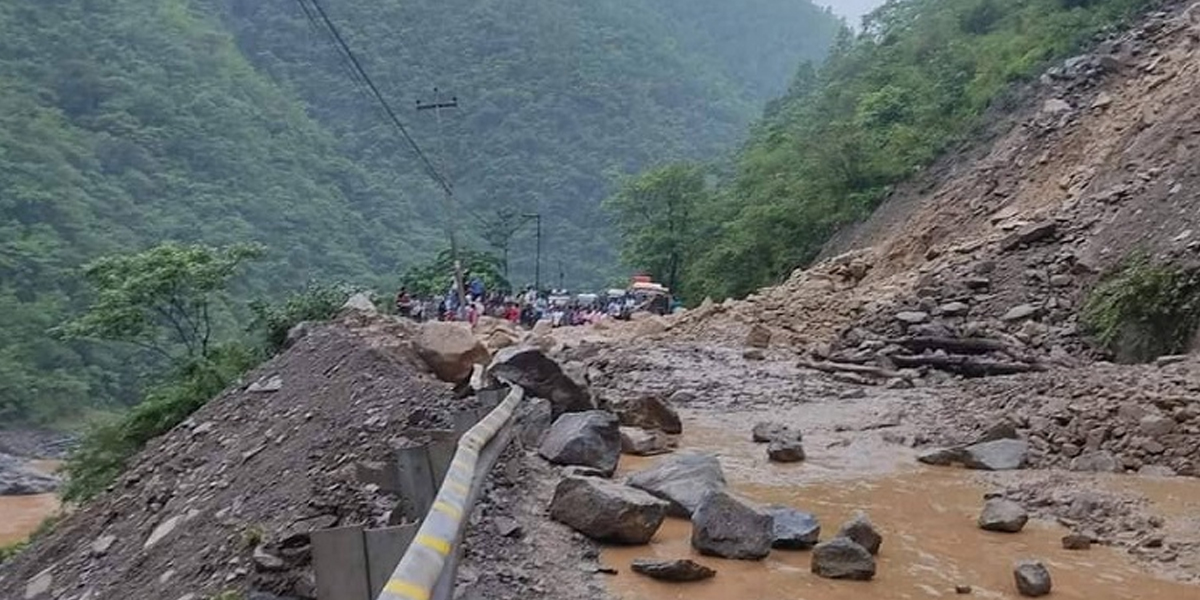
KATHMANDU: With just 24 days remaining before Dashain, Nepal’s biggest festival, the country’s road network remains heavily disrupted by floods and landslides. Despite the festive season typically boosting mobility and the economy, major highways continue to face blockages, according to officials.
The Department of Roads reports that 250 locations across the country are currently obstructed due to landslides triggered by ongoing monsoon rains. The figure could rise further if rains persist, warned Prabhat Kumar Jha, deputy director general at the department.
Repair and maintenance works are underway on several major routes, including the Nagdhunga–Muglin, Muglin–Pokhara, and East–West highways, as well as projects under the National Pride program. Based on past experiences, priority has been given to the BP Highway, Prithvi Highway, Kanti Lokpath, and the Araniko Highway for immediate repairs such as pothole filling, Jha said.
The BP Highway, in particular, remains severely affected, with traffic allowed only during the daytime via alternative routes.
“We are ensuring that even with temporary maintenance, highways remain open. If a road is blocked during the day, equipment will reach within half an hour and traffic will be restored within four hours,” Jha said.
He added that 2,600 staff and 277 machines have been placed on standby nationwide, with private contractors mobilized if necessary. The department has urged travelers to check updates on its official website before setting out.
While authorities have started preparations for festival-season repairs, funding constraints remain a major obstacle. Ganesh Bahadur KC, executive director of the Nepal Road Board, said maintenance of the country’s 80 national highways would require an estimated Rs 138.1 billion this year, but the government has allocated only Rs 42.8 billion.
“How can we maintain the roads with such a limited budget?” KC questioned, adding that the board allocates 70 percent of its budget to the Department of Roads and 30 percent to local governments.
The Road Board generates revenue from fuel levies, Rs 4 per liter of petrol and Rs 2 per liter of diesel, along with tolls and vehicle registration fees. However, KC said the board has struggled to meet targets as it lacks full autonomy.
A new procedure approved by the Office of the Prime Minister last year allows the board to collect road tolls on 15 highways, with plans to expand the system to 22 roads. For example, vehicles using the Narayanghat–Muglin section would be charged Rs 120.
Despite broader funding gaps, officials said resources have been earmarked for festival-season repairs. “We have raised the issue with the Finance Ministry and received assurances that additional funds will be released if we spend the allocated amount by mid-January,” KC said.
According to Jha, the Department of Roads has so far received Rs 337 million for regular maintenance, Rs 8 billion for highway upgrading and restoration, and around Rs 4.28 billion from the Road Board. Still, the department estimates that at least Rs 30 billion will be required to manage landslides and carry out essential repairs.





Comment