




KATHMANDU: Despite forming a federal coalition with the CPN-UML to ensure political stability, the Nepali Congress (NC) is now facing internal strife that threatens to destabilize its own provincial governments.
The alliance, forged through a seven-point agreement in July 2024, aimed to replace then Prime Minister Pushpa Kamal Dahal “Prachanda” and establish a national consensus government under Article 76(2) of the Constitution. The agreement focused on promoting good governance, curbing corruption, and accelerating development with the cooperation of other parties.
Under this arrangement, the CPN-UML currently leads the provincial governments in Koshi, Lumbini, and Karnali, while the Nepali Congress leads in Sudurpaschim, Bagmati, and Gandaki. Madhesh Province is led by the Janamat Party with support from both major parties.
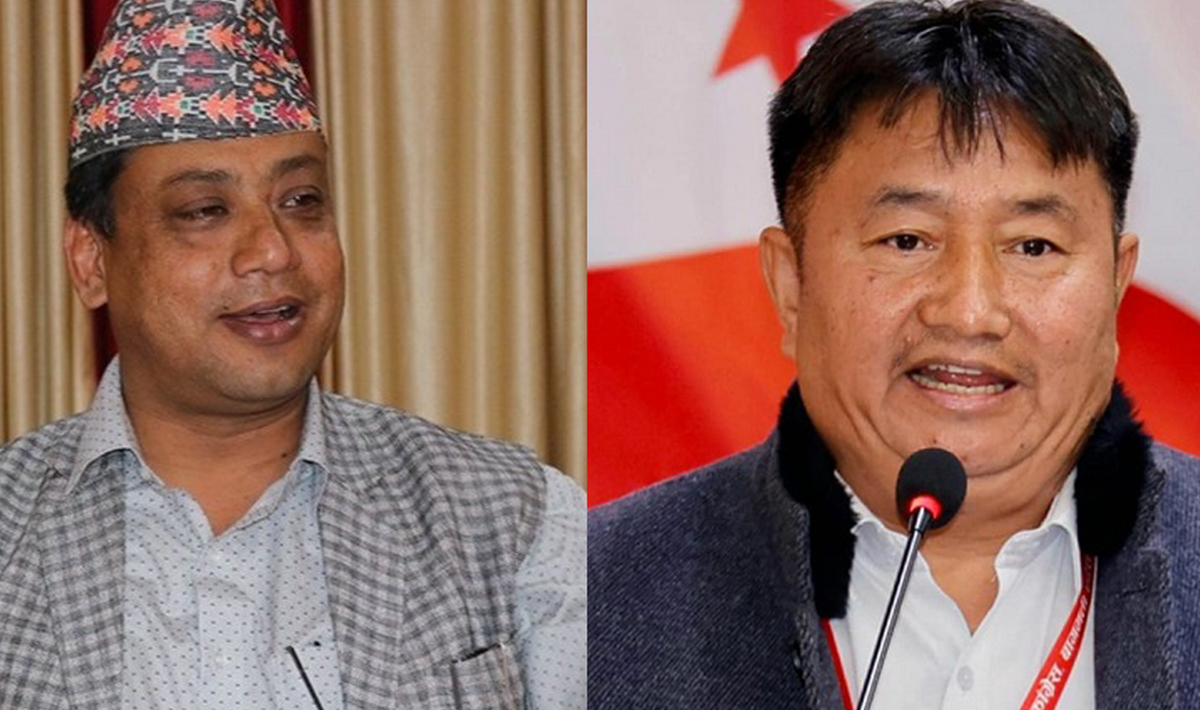
However, instability has emerged, particularly in Bagmati Province, due to internal discord within the Congress. The faction led by Indra Bahadur Baniya, a Provincial Assembly member and president of the Bagmati Province Working Committee, has filed a no-confidence motion against Chief Minister Bahadur Singh Lama, a fellow Congress member.
Baniya, considered close to party president Sher Bahadur Deuba, secured the support of 21 out of 37 Congress Provincial Assembly members in the motion.
The position of Bagmati Province Chief Minister Bahadur Singh Lama is now in serious jeopardy after 21 Nepali Congress Provincial Assembly members filed a no-confidence motion against him, who also serves as the party’s parliamentary leader.
The no-confidence motion accuses Lama of failing to deliver effective leadership both as Finance Minister and Chief Minister. It cites weak performance in budgeting, poor public service delivery, and lack of disaster response—especially after last year’s floods as key failures.
It also criticizes Lama for failing to convene regular party meetings, pass meaningful legislation, or maintain coordination between the party, parliamentary caucus, and provincial government.
Furthermore, the motion claims the provincial government has failed to utilize the budget effectively, and that internal party members have been sidelined in legislative processes and decision-making.
The Baniya faction asserts that Lama’s leadership has eroded public confidence in the party and the provincial structure, warranting urgent change.
Invoking Article 18(6) of the Nepali Congress Provincial Assembly Parliamentary Party Statute, 2074 BS, the faction formally demanded Lama’s removal and proposed Baniya as the new parliamentary party leader. Of the 37 Congress members in the 110-member Provincial Assembly, 21 signed the motion, with 18 present during submission.
This internal revolt has cast a shadow over the broader Congress-UML alliance, raising questions about the stability of provincial governments and the effectiveness of the national consensus initiative launched just a year ago.
Despite the crisis, three Congress ministers remain in office: Hari Prabha Khadki (Ministry of Social Development), Kundan Raj Kafle (Ministry of Economic Affairs and Planning), and Shyam Khadka (Ministry of Drinking Water, Energy and Irrigation). Their continued support—or lack thereof—could prove crucial as the party heads toward a leadership showdown.
The position of Bagmati Province Chief Minister Bahadur Singh Lama is now in serious jeopardy after 21 Nepali Congress Provincial Assembly members filed a no-confidence motion against him, who also serves as the party’s parliamentary leader.
According to Article 18 of the Nepali Congress Provincial Parliamentary Party Statute, a party meeting must be convened within 15 days of such a motion, during which Lama must prove he retains majority support.
The no-confidence move followed growing discontent within the party and came on the heels of resignations by four Congress ministers from the provincial cabinet. Before Indra Bahadur Baniya officially submitted the motion, Culture and Tourism Minister Bimal Thakuri, Cooperatives and Poverty Alleviation Minister Madukumar Shrestha, Youth and Sports Minister Minkrishna Maharjan, and Internal Affairs and Law Minister Suraj Chandra Lamichhane all stepped down.
In response, Chief Minister Lama dismissed all four ministers on the same day, escalating the internal conflict. Out of the 14 ministries in the Bagmati provincial government, eight were held by the Nepali Congress, including the chief minister’s position.
Despite the crisis, three Congress ministers remain in office: Hari Prabha Khadki (Ministry of Social Development), Kundan Raj Kafle (Ministry of Economic Affairs and Planning), and Shyam Khadka (Ministry of Drinking Water, Energy and Irrigation). Their continued support—or lack thereof—could prove crucial as the party heads toward a leadership showdown.




Comment