




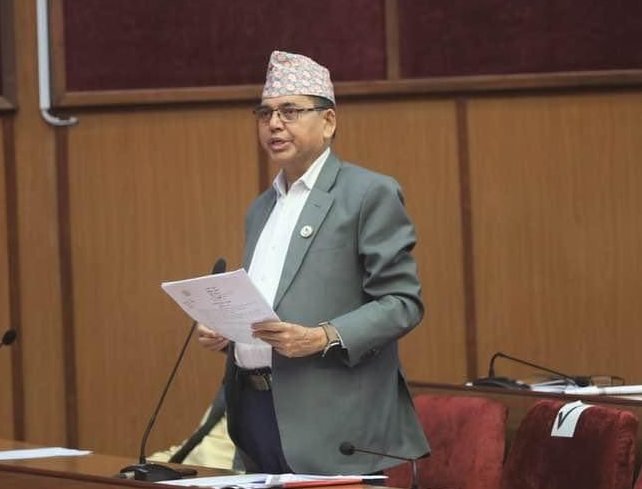
KATHMANDU: Minister for Physical Infrastructure and Transport, Devendra Dahal, has stressed the importance of regional cooperation for the development of landlocked countries like Nepal.
Speaking at the ‘Global Transport Connectivity Forum’ held in Istanbul, Turkey, Minister Dahal underscored the necessity of ensuring maritime access for landlocked nations through strategic regional partnerships.
Addressing the forum on the theme ‘Strategic Opportunities for Regional Development through Landlocked-to-Landlocked Efforts’, he noted that enhanced transport infrastructure could help landlocked countries connect to the sea and unlock new opportunities.
“All landlocked countries, including Nepal, must collaborate with the international community to accelerate infrastructure development,” he said.
According to Minister Dahal’s secretariat, he emphasized that transforming landlocked nations into land-linked economies requires not just investment in roads, railways, and ports, but also in building cooperation, mutual trust, and a shared regional vision.
Minister Dahal also highlighted the importance of developing strategic transport corridors that connect landlocked countries to their neighbors. He said Nepal has prioritized such corridors to improve connectivity and boost trade.
Citing Nepal’s vulnerability to natural disasters such as floods, landslides, and earthquakes, Dahal explained that the country’s complex geography—including the mountains, hills, Chure-Bhawar, and Terai plains—poses additional challenges for transport infrastructure development.
The weak soil composition and varied topography further complicate construction and maintenance. He noted that Nepal experiences significant damage every year from monsoon-related disasters, as rivers originating in the Himalayas flow swiftly through the hills, slow down midstream, and then speed up again in the Terai, increasing flood risks.
Minister Dahal concluded by highlighting the need for resilient and inclusive infrastructure solutions that take into account these geographical challenges and help turn Nepal’s landlocked position into a strategic advantage through regional cooperation.





Comment