




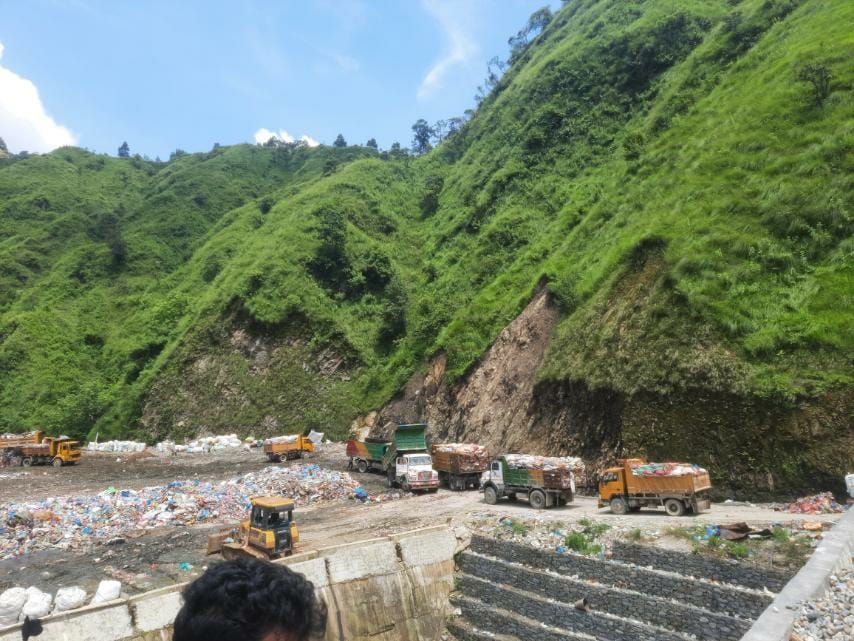
KATHMANDU: The volume of waste at Bancharedanda, the waste management site for Kathmandu Valley, has decreased following the implementation of a waste segregation policy at the household level, or the first collection point.
Prior to the policy’s implementation, 20 waste containers would reach Bancharedanda daily.
However, this number has now reduced to 15, according to Sarita Rai, Chief of the Kathmandu Metropolitan City Office’s Environment Management Department.
The segregation policy has been implemented in 10 of the city’s 32 wards (Wards No. 12, 18, 19, 20, 21, 22, 23, 24, 25, and 27).
Waste from 18 local levels within the Kathmandu Valley is managed at the Bancharedanda landfill site.
The Solid Waste Management Act of 2068 BS (2011) requires solid waste to be segregated at the source into at least biodegradable and non-degradable categories, a provision that aligns with the Kathmandu Metropolitan City’s Environment and Natural Resources Conservation Act (2011).
Reports indicate that 18 local levels in the Kathmandu Valley produce 1,600 metric tons of solid waste daily.





Comment