




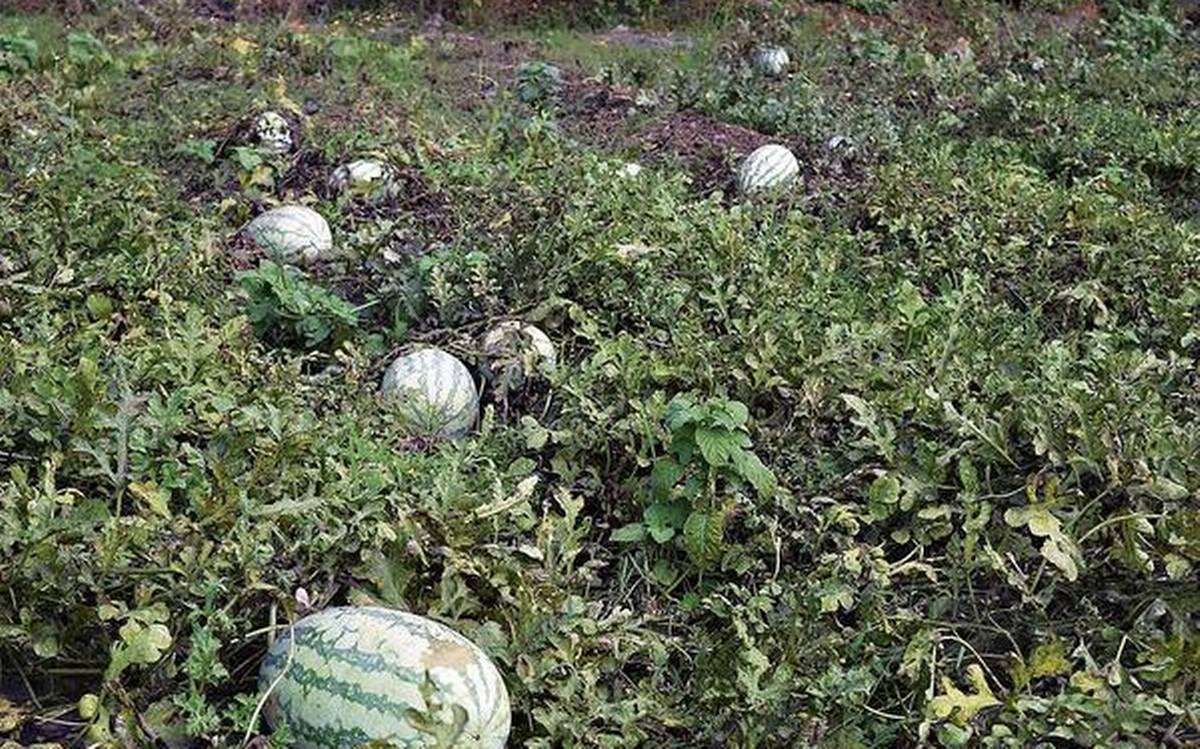
KANCHANPUR: Bandhu Chaudhary, a resident of Pipaladi, Shuklaphanta Municipality-3, has been earning his livelihood by selling watermelons grown in the Syaali River basin for the past 15 years.
Watermelons planted in the Nepali month of Magh are typically ready for sale by the last week of Chaitra.
“Earlier, we had to transport watermelons from village to village on bicycles and bullock carts, exchanging them for wheat,” he said.
“Now, we can sell them by loading them onto autos and taking them directly to markets in Mahendragarh, Jhalari, Attariya, and other places. Selling watermelons has become much more profitable and convenient.”
It’s not just residents of Jonapur and Pipaladi in Ward No. 3 who are involved in watermelon cultivation in the basin.
Locals from Ward No. 4, Asaina, also grow watermelons. The land is divided into equal parts for growing watermelons, gourds, cucumbers, and squashes.
According to local farmer Budhram Chaudhary, each family is allotted four to five katthas of land. Families typically earn between Rs 100,000 and Rs 120,000 per season by cultivating melons and other crops on the divided land.
Watermelons, gourds, and cucumbers are planted in the first week of Magh. “We start selling cucumbers and gourds from Falgun,” said Lalu Chaudhary. “However, watermelons are ready for sale only by the last week of Chaitra.”
Protecting the crops from wild animals is a significant challenge. Lalu explained that wild animals often damage the crops because the land is situated in the Syaali River basin, which is connected to the Shuklaphanta National Park.
To protect the crops, farmers build huts and stay on the land from Magh onwards. “During the day, we irrigate, fertilize, weed, and build fences to safeguard our crops,” said Chhalli Chaudhary, another local farmer.
“At night, we have to keep watch to prevent wild animals from damaging the plants and fruits.”
Farmers still rely on the Indian market for seeds and other farming inputs. They believe subsidies for seeds, chemical fertilizers, pesticides, and irrigation equipment would greatly benefit them.
Many farmers in the area started farming after observing similar practices by Indian farmers in the bogs.
Local farmer Hinglal Chaudhary shared that the income from the bogs helps cover household expenses year-round, including their children’s school fees.
“We’ve been farming in the bogs for 15 years,” he said. “We haven’t received any external support; we’ve been managing on our own.” More than 200 families are engaged in farming in the bogs of the Syaali, Sanbora, and Doda rivers.




Comment