




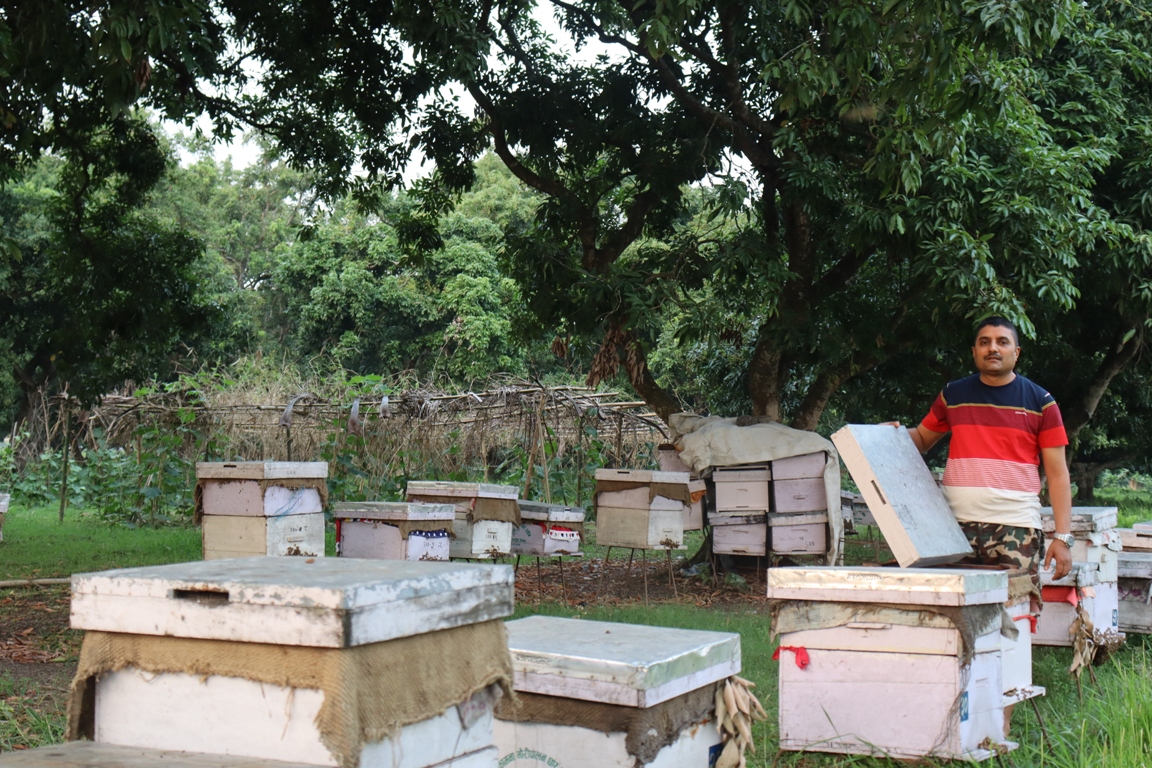
SUNSARI: Yubaraj Bhattarai from Itahari Sub-metropolitan City-4 earns an additional eight lakh rupees (Rs. eight hundred thousand) annually through beekeeping.
With favorable weather conditions, Bhattarai produces a significant amount of honey.
He began his beekeeping venture in 2072 BS on the advice of his father and has since set an example of how modern technology can yield substantial profits from this practice.
“Currently, I manage 62 beehives, producing between nine and twelve quintals of honey each year, earning more than eight lakh rupees,” he said.
Initially, Bhattarai faced challenges with selling his honey, but now those issues have been resolved. He sells his honey locally, as well as in Biratnagar, Damak, and Kathmandu.
“When there are online orders, I ship the honey via courier,” he added. The price of the honey is determined based on quality, taste, and production costs. Presently, he sells the honey for Rs. 1,000 per kg and offers the hives with bees for Rs. 10,000 each.
Bhattarai raises European mellifera bees, a breed known for being disease-resistant and highly productive. The hives are placed in sunny locations, and he ensures that the bees have access to water and a peaceful environment.
The hives are relocated every one to two months to different gardens, including mustard, mango, litchi, and sunflower gardens, depending on the season.
Although beekeeping doesn’t require daily attention, Bhattarai monitors the hives every four to five days to check the condition of the hives, the bees’ activity, and the availability of nectar, ensuring there are no diseases.
The Itahari Sub-metropolitan City has been supportive, providing beekeeping equipment and hive grants annually.
Bhattarai believes that with further government support in modern technology, beekeeping skills, and market analysis, there is tremendous potential for income growth in this sector.






Comment