




KATHMANDU: The spark behind the “Gen-Z rebellion,” experts argue, can be traced to KP Sharma Oli’s era—defined by charges of autocratic decision-making, constitutional neglect, and personal power games.
Oli was widely accused of misusing power and authority, disregarding democratic norms, constitutional principles, and the rule of law for personal and political gain.
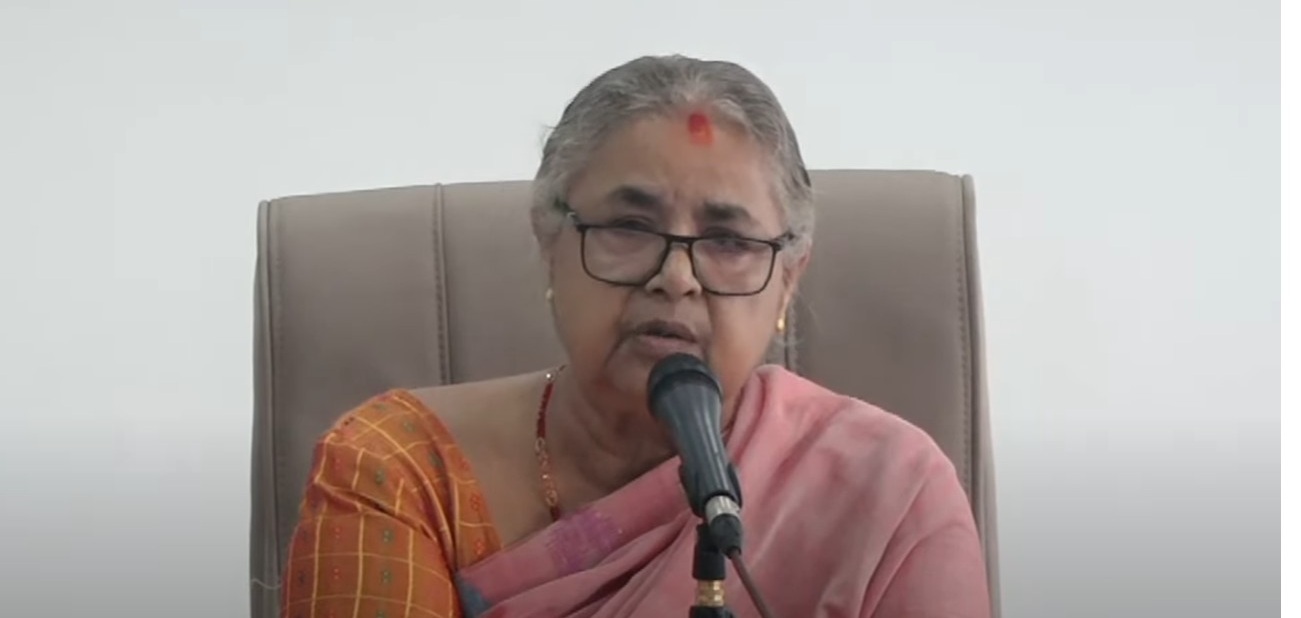
However, the same tendencies associated with Oli now appear to be resurfacing under Prime Minister Sushila Karki, who rose to power after the Gen-Z movement with promises of good governance, rule of law, constitutional integrity, an end to corruption, and a commitment to the aspirations of a new generation.
Prime Minister Karki has increasingly been seen protecting the questionable actions of her allies and close associates, while showing limited accountability to public concerns. As a result, even members of the Gen-Z movement who helped elevate her to the premiership have begun strongly criticizing her actions, style of governance, and public statements.
In recent months, several of Karki’s aides have become embroiled in controversy after controversy. Just as during Oli’s tenure, when misdeeds involving Ramesh Lekhak, Raj Kumar Gupta, Balaram Adhikari, Ram Rana Magar, and Ram Hari Khatiwada were overlooked, similar patterns are emerging again—causing growing frustration among Gen-Z supporters.
Many have warned of escalating protests from Singha Durbar to Baluwatar if such trends continue. The distance between the Prime Minister and Gen-Z forces has visibly widened.
Twenty-two Gen-Z groups have already submitted a petition to President Ram Chandra Poudel urging him to consider an alternative to the current government. Amid increasing public disappointment, critics warn that Karki’s silence on serious allegations involving her aides risks triggering renewed public anger.
Silence on the Hope Fertility Egg trade case
It has recently come to light that Attorney General Sabita Bhandari’s daughter, Pratyusha Baral, has invested in Hope Fertility and Diagnostic Clinic in Babarmahal, Kathmandu. According to a Central Investigation Bureau (CIB) investigation, the clinic has been involved in calling young women, extracting their eggs, and selling them illegally.
The government has come under sharp criticism after Attorney General Bhandari decided not to file charges in the case—despite CIB’s confirmation of illegal egg trading.
In August, it was revealed that Hope Fertility and Unjal Fertility Clinic in Maharajgunj had been collecting and selling eggs from girls under 18. Investigations showed that the girls were paid only Rs. 10,000–15,000, while clinics charged recipients between Rs. 180,000 and 2 million.
CIB detained five individuals, including clinic operators Dr. Swasti Sharma and Dr. Malini Chaudhary. Due to the absence of a clear legal framework, police pursued the case under the Children’s Act, 2075 BS.
Debate over whether to prosecute began during the Oli government. After Karki became Prime Minister following the Gen-G rebellion, the Attorney General’s Office ultimately decided not to prosecute Dr. Sharma and others involved.
This decision has drawn widespread criticism, with many accusing the Karki government of shielding serious crimes. Yet Prime Minister Karki has remained notably silent—effectively endorsing Attorney General Bhandari’s decision.
Public calls have grown on social media for Karki to remove Bhandari from office. Gen-G activists say their trust in Karki’s promise of good governance has been deeply shaken.
Husband and wife appointed to the PM’s Secretariat
During the Gen-Z rebellion, youth activists popularized the slogan “Nepo Babies,” criticizing traditional political leaders for using state institutions to benefit family members and relatives.
Contrary to that spirit, Prime Minister Karki appointed Adarsha Shrestha as her chief personal secretary with secretary-level privileges. She then appointed Shrestha’s wife to the Prime Minister’s Secretariat as a joint secretary. Adarsha, previously a staff at the Supreme Court, has now risen to a highly influential role in the Prime Minister’s Office. However, PM Karki dismissed 14 individuals, including Sangita on Wednesday evening.
Such appointments echo the practices of former prime ministers, ministers, and several current provincial leaders who faced backlash for similar nepotistic patterns. Instead, earlier, her press coordinator, Ram Bahadur Rawal, issued a statement defending the decision, claiming the Prime Minister needed someone “trustworthy, reliable, and able to work around the clock—even for security reasons.” Critics argue that this justification mirrors the same tendencies seen during KP Oli’s tenure.
Hitendra’s transfer from NEA
Soon after assuming office, the Karki-led government transferred Hitendra Dev Shakya, Managing Director of the Nepal Electricity Authority (NEA). Dissatisfied with the decision, Shakya filed a writ petition in the Supreme Court, which is currently under consideration.
Previously, the Pushpa Kamal Dahal ‘Prachanda’-led government had removed Shakya and appointed Kulman Ghising as NEA Managing Director. Later, the KP Sharma Oli-led government removed Ghising and reinstated Shakya.
Observers argue that the Karki-led administration has continued the same pattern of politically motivated reshuffles in NEA leadership. Prime Minister Karki has been criticized for turning a blind eye to the decisions involving Kulman Ghising, who now holds three ministerial portfolios.
Tax exemption for Dolma
The interim government has also been mired in controversy over an alleged illegal tax exemption, amounting to billions of rupees, granted to the Dolma Impact Fund, a foreign investment routed through Mauritius, a known tax haven.
This controversial decision, proposed by Finance Minister Rameshwor Khanal and approved by the Cabinet, came to light after then–Chief Secretary Ek Narayan Aryal refused to verify the decision and reported it. Public backlash has surged since the leak.
Another disputed decision involves granting full capital gains tax exemption to Dolma Impact and revoking Nepal’s Double Taxation Avoidance Agreement (DTA) with Mauritius. The Cabinet meeting approved the full exemption before Aryal blocked the decision. Aryal has since been replaced by Suman Raj Aryal as Chief Secretary.
Serious questions have arisen over why the Finance Ministry relied on the treaty with Mauritius to grant exemptions to Dolma, which has invested in 16 Nepali companies. After granting Dolma the tax exemption, the Cabinet moved to revoke the treaty altogether—raising further suspicion about the government’s intentions.
The Finance Ministry claims it made the decision based on the opinion of the Attorney General’s Office—an institution already under scrutiny due to its role in the illegal egg-trading scandal.
Section 73 of Nepal’s Income Tax Act 2058 clearly regulates international treaties. Subsection 5(b) states that a company registered in a treaty partner country is not eligible for tax exemptions unless at least 50 percent of its investment comes from citizens of that country. Critics argue that the exemption granted to Dolma violates this provision.
Despite some efforts, old problems persist: Trital
Former Secretary Sharada Prasad Trital remarked that although the interim government has made some positive decisions, several controversial ones reflect the old political culture.
“Some decisions show the same old trends, which should not be happening now,” Trital said. “It’s not about removing one or two employees—either everyone should be evaluated equally, or none. Selectively removing some and protecting others continues the bad practices of the past.”
He added that Nepal has reached a point where institutions act according to personal whims, and the Attorney General’s Office is no exception. “The Attorney General is traditionally a highly politicized post. It shouldn’t be about saving some and targeting others. The Office has acted controversially despite also serving as the Prime Minister’s advisor,” said Trital.
According to him, a government formed on the mandate of the Gen-G rebellion should have begun by forming a high-level commission to investigate corruption.
“Corruption control was the primary demand of the Gen-Zs. A high-level property investigation committee or judicial commission should have been formed immediately. Instead, the government is repeating exactly what it promised not to do,” he stated.
Trital acknowledged that the government handled the appointments of the Nepal Police Chief and Chief Secretary appropriately. However, he stressed the need to institutionalize clear procedures so future governments follow these standards consistently.





Comment