




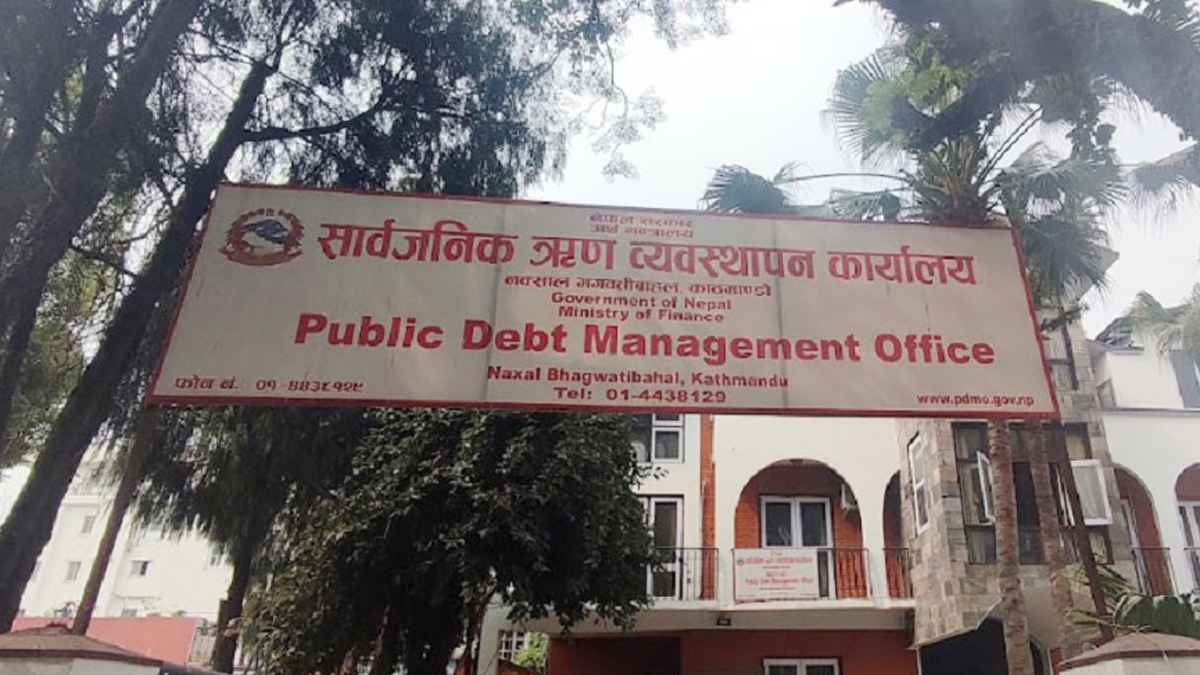
KATHMANDU: Nepal’s sovereign debt increased by more than Rs 14 billion in the first month of the current fiscal year 2025/26, according to the Public Debt Management Office.
A report on the debt status as of August 16 shows that total public debt stood at Rs 2 trillion 669.57 billion at the beginning of the fiscal year. By the end of Saun, it had risen to Rs 2 trillion 683.60 billion, an increase of Rs 14.02 billion. The debt now accounts for 43.94 percent of the country’s gross domestic product (GDP).
Of the total, foreign debt makes up 52.26 percent (Rs 1.42 trillion), while domestic debt accounts for 47.74 percent.
The government has targeted mobilizing Rs 595 billion in public debt this fiscal year. By mid-August, Rs 44.57 billion — or 7.48 percent of the annual target — had already been raised.
According to the Office, Rs 362 billion is to be raised through domestic borrowing this year. In Saun alone, Rs 40 billion, or 11.05 percent of that target, was mobilized. Similarly, out of the Rs 233.66 billion target for external loans, Rs 4.57 billion — 1.96 percent — was raised in the first month.
Meanwhile, the government has earmarked Rs 411 billion for servicing public debt this fiscal year. Of this, Rs 36.68 billion was spent on interest payments in the first month alone, the Office said.




Comment