




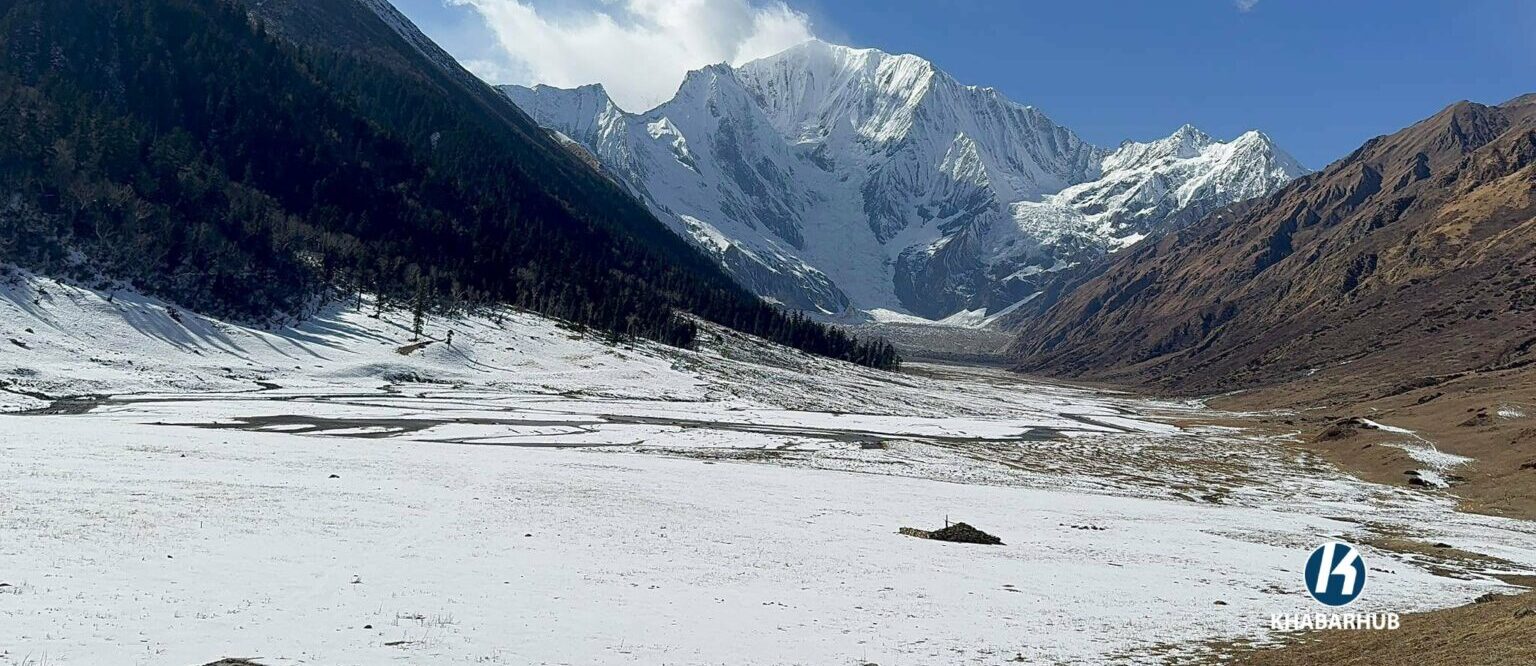
DHANGADHI: Can nature, too, be a queen? And if so, why is she called a queen? These questions may arise, stirring curiosity and wonder. But in this vast creation, nothing is impossible—Ranisain stands as a vivid testament to the boundless beauty and mystery that nature offers, mirroring both human grace and natural grandeur.
Ranisain is an embodiment of serene beauty and pristine charm—her landscape appears lovingly adorned, as if nature itself were her devoted admirer.
Draped in a veil of snow, surrounded by lush greenery, flowing waters, rolling hills, and open meadows, Ranisain feels like a royal consort to the mountains—majestic yet untouched. Her surroundings seem to have embraced and celebrated her like a palace might its queen.
Although Ranisain has only recently come into the spotlight, her allure has captivated those fortunate enough to encounter her. As King Mahendra once called Rara Lake the “nymph of heaven”, the locals affectionately refer to this hidden gem as Rani Kharka—now popularly known as Ranisain.
Located in Himali Rural Municipality–3 of Bajura district, Ranisain lies near the border with Humla and Bajhang, nestled at the eastern foothills of the Saipal Himal. Like a queen waiting for her king, Ranisain appears secluded and tranquil, yet never loses her dignified charm. She is beautiful in her silence, regal in her solitude.
Ranisain is not only awaiting development but also urgent conservation efforts. With immense potential for trekking routes, eco-trails, homestays, and eco-villages, Ranisain could become a vital hub for sustainable tourism. From here, travelers can enjoy panoramic views of the Saipal Himal and even connect to Mansarovar via Humla.
Originally known as Rani Kharka, the area served as seasonal pastureland. Locals would bring their cattle and sheep during the rainy season and live in temporary huts, or kharkas. For about half the year, Ranisain is blanketed in snow, making winter habitation difficult. But during the summer months, the region comes alive—green, fertile, and breathtaking.
Ranisain is a unique confluence of the Himalayas, hills, and plains. Although situated in a mountainous climate, its landscape stretches into flat meadows that resemble the fertile lands of the Terai.
The juxtaposition of snowy peaks, gentle slopes, and open fields creates a surreal blend of geographical diversity, as though crafted by hand with artistic precision.
Despite its unmatched natural beauty, Ranisain suffers from a lack of promotion and accessibility. It takes at least two days of trekking from Dhulachaur in Himali to reach her, making the journey challenging.
Yet those who make the effort often say, “Ranisain is waiting for her lover—come, see her charm; she waits for none but welcomes all.”
Recognizing its potential, Himali Rural Municipality has identified Ranisain as a top development priority. According to Chairperson Govinda Bahadur Malla, the municipality recently held a village assembly in the area and is lobbying for federal and provincial investment to build a connecting road. Basic amenities such as lodges and eateries for visitors are also in the planning stages.
Formerly part of the Bichhya Village Development Committee, Wards 1, 2, and 3 of Himali boast a rich variety of medicinal herbs. A road would benefit not only tourism but also support herb cultivation and trade.
Even in the absence of a motor road, Vice-Chairperson Rajkala Sarki emphasizes that improved footpaths and eco-friendly infrastructure could provide sustainable income for locals.
Situated at an altitude of 3,578 meters above sea level, Ranisain is home to diverse flora and fauna, from wild elephants and horses to goats and sheep.
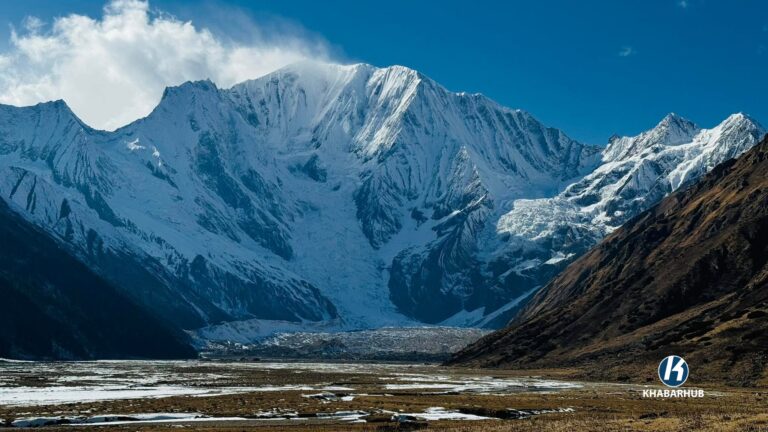
The area is adorned with majestic waterfalls cascading like the flowing locks of a celestial nymph. Snowfall at the foot of the Saipal Himal (mountain) enhances her allure, and the distant roar of avalanches echoes like a mountain’s own symphony.
Nearby fields bloom with vibrant wildflowers, and the terrain is rich in rare and valuable herbs, including Yarsagumba. The region’s biodiversity is as captivating as its scenery, offering opportunities for eco-tourism, research, and economic development.
In essence, Ranisain is not just a destination—it is a dreamland, a hidden paradise on earth. Like Badimalika and Budhinanda, she is one of Bajura’s many divine offerings. She is a natural queen, quietly waiting—for discovery, for admiration, and for a future where she shines in the world’s eyes as brightly as she does beneath the Himalayan sun.
The source of the Karnali River, also known locally as the Sanhakuwadi River, originates from the snow- and glacier-fed lakes of the Saipal Himal. Despite its breathtaking natural beauty and ecological significance, very few domestic or international tourists have explored this region.
The lack of awareness, promotion, and dedicated protection efforts has left this hidden gem in a state of neglect. Unless addressed, the area risks losing its untapped potential as one of Nepal’s most promising yet underappreciated natural treasures.
Ranisain is not only awaiting development but also urgent conservation efforts. With immense potential for trekking routes, eco-trails, homestays, and eco-villages, Ranisain could become a vital hub for sustainable tourism. From here, travelers can enjoy panoramic views of the Saipal Himal and even connect to Mansarovar via Humla.
For international visitors, the shortest and most convenient route is by air—from Nepalgunj to Bajura Airport. Overland travelers can reach Himali Rural Municipality from Surkhet via the Karnali Corridor in approximately a day and a half.
Alternatively, those flying can take a connecting flight from Nepalgunj to Kolti Airport, followed by a one-hour jeep ride to the rural municipality center.
From there, Ranisain is a 1.5-day trek via villages such as Jivana, Boudi, Gumba, Chiachaur, and Lampata. Due to the lack of direct road access, even many locals have yet to visit.
However, public transport can reach the Himali Rural Municipality center and Jeewana village in Humla, from where trekkers can proceed on foot. Along the way, temporary accommodation and food can be found in seasonal shepherd settlements, though visitors must carry some basic supplies and be prepared to hike.
Locals explain that the Kawadi River, which flows from the district’s border, originates from the glacial lake in Ranisain and eventually feeds into the Karnali River system. Despite changes in government and shifting political priorities, Ranisain remains overlooked.
The lack of awareness, promotion, and dedicated protection efforts has left this hidden gem in a state of neglect. Unless addressed, the area risks losing its untapped potential as one of Nepal’s most promising yet underappreciated natural treasures.





Comment