




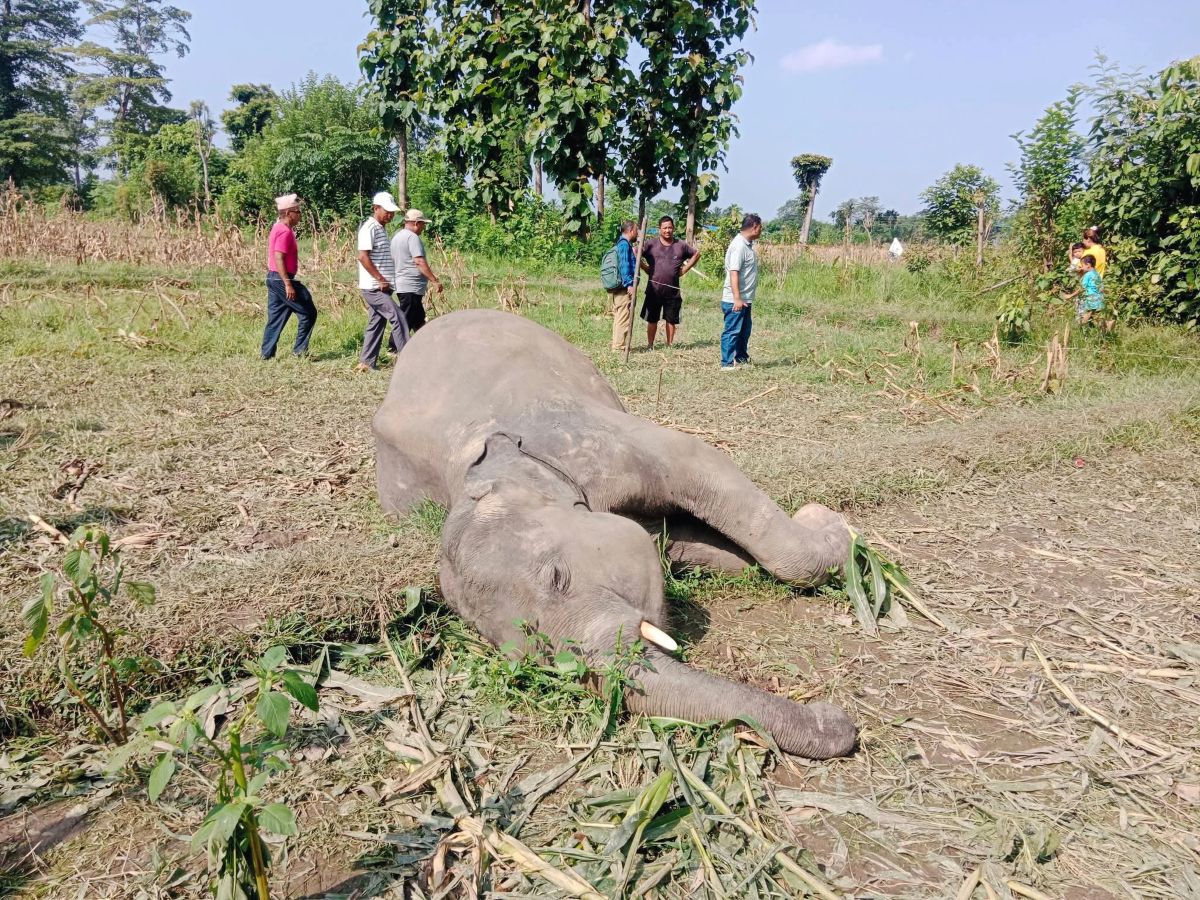
JHAPA: Over the past 15 years, human-elephant conflict in Jhapa district has claimed the lives of 72 people, including seven foreign nationals since 2067 BS.
During the same period, 92 people have been injured in elephant attacks, according to Dr. Suman Bhal of the Division Forest Office, Jhapa.
In the current fiscal year alone (from Shrawan 2081 BS), five people have died and six others have been injured. On average, five people die annually due to elephant encounters in the district.
To mitigate the conflict, various measures have been implemented—including electric fencing, construction of biological corridors, creation of forest ponds, planting of fruit trees, and increased patrolling. However, experts argue that these efforts are not enough.
“Fencing alone is not sufficient to stop elephants,” said Dr. Lilanath Sharma of Forest Action Nepal. “We need ecological improvements inside the forests. Creating elephant-friendly habitats and biological routes can significantly reduce conflict.”
Dr. Sharma emphasized that elephants often leave forests in search of food, and forest encroachment, coupled with expanding human settlements near forested areas, exacerbates the problem.
Dr. Bhal added that elephants are particularly drawn to corn, leading to increased cross-border movement from India during the corn-growing season.
25 elephant deaths recorded
Since 2062 BS, 25 elephants have died in Jhapa, with the number of deaths rising in recent years. In the past, one or two elephants died annually. However, four elephants were found dead between Shrawan 2080 and Asar 2081 BS, and another four have died so far this fiscal year, according to the Division Forest Office.
Rs 95 million in relief distributed
The government has disbursed Rs 96.8 million in relief to victims of elephant-related incidents from fiscal year 2068/69 BS to the present. Families of those killed receive Rs 1 million each, while injured individuals are eligible for up to Rs 200,000. Additional compensation is provided for loss of livestock, crops, and property.
Despite these efforts, 525 wildlife conflict victims in the district are still awaiting relief, Dr. Bhal confirmed.



Comment