




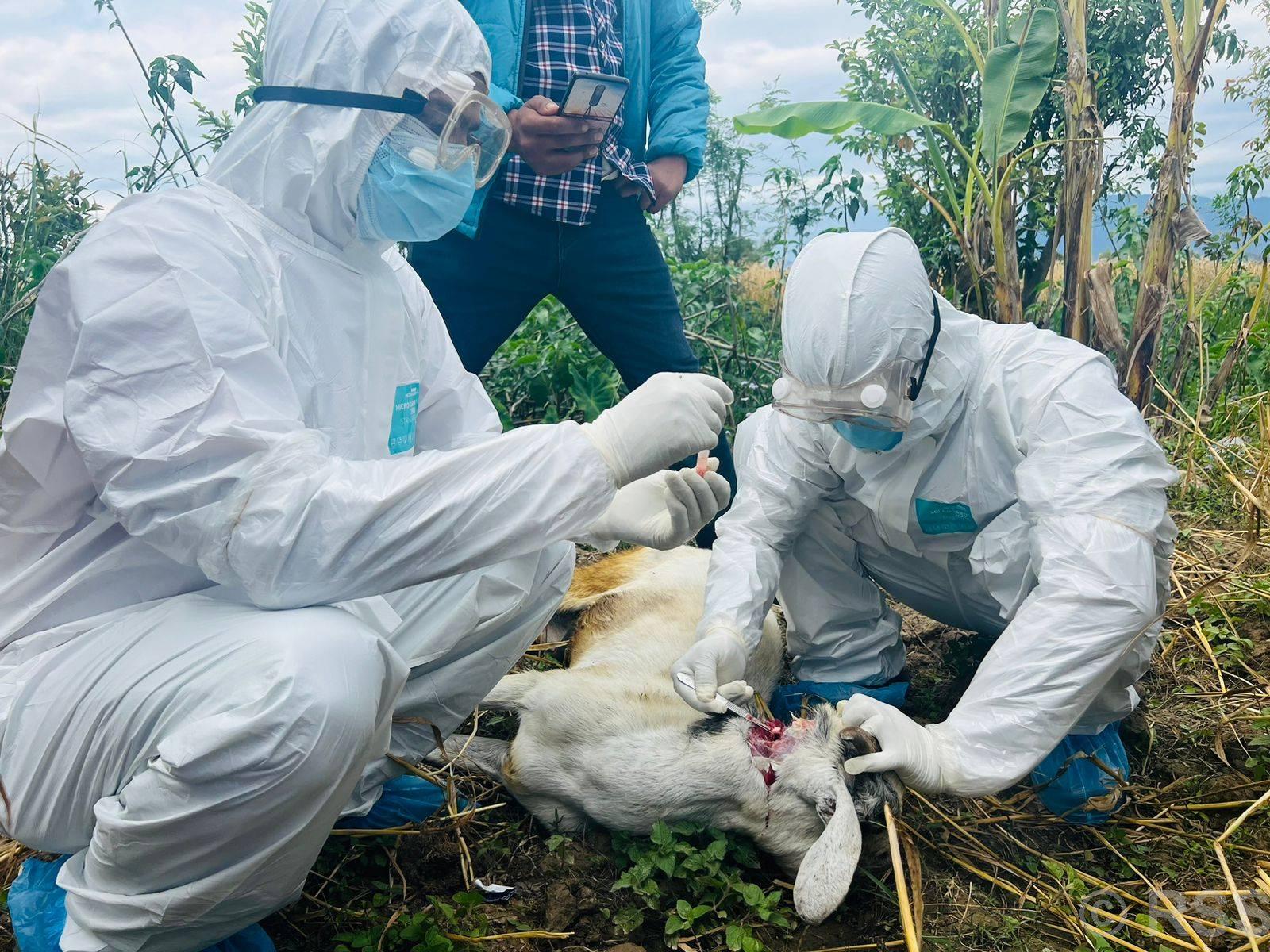
KANCHANPUR: Rabies infections are on the rise in Nepal’s Sudurpaschim Province, creating a significant challenge for disease control.
According to Naresh Prasad Joshi, Senior Veterinarian at the Animal and Poultry Disease Research Laboratory in Dhangadhi, rabies was confirmed in 136 out of 170 samples collected during the fiscal year 2024/25.
The highest number of cases was recorded in Kailali, where 78 out of 98 samples tested positive. Kanchanpur followed, with 43 out of 53 samples confirmed positive. Other districts reporting positive cases include Achham (5 out of 7), Bajhang (3), and Doti (6 out of 8).
Dr. Joshi noted that dogs are the primary transmitters of rabies in the region. Of 87 dog samples tested, 72 were positive. In addition, rabies was confirmed in 22 out of 32 buffaloes, 23 out of 26 cows, 8 out of 11 goats, 2 horses, 5 out of 7 pigs, and 1 rabbit.
“Rabies is a zoonotic disease, transmitted from animals to humans,” said Dr. Joshi. “It spreads from wild animals like jackals, wolves, and foxes to domestic dogs, cats, and livestock. Infected animals transmit the virus to humans and other animals through bites.”
According to the World Health Organization (WHO), rabies causes around 59,000 deaths worldwide annually, with 95 percent of fatalities occurring in Asia and Africa. The WHO has set a global goal to eliminate dog-mediated rabies deaths by 2030.
In Nepal, an estimated 15 to 36 people die each year from rabies, out of approximately 100,000 animal bite cases reported annually. The WHO estimates there are about 2.9 million dogs in the country.
“Once symptoms of rabies appear, there is no cure — death is inevitable,” said Dr. Joshi. “That’s why prevention is key. If bitten by a suspected rabid animal, the wound must be cleaned thoroughly with soap and water, and an anti-rabies vaccine should be administered immediately.”
Symptoms of rabies include difficulty drinking water, fear of water (hydrophobia), memory loss, and fever. The incubation period varies depending on the amount of virus that enters the body, Dr. Joshi added.
“Rabies has been controlled in some developed countries and is in a transitional phase in others,” he said. “But in Nepal, rabies remains a serious public health challenge.”
He emphasized that vaccinating community dogs is essential for controlling the disease. In line with this, the Animal and Poultry Disease Research Laboratory in Dhangadhi conducted a rabies vaccination campaign for community dogs to mark World Rabies Day 2025.






Comment