




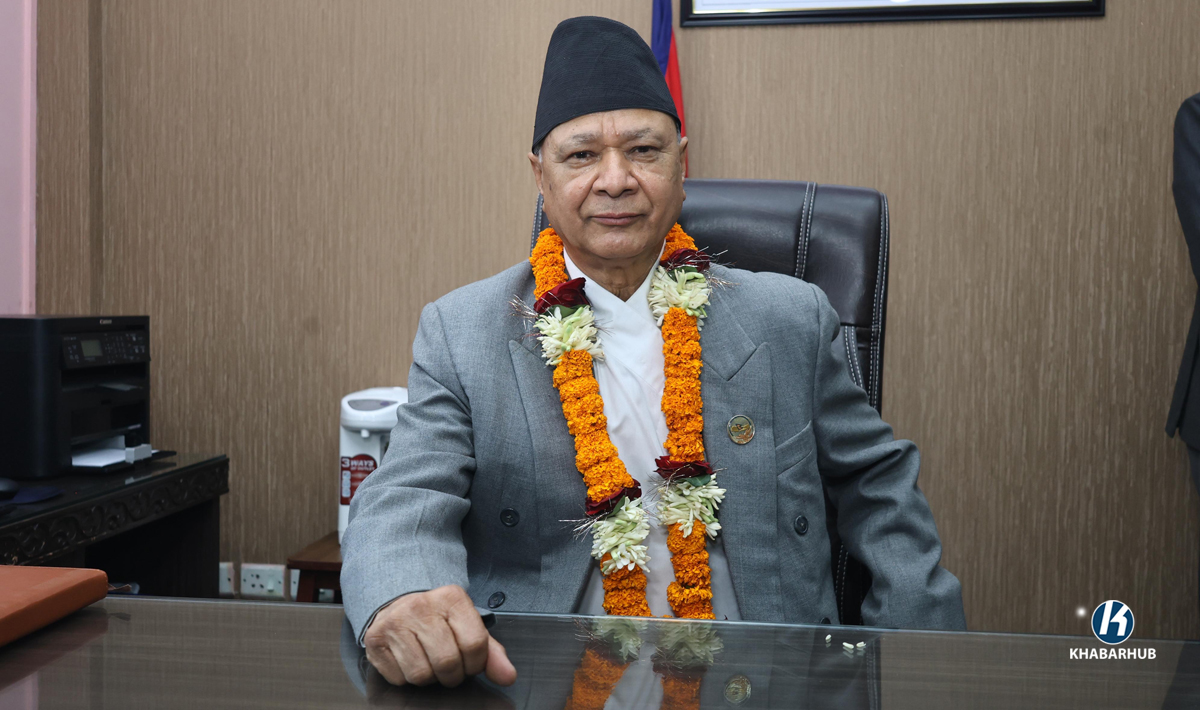
KATHMANDU: Reform initiatives in Nepal’s education sector spearheaded by former Minister of Education Bidhya Bhattarai have come to a halt after her resignation and the appointment of Raghuji Pant as her successor, according to ministry insiders and observers.
Bhattarai resigned on Baisakh 8, citing health reasons publicly. However, subsequent interviews and statements suggest she was under intense pressure from internal party factions and vested interest groups for resisting politically motivated interference, particularly around reforms aimed at regulating private and foreign-affiliated educational institutions.
Among her key priorities were the implementation of the Compulsory and Free Education Act, 2075; regulating educational consultancies; and transforming private schools into service-oriented institutions.
Her firm stance reportedly triggered strong resistance from within the government, including from Prime Minister KP Sharma Oli’s camp and powerful education lobbies.
Just two days after her resignation, Prime Minister Oli appointed UML leader Raghuji Pant as education minister.
Since then, reform efforts appear to have stalled. Ministry sources confirmed that Pant, now two months into the role, has not advanced any of the reform processes initiated by Bhattarai.
A key example is the Ashwin 2081 report prepared by a committee led by Tribhuvan University professor Dr. Binil Aryal, which recommended revising the outdated 2059 directive on foreign university affiliations.
The report highlighted that many colleges operating under foreign affiliations in Nepal do not meet regulatory standards and often duplicate programs already offered by Nepali universities.
Bhattarai had begun acting on the report, but that process has reportedly been shelved under the new minister.
Similarly, Bhattarai had initiated steps to regulate the education consultancy sector. During her tenure, 927 consultancies were renewed.
However, no follow-up action has been taken to regulate those outside the system since her departure, according to ministry spokesperson Shiv Kumar Sapkota.
Despite an increased education budget in the new fiscal year 2082/83, analysts say it will fall short of meeting the commitments made to teachers’ associations, and fails to reflect the structural reforms Bhattarai had advocated.
While Minister Pant has spoken about regulating private schools, he has yet to take concrete policy steps or publicly promote service orientation for such institutions.
In parliament, Pant stated his approach is not to restrict private education but to regulate it. He emphasized government investment should prioritize public and community schools and that private schools willing to operate as trusts should be encouraged with appropriate incentives.
However, critics say his approach lacks the urgency and clarity required to address deep-rooted issues in Nepal’s education system.




Comment