




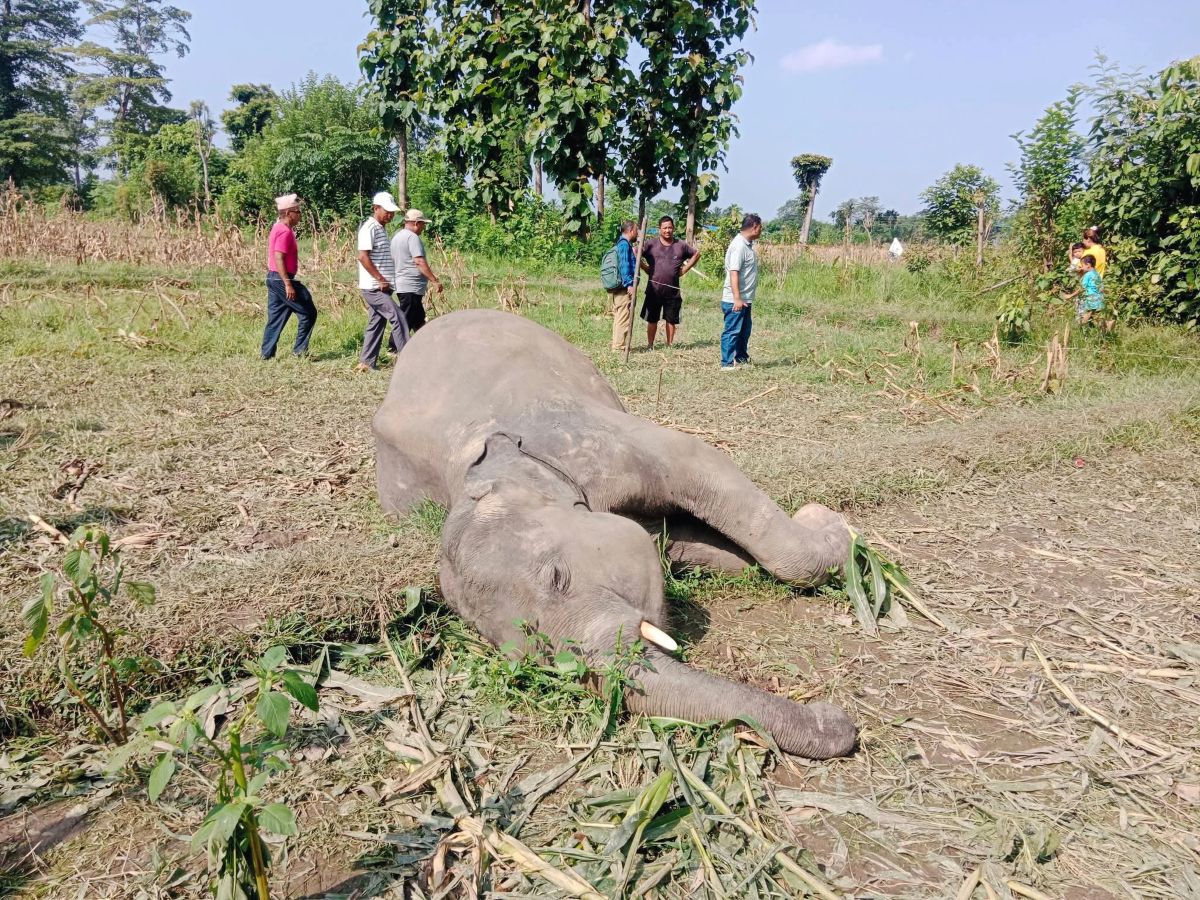
KATHMANDU: The Ministry of Forests and Environment is set to implement an immediate and effective project aimed at mitigating the growing human–elephant conflict in Nepal’s eastern Tarai region.
The initiative comes amid a rising number of human and agricultural casualties caused by wild elephants.
To develop a collective approach, the ministry on Wednesday held a stakeholder consultation meeting with development partners to gather feedback. The project will be launched with the support and coordination of partner organizations, incorporating modern technologies and local participation.
Forest Minister Ain Bahadur Shahi Thakuri highlighted the urgent need to address the issue, citing the increasing damage caused by elephants to lives, livestock, crops, and homes.
“We will move forward with short- and long-term plans to reduce human–elephant conflict and simplify the relief process for victims,” he said.
Since the year 2000, 345 people have died in Nepal due to elephant attacks, while 55 elephants have been killed due to human retaliation or electrocution. Additionally, annual losses of crops, livestock, and property due to elephant incursions are reported to be significant.
Minister of State for Forests Rupa BK pointed out that poor communities are disproportionately affected and stressed that this issue should not remain the concern of the Forest Ministry alone but also involve all levels of government and related ministries.
Ministry Joint Secretary Buddhisagar Paudel described the escalating conflict as alarming and advocated for public education, awareness, and promotion of alternative farming practices in high-risk areas. He also mentioned efforts to simplify relief distribution guidelines to reduce the desire for retaliation among affected communities.
According to recent data, Nepal is home to 230 wild elephants and around 180 domesticated elephants. Dr. Narendra Man Babu Pradhan, IUCN Nepal’s Country Representative, argued that up to 70% of human casualties could be prevented through community behavior change and awareness.
Dr. Ghanashyam Gurung, Country Representative of WWF Nepal, raised concerns about elephants crossing into Nepal from India, causing additional damage, and urged cross-border coordination to manage the issue.
Similarly, Dr. Naresh Subedi, Member-Secretary of the National Trust for Nature Conservation (NTNC), highlighted that electric fencing technology has proven effective in recent years. He also recommended improved logistics and resources for field staff to respond efficiently to conflict incidents.
So far, the Ministry has undertaken several interventions to reduce human–elephant conflict, including relocating problematic elephants, providing rescue and treatment services, distributing relief, raising awareness, installing electric fences, supporting alternative agriculture, and offering scholarships and employment to families of deceased victims.






Comment