




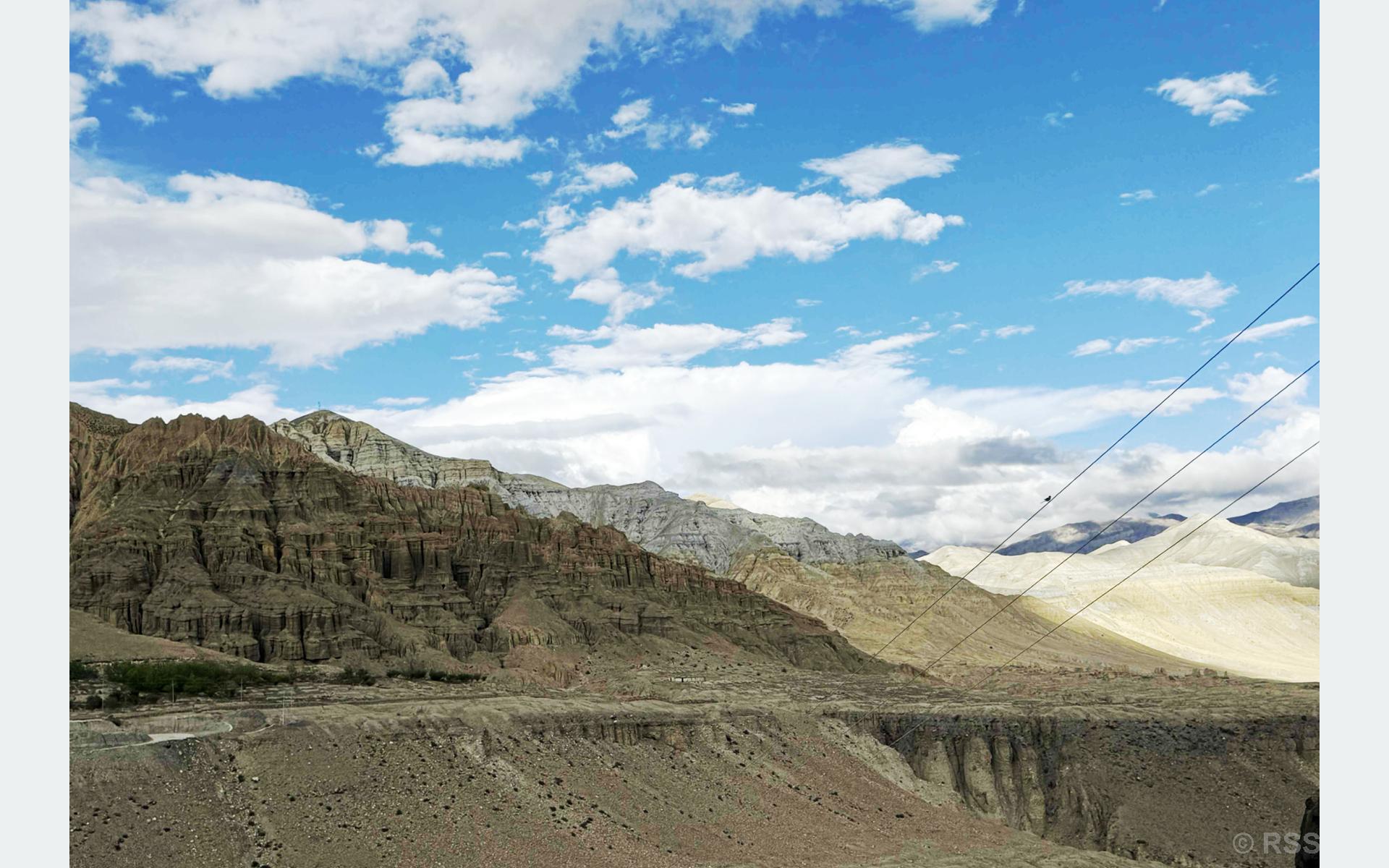
MUSTANG: The long-standing dispute over who holds the authority to collect utility tax from the excavation, sale, and transportation of river-based natural materials from the Kaligandaki River in Mustang has been resolved.
The Conservation Management Committee (CMC) under the Annapurna Conservation Area Project (ACAP) has officially started collecting utility tax for the excavation of river-based resources such as sand, gravel, and stone.
According to Rajesh Gupta, Chief of the ACAP Jomsom Office, excavation activities are being permitted strictly for internal use and must adhere to minimum environmental standards recommended by the ACAP head office.
Previously, the Supreme Court (SC) had issued an interim order in July 2021, banning the excavation of natural resources from the Kaligandaki River. The court’s ruling prohibited any activities that would obstruct the river’s natural flow, cause pollution, or involve the extraction of stone, sand, and gravel.
However, on November 4, 2024, the SC dismissed the writ and issued a directive order, effectively lifting the ban. In a related case, the Kaski District Court also revoked a writ petition filed by the CMC of Machhapuchhre Rural Municipality Wards 8 and 9 on December 15, 2020, reinforcing the requirement to follow existing federal laws for excavation in protected areas like ACAP.
Local officials warn that the lack of regulated excavation in the Mustang region has contributed to increasing natural disasters along the Kaligandaki River. Thirteen rural municipalities in Mustang are currently at high risk of land erosion, exacerbated by the rising water levels of the river.



Comment