




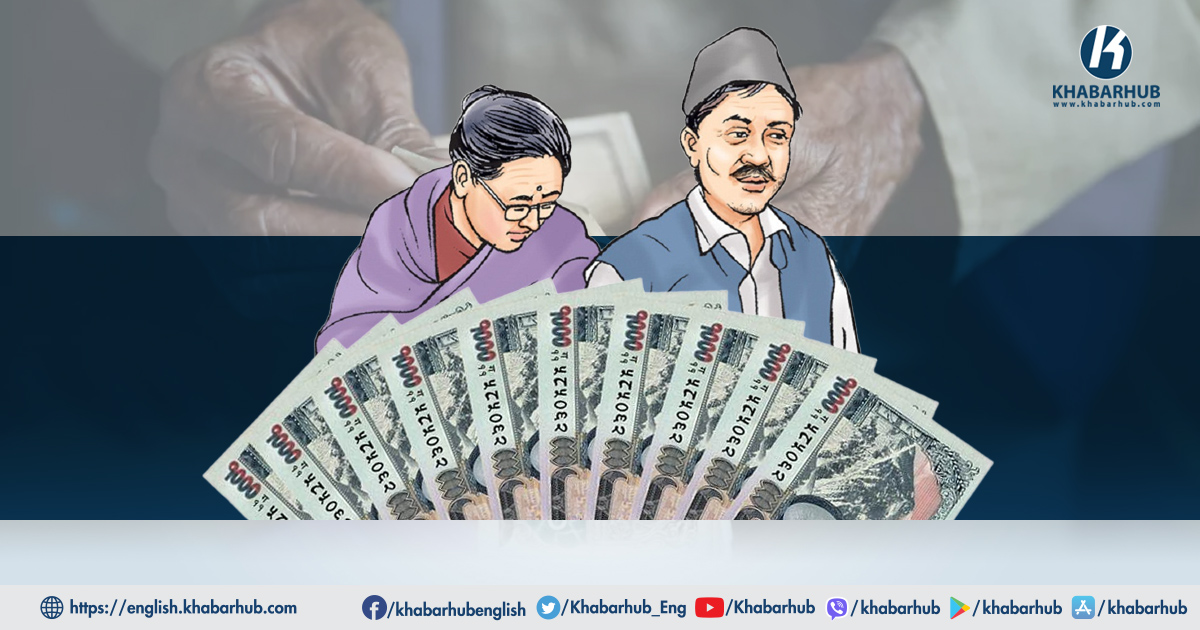
KATHMANDU: The government is preparing to roll back the eligibility age for senior citizen allowances from 68 to 70 years, just two years after it was lowered.
The proposed change is part of the Economic Reform Implementation Plan 2052, based on recommendations from the High-Level Economic Reform Suggestion Commission 2024, led by former Finance Secretary Rameshore Khanal.
The commission had warned of rapidly increasing social security spending under current recurrent expenditures and recommended raising the age threshold to curb unsustainable fiscal burdens.
Following this advice, the government has signaled its intention to implement the new age criterion in the upcoming fiscal year and complete full enforcement within one year.
Nepal’s Constitution recognizes the right to social security as a fundamental right. Article 41 ensures special protection and social security for senior citizens, while Article 43 guarantees the same for economically deprived and vulnerable groups. However, experts argue that these rights must be balanced against economic sustainability and targeted execution.
The senior citizen allowance has been a major component of Nepal’s social security scheme since its inception. In the last fiscal year alone, the government spent over Rs 108 billion on social security allowances, including senior citizen benefits.
Economist Dilliram Khanal criticized the government’s failure to target the truly needy, saying the allowance has been distributed broadly, often overlapping recipients under different categories. “Many beneficiaries receive duplicate benefits,” he said. “Given Nepal’s looming fiscal crisis, the government has no choice but to cut costs.”
He added that the country must shift to a needs-based model, similar to post-Covid Western nations that provide welfare only to citizens below a certain income threshold. “Even billionaires in Nepal are accepting allowances,” he remarked, calling for political courage to enforce targeted distribution.
In parallel, the Ministry of Land Management, Cooperatives, and Poverty Alleviation has nearly completed the long-running Poverty Identification Program. According to division head Pushpa Raj Joshi, data collection has been finalized across all 77 districts, with final verifications underway in select municipalities.
The ministry is also developing a software system to integrate and regularly update this data at the municipal level. Once completed, this poverty database will be linked with the National ID system, enabling the government to deliver more targeted social security benefits based on economic status rather than age or caste alone.
Despite these technical advancements, analysts caution that Nepal’s social security system remains heavily influenced by political motives rather than evidence-based policymaking. “The focus remains on age and caste instead of economic vulnerability,” noted one analyst. “This undermines the effectiveness and sustainability of social protection programs.”
As the government moves to finalize its budget for the upcoming fiscal year, the reversion to a 70-year age threshold for senior citizen allowances is likely to spark debate over social justice, fiscal responsibility, and the long-term future of Nepal’s welfare state.






Comment