





KATHMANDU: Economic Digest offers a concise yet comprehensive overview of significant business happenings in Nepal, presented in easily digestible summaries.
Nepal’s recent economic and social developments reflect a mixed landscape of regulatory tightening, innovation, and shifting regional dynamics. The Nepal Rastra Bank has intensified liquidity absorption as weak credit demand leaves excess cash in the system, while cross-border QR transactions exceeding Rs 400 million monthly signal growing digital adoption.
The registration of over 400 labor supply firms points to stronger regulatory enforcement, and the listing of Nepali AI firm Fusemachines on NASDAQ highlights the country’s expanding global tech footprint. Meanwhile, rising imports through Kakarbhitta underscore persistent trade imbalances, even as agricultural districts like Parbat progress toward self-sufficiency.
Infrastructure efforts such as the Humla Karnali II hydropower project and Koshi Province’s tourism drive indicate regional economic aspirations, while initiatives like vermicompost production and zero-tillage farming show grassroots innovation. Internationally, Saudi Arabia’s abolition of the Kafala system promises relief for Nepali migrant workers, and leadership changes at Nepal Telecom and NRB reflect ongoing institutional restructuring.
Over 400 labor supply companies registered in Nepal
The number of registered labor supply companies in Nepal has now surpassed 400. According to the Department of Labor and Occupational Safety, a total of 437 companies were registered to operate as labor suppliers in fiscal years 2024/25 and 2025/26, including new and renewed licenses. Most of these firms are involved in providing security services. The government has cautioned against unregistered operations and urged clients not to hire through unlicensed agencies. Authorities say the stricter registration process has contributed to the rise in official registrations.
Nepali AI firm Fusemachines debuts on NASDAQ
Fusemachines, an artificial intelligence (AI) company founded by Nepali entrepreneur Dr. Sameer Maskey, has officially been listed on the U.S. stock exchange NASDAQ. Its shares began trading under the ticker symbol “FUSE” on Thursday. With this listing, Fusemachines becomes the first company of Nepali origin to be traded on NASDAQ. The company described the achievement as a major step toward its mission of “democratizing AI for all.”
NRB absorbs excess liquidity as loan demand remains weak
The Nepal Rastra Bank (NRB) has ramped up its liquidity absorption operations after credit demand failed to recover, putting pressure on its monetary management efforts. Despite a steady decline in interest rates, banks and financial institutions have not witnessed an uptick in new lending. As a result, excess liquidity has accumulated in the banking system, prompting the central bank to withdraw funds to ensure monetary stability.
Cross-border QR payments exceed Rs 400 million a month
One year after the launch of cross-border QR payments, Nepal now records more than Rs 400 million in digital transactions each month. The Nepal Rastra Bank has so far enabled only the acquiring side of the system — allowing foreign visitors to make QR payments in Nepal.
According to NRB data, foreigners use QR codes to make payments worth over Rs 400 million monthly. However, Nepalis are still unable to make QR payments abroad, as the outbound payment system has not yet been launched.
Saudi Arabia ends Kafala system, aiding Nepali migrant workers
Saudi Arabia has officially abolished its 70-year-old Kafala (sponsorship) system, benefiting more than 13 million foreign workers. Under the new rules, workers can now change jobs or leave the country without requiring their employer’s consent and have greater access to legal protections. The Kafala system had faced widespread criticism for enabling forced labor and human rights abuses. The reform will benefit workers from Nepal, India, Bangladesh, and the Philippines, among others.
Imports through Kakarbhitta rise, exports decline
During the first three months of the fiscal year 2025/26, goods worth Rs 12.28 billion were imported through the eastern customs point at Kakarbhitta — a 13.31% increase (Rs 1.44 billion) compared to the same period last year. According to Mechi Customs Office information officer Ishwar Kumar Humagain, imports in the corresponding period of the previous fiscal year totaled Rs 10.84 billion. However, exports through Kakarbhitta have dropped this year, indicating a widening trade imbalance.
Tanka Prasad Pandey appointed director of Nepal Telecom
The government has appointed Joint Secretary at the Ministry of Finance, Tanka Prasad Pandey, as a director of Nepal Telecom, replacing Yagya Prasad Bhattarai. According to a letter issued by the Financial Sector Management and Institutional Coordination Division on October 9, Pandeya took his oath of secrecy and integrity on October 15 before assuming office.
NRB executive director Dr. Gunakar Bhatta retires compulsorily
Nepal Rastra Bank’s Executive Director, Dr. Gunakar Bhatta, has gone into compulsory retirement starting Thursday. As per NRB employee regulations, an executive director must retire after completing seven years in the post. The rules also mandate retirement after 30 years of total service, upon reaching the age of 58, or after serving 12 years as a senior director and seven years as an executive director.
Work progresses on Humla Karnali II hydropower project (335 MW)
The process for constructing the 335-megawatt Humla Karnali II Hydropower Project has moved forward in Humla district, one of Nepal’s least-developed regions. The Environmental Impact Assessment (EIA) is currently underway, following recommendations from the Ministry of Energy, Water Resources, and Irrigation. The Ministry of Forests and Environment has also advanced the EIA process. The project, to be developed by Ruru Hydropower Company, spans Kharpunath and Sarkegad rural municipalities in Humla.
Koshi Province marks Tourism Year 2025 with goal of 1.5 million visitors
Koshi Province is observing Tourism Year 2025 to boost regional tourism and attract 1.5 million visitors from India and beyond. Six months into the campaign, officials note that while promotional activities were robust during the first quarter of the fiscal year, the pace of events has slowed in recent months. The provincial government plans to reinvigorate tourism promotion ahead of the peak season.
Parbat earns over Rs 653 million from agriculture trade
Parbat district has generated more than Rs 653 million from the sale of six major crops in fiscal year 2024/25, marking steady progress toward agricultural self-sufficiency. The district’s farmers earned this income from potatoes, paddy, cardamom, vegetables, maize, and citrus fruits — with potatoes and oranges contributing the most to the total trade volume.
Pauwadung Rural Municipality launches vermicompost initiative
Pauwadung Rural Municipality in Bhojpur has started producing vermicompost to promote organic agriculture and reduce dependence on chemical fertilizers. The initiative, implemented under the “Vice-Chairperson Self-Reliance Program” through the Women Development Board, aims to empower local women economically. Vice-Chairperson Jyotsna Rai said that 19 women’s groups from all six wards have begun vermicompost production with technical and financial assistance from the municipality.
Shuklaphanta farmers adopt zero-tillage for garlic cultivation
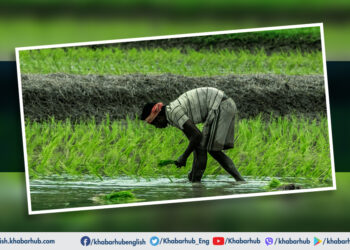
Farmers in Shuklaphanta Municipality-3, Pipaladi, are cultivating garlic using zero-tillage methods after harvesting paddy. Instead of plowing, they directly plant garlic bulbs into paddy stubble with spades — a technique introduced by agricultural technicians a decade ago.
Local farmers report that this method yields larger bulbs and higher production compared to traditional plowing.
Upendra Mahato, Laxmi Group exit Machhapuchhre Bank’s founding ownership
Non-Resident Nepali Association (NRNA) founding president Dr. Upendra Mahato and the Laxmi Group have officially withdrawn from Machhapuchhre Bank’s founding shareholding. Dr. Mahato sold his shares in fiscal year 2023/24 to repay a Himalayan Bank loan taken for Mediciti Hospital. After completing a one-year regulatory restriction following his resignation from the board, Mahato transferred his remaining shares to his brothers, Birendra and Surendra Mahato, finalizing his exit from the bank.



Comment