




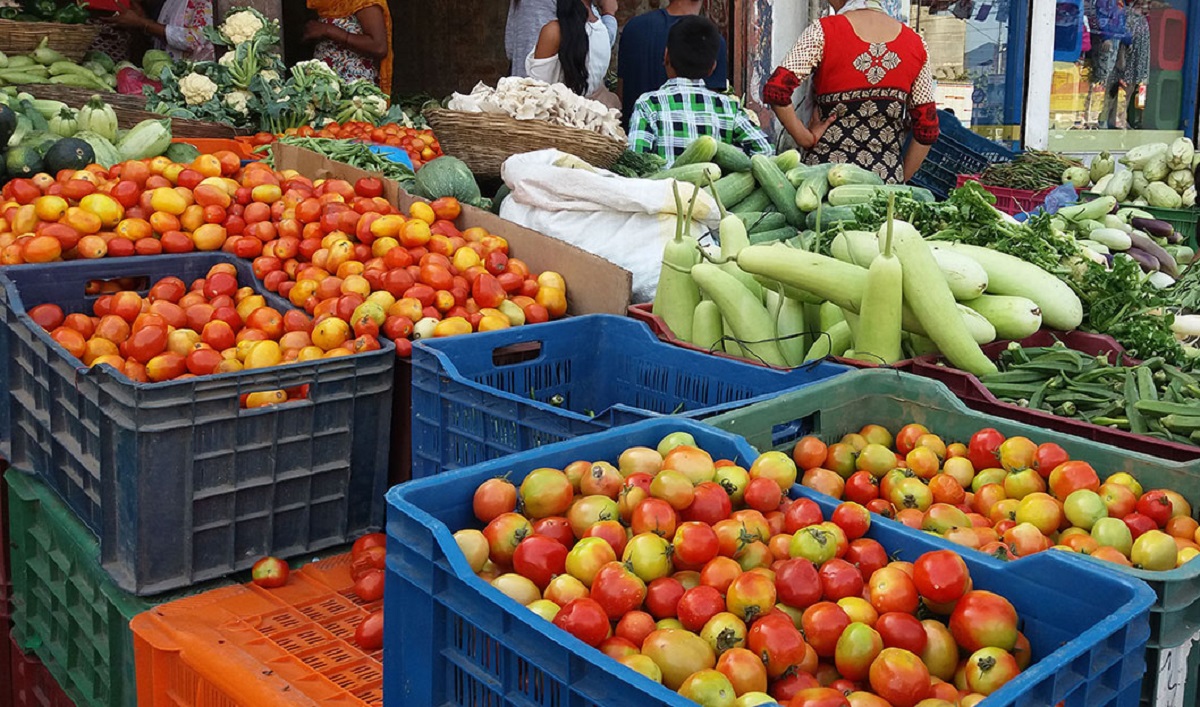
DHARAN: A pesticide residue testing lab set up in Dharan to ensure safer vegetables and fruits for consumers has triggered unintended consequences as farmers and traders are avoiding the city’s main wholesale market, leading to a sharp decline in transactions.
Seven months ago, the Rapid Pesticide Residue Analysis Laboratory Unit was established under the Central Agricultural Laboratory in Dharan with the goal of promoting pesticide-free or low-residue produce. However, the mandatory testing of vegetables and fruits has left farmers and traders from the eastern hills and Tarai regions alarmed.
Dharan’s agricultural wholesale market, which has been recognized nationally eight times in a row for excellence and generates annual transactions exceeding Rs 6 billion, has already seen business shrink by around 25 percent since stricter testing began.
Market manager Laxman Bhattarai confirmed the trend, saying: “The number of farmers and traders bringing produce to the Dharan market has been steadily declining ever since pesticide testing became mandatory. Many now take their produce elsewhere, where such monitoring is absent.”
The Dharan market not only serves local consumers but also exports ginger, broom grass, bay leaf, madder, soapnut, cabbage, and cardamom to India and Bangladesh. With pesticide checks intensifying, this export trade, which accounts for about 20 percent of total transactions, is also under pressure.
Farmers admit they often rely on excessive pesticide use to boost yields. But instead of reducing unsafe practices, many are now bypassing the Dharan wholesale market altogether, raising concerns that unsafe produce is still reaching households through unregulated channels.
It’s toxic
Since its establishment, the lab has tested over 2,000 samples, many showing pesticide residues above safe limits.
In one alarming case this May, 2,442 kg of cauliflower brought from Palung, Makwanpur, was found to have 97.4 percent pesticide residue, more than double the permitted level, and was immediately destroyed.
Similarly, in late August, green mustard leaves from Dhankuta’s Dandabazar tested positive for 61.9 percent organophosphate residues, well above the allowable threshold, and were declared unfit for consumption.
Lab technician Rupesh Rijal explained that vegetables containing 35–45 percent pesticide residues are quarantined for a few days before being released to the market, while those exceeding 45 percent are destroyed outright.
Alarmingly, even fruits like pears and oranges, often assumed to be pesticide-free, have tested positive. Last year, tests at the Paripatle Orange Research Center in Dhankuta found residues of 22 percent in oranges and up to 15 percent in pears and chayote.
Debate over implementation
The strict enforcement has sparked heated discussions among stakeholders. While consumer safety advocates welcome the checks, farmers and traders argue they are bearing the brunt.
During a recent multi-stakeholder meeting in Dharan, representatives from farmers’ groups, traders, local government, and police debated how to make testing more effective and less disruptive. Critics noted that while the Dharan-13 wholesale market has been subjected to mandatory testing, other vegetable markets in Dharan-2 and Dharan-3 remain outside the system, undermining its credibility.
Officials admitted that pesticide testing has so far been inconsistently implemented despite government pledges to make it mandatory nationwide. Dharan Deputy Mayor Indra Bikram Beg urged coordination with other municipalities, while officials suggested branding “pesticide-tested organic vegetables” as a way to encourage compliance and win consumer trust.
Bhattarai, however, warned that unless awareness campaigns reach farmers directly, unsafe produce will continue to enter kitchens through unchecked channels.
“The irony is that we destroy pesticide-laden vegetables in Dharan, but the same unsafe produce ends up in other markets and still reaches consumers,” he said.






Comment