




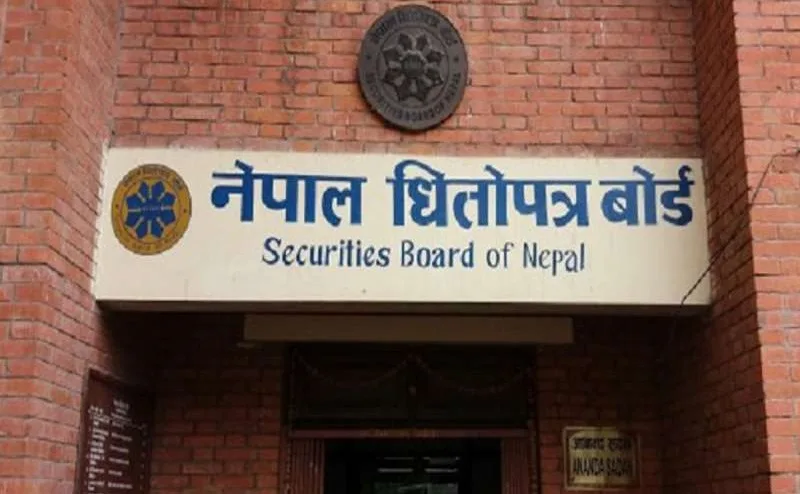
KATHMANDU: The Securities Board of Nepal (SEBON) has announced an ambitious policy and program package for the fiscal year 2025/26, aimed at the reform, development, and expansion of the securities and commodity exchange markets.
SEBON unveiled a comprehensive plan under seven major policy headings, comprising 88 specific programs. The announcement has drawn attention from both short-term investors in the stock market and long-term stakeholders interested in Nepal’s emerging commodity exchange market.
The board has laid out a vision to align Nepal’s capital market with international standards, enhance investor protection, increase transparency, and introduce new financial instruments. It also emphasizes the use of information technology to modernize the market and improve financial literacy among investors.
A key focus is the reform of existing laws to bring them in line with global best practices. SEBON aims to amend the Securities Act 2006, the Commodity Exchange Market Act 2017, and other relevant regulations such as the Mutual Fund Regulations 2010, Specialized Investment Fund Regulations 2019, and Securities Listing Directives.
These changes are intended to simplify processes, reduce issuance costs for shares and bonds, and facilitate capital mobilization for private-sector production-based companies.
The board also plans to amend the Credit Rating Regulations 2011 and introduce new legal provisions to govern commodity trading, clearing and settlement, warehousing, and market supervision. Additionally, measures are being taken to allow Non-Resident Nepalis to participate in securities trading more easily.
SEBON is putting institutional strengthening and capacity-building at the core of its strategy. It plans to improve the regulatory framework and restructure institutions such as the Nepal Stock Exchange (NEPSE) and CDS and Clearing Limited. A four-year strategic plan (2025/26–2028/29) will be implemented to guide these developments.
The board is committed to effective regulation and surveillance to detect and penalize illegal market activities. Real-time monitoring of daily transactions, company performance, and trading patterns will be introduced. It also plans on-site inspection of at least 15 percent of brokerages, merchant bankers, credit rating agencies, and fund managers.
In terms of market expansion, SEBON aims to facilitate secondary market trading of government bonds and diversify available financial instruments. It also plans to review margin lending policies and introduce regulatory frameworks for intra-day trading and securities lending and borrowing.
Investor protection remains a priority, with initiatives to reduce systemic risk, enforce risk-based supervision, and ensure proper execution of investor orders by brokers. The Investor Protection Fund will also be strengthened.
To keep pace with global trends, SEBON is modernizing its IT infrastructure. Efforts will be made to enhance cybersecurity and ensure the secure, efficient use of technology in the market. The board’s website will be upgraded to be more user-friendly and informative.
SEBON will also continue promoting financial literacy and investor awareness across Nepal through education campaigns, research, and collaboration with universities, international regulators, and industry experts. Events like World Investor Week and Global Money Week will include seminars, training, quizzes, and essay competitions targeting investors, students, and the general public.
The board has reaffirmed its commitment to maintaining regular services, including licensing, registration, and renewal of market participants such as brokers, depository participants, merchant bankers, credit rating agencies, and institutional investors, as mandated by law.
With this wide-ranging agenda, SEBON hopes to build a robust, transparent, and investor-friendly capital and commodity market in Nepal.






Comment