




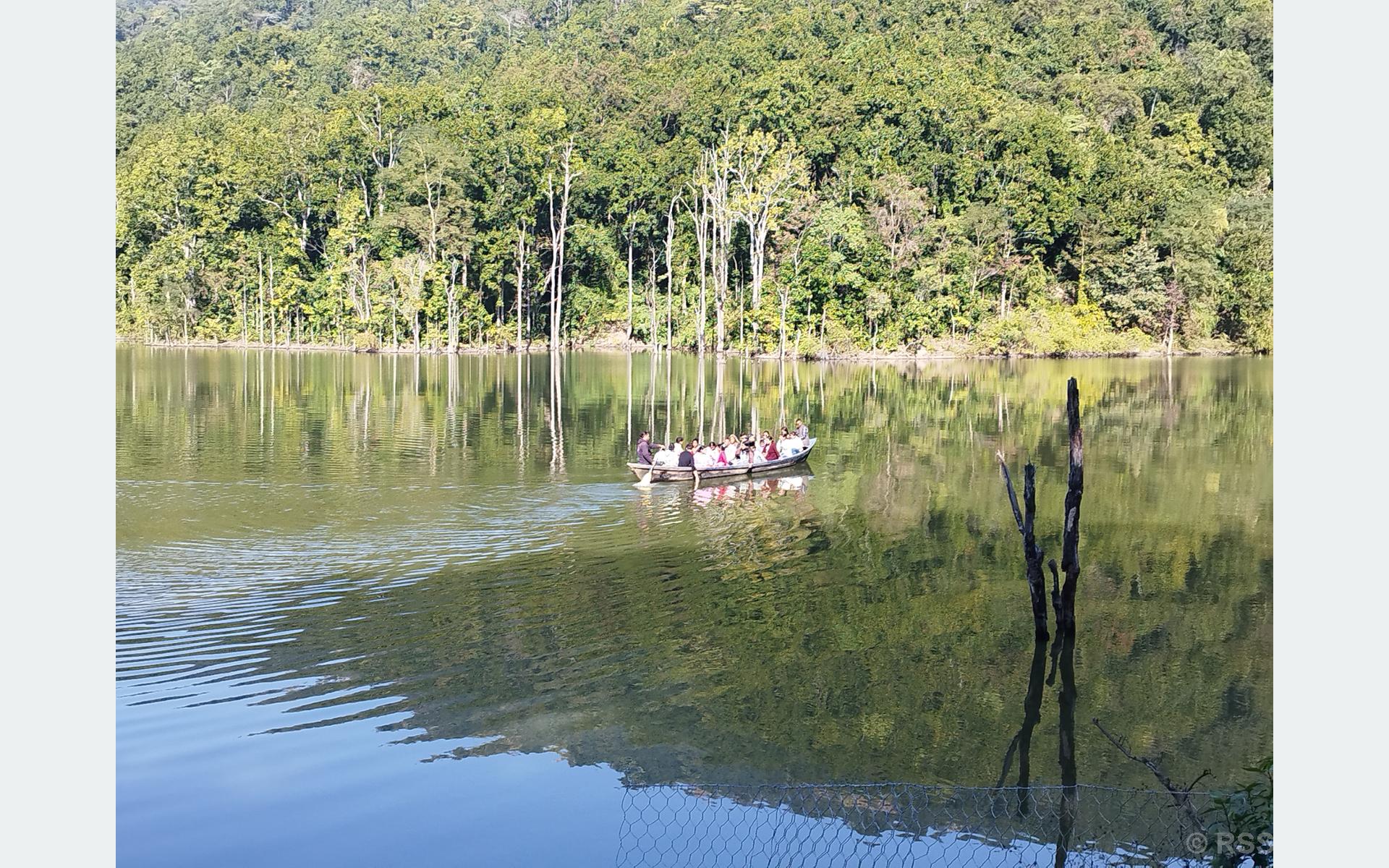
DEUKHURI: Bahrakune Daha, located in Ghorahi Sub-metropolitan City–13, Dang, has been drawing a growing number of domestic tourists in recent times.
Known as a destination for both domestic and foreign visitors, Bahrakune Daha has seen a steady rise in tourist inflow due to its scenic beauty and cultural significance. The lake derives its name from the twelve corners of the surrounding hill, and it offers a panoramic view of pristine natural surroundings.
Considered a model tourist site of Lumbini Province, Bahrakune Daha is also regarded as an important religious destination. Local legends say that one of the twelve brothers once lived in the area.
Visitors come not only to enjoy the natural landscape but also to participate in picnics, boating and religious activities. Sita Panthi of Tulsipur Sub-metropolitan City–17, who visited the site with friends, said she came to Bahrakune Daha for a forest picnic at the invitation of a local mothers’ group.
“Although there are many places to visit in Tulsipur, I had never been to Bahrakune in Ghorahi before. It was very enjoyable,” she said, adding that the area is often lively with people picnicking, dancing and enjoying themselves. She also described the temple surroundings as pleasant and said boating in the nearby lake and feeding fish added to the experience.
Similarly, Muna Pokharel of Ghorahi Sub-metropolitan City–18 said she visited Bahrakune Daha with her students on Saturday. She noted that the site was crowded, likely due to the holiday and its easy access from the market area, with many groups engaged in picnics.
According to Dev Bahadur Gharti, chairperson of the Barahakshetra Conservation Committee, the area receives devotees throughout the year, with particularly heavy crowds from December to early-February.
“Devotees visit on the tenth day of Bahrakune to seek blessings, and a large fair is held on the occasion of Maghe Sankranti,” he said. Childless couples, in particular, visit the site to pray for children. Gharti added that the area becomes especially crowded during Maghe Sankranti.
The site features a natural lake with twelve distinct shapes, where traditional rituals such as animal sacrifices and the release of pigeons are performed.





Comment