




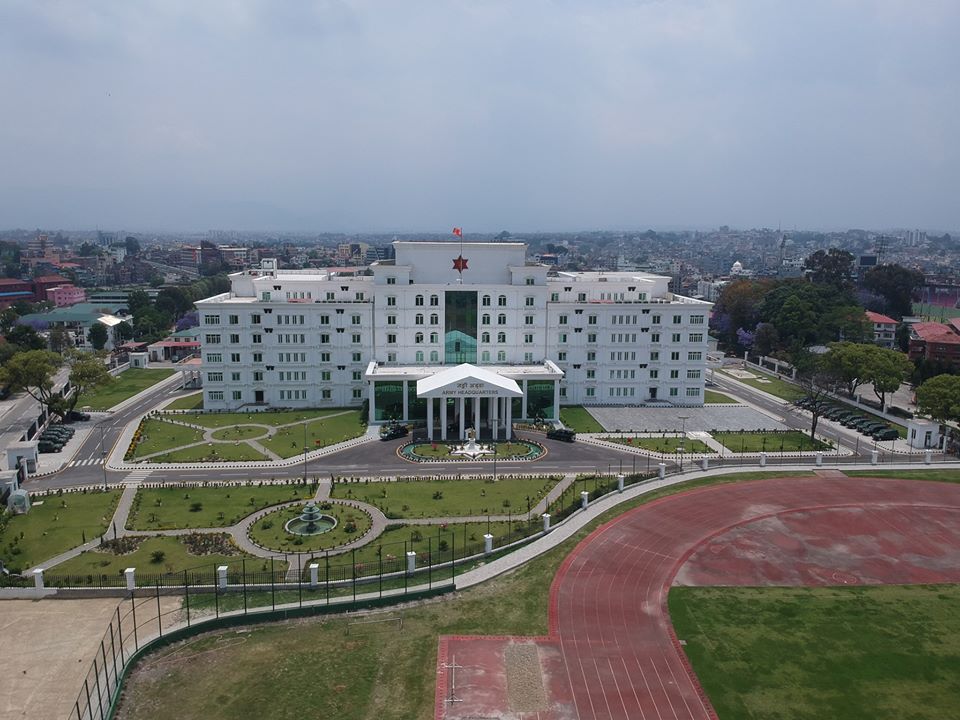
KATHMANDU: The Nepali Army (NA) has reiterated that it acted strictly within constitutional limits during the September 8 and 9 Gen-Z protests, emphasizing respect for civilian authority, restraint in the use of force, and a focus on protecting lives amid growing public debate over its role.
In a statement, the Nepali Army said that creating an environment for dialogue among stakeholders during crisis management is the responsibility of the concerned authorities and should be done at the earliest to prevent further deterioration of the situation.
According to the Nepali Army Headquarters, despite criticism, the Army did not pursue any political agenda nor attempt to interfere in government affairs, calling this evidence of its commitment to democratic principles.
“The Army is loyal to the Constitution and remains committed to national unity and national security under the established government,” the NA said in an article, adding that the institution has no political ambition. It argued that the Army’s actions helped end the political vacuum at the time and questioned whether the present situation would exist if the Army had intended to assume political power.
The NA further emphasized the need to strengthen security institutions, stating that the situation should be assessed objectively rather than superficially. It said reinforcing all security agencies, including the Nepali Army, is in the national interest.
Titled “The Situation After September 8 and 9: The Role of the Nepali Army,” the article noted that debate over the Army’s role during the Gen-Z protests and subsequent developments has continued for months. It said such debate is a normal feature of a democratic system, where citizens have the right to criticize, support, or caution state institutions.
The article further stated that ongoing discussion and analysis of the events from multiple perspectives have contributed positively to public awareness of national security issues and helped clarify the role played by the country’s primary security institution during an unprecedented crisis.
Constitutional scope and civilian supremacy
The article stated that the Constitution of Nepal places the Nepali Army firmly under civilian control and the authority of the elected government. Its mobilization, role, and limitations are clearly defined, and the Army cannot be deployed for internal security operations without a decision by the executive.
It stated that this constitutional framework has contributed to the Nepali Army being regarded as one of the most trusted institutions in the country. Observers say this trust stems from the Army’s adherence to constitutional provisions and respect for democratic governance.
“Had the Army intervened without explicit executive orders during the unrest on September 9, and had civilian casualties increased, managing the situation would have been significantly more difficult. In such a scenario, responsibility for unauthorized mobilization would likely have fallen on the Army itself.”
According to security officials, the immediate priority on September 9 was the protection of lives, those of dignitaries, diplomats, and the general public, who were exposed to heightened risk due to the prevailing situation. Protecting life, they say, is a fundamental responsibility of the state and not the protection of any particular individual.
It said that as the situation became increasingly volatile, the Army adopted a restrained approach, focusing primarily on life-saving measures. Analysts note that any serious incident that day could have further escalated conflict and instability.
According to the article, while the protection of physical infrastructure is important, officials argue that it cannot supersede the protection of human life. Had force been used to protect buildings at the cost of civilian casualties, questions would likely have arisen about the justification for such actions. Members of the public have also shared accounts of the Army’s role in rescue and immediate assistance during the unrest, reinforcing the view that saving lives was given top priority.
Civilian orders as the basis of credibility
Under Nepal’s constitutional arrangement, the Nepal Police and the Armed Police Force are primarily responsible for internal law and order, with the Army serving as a last resort. This division of responsibility is widely viewed as a safeguard for democratic governance.
In line with this framework, the Army acted based on necessity and with restraint, focusing on rescue operations, humanitarian assistance, and the protection of sensitive locations. Despite limited manpower and resources amid rapidly unfolding events, the Army’s handling of the situation has generated extensive public debate.
Some criticism has also been directed at the Army’s efforts at coordination and communication during the crisis. However, officials maintain that the Army neither pursued a political agenda nor sought to intervene in government affairs. They emphasize that facilitating dialogue among stakeholders to prevent further deterioration was the responsibility of the relevant civilian authorities.
Ultimately, decision-making authority rested with the executive and the President, a process the Army says it fully respected, an approach cited as evidence of its commitment to democratic norms.
Meanwhile, the article noted that the inclusion of a photograph of Prithvi Narayan Shah in the Army Chief’s message on September 9 sparked criticism from some quarters. Supporters, however, argue that Prithvi Narayan Shah is widely recognized as the founder of modern Nepal and a symbol of national unity.
They contend that invoking his image during a period of crisis should be seen not as a political statement, but as a reminder of national unity, sovereignty, and integrity. In that context, the Army leadership’s message was intended to emphasize social harmony and collective national responsibility during a challenging moment.
Nepali Army’s credibility and commitment
The article further noted that historically, the Nepali Army has not intervened in political power, maintaining restraint and discipline in support of civilian supremacy, including during Nepal’s constitutional transition. Observers note that the Army has consistently adapted to political and structural changes that have taken place in the country over time.
The Nepali Army is also among the world’s leading contributors to United Nations peacekeeping missions, a role often cited as evidence of its professionalism, commitment to human rights, and international credibility. Officials maintain that the institution harbors no political ambition. They argue that its actions during the crisis helped prevent a prolonged political vacuum, raising the question of whether the current political order would exist had the Army sought to assert power.
National security and upcoming elections
As the country moves toward elections, analysts emphasize the importance of institutional restraint, a clear division of responsibilities among security agencies, and accountable leadership. The Nepali Army has reiterated its commitment to operating within the constitutional framework and in coordination with the Nepal Police, the Armed Police Force Nepal, and other relevant bodies.
Security officials and civil society members alike have called for public cooperation to ensure that the upcoming elections are conducted in a free, fair, and fearless environment.
At the same time, continued public discussion and debate over the role of the Army and other security agencies during the events of Bhadra 23–24 are seen as a healthy feature of democratic practice. The Army has acknowledged the importance of such debate and has also conducted internal reviews.
However, analysts caution that national interest is best served through objective and comprehensive assessment rather than superficial criticism. Strengthening all security agencies, including the Nepali Army, is viewed as essential to improving crisis response and safeguarding stability.
Throughout the course of events, the Army maintains that it acted in accordance with both the letter and spirit of the Constitution, refraining from political involvement and prioritizing the protection of lives. It reiterates its loyalty to the Constitution and its commitment to national unity and security under the authority of the elected government. (RSS)



Comment