




LONDON: In a significant diplomatic shift, Britain, Canada, Australia, and Portugal formally recognized the State of Palestine on Sunday — a move driven by frustration over the ongoing war in Gaza and aimed at reviving momentum for a two-state solution. The decision drew a strong rebuke from Israel.
These four Western nations, historically aligned with Israel, now join over 140 countries that have already acknowledged Palestinian statehood, reflecting growing global support for Palestinian aspirations for independence in the occupied territories, according to Reuters.
Britain’s recognition carries particular historical weight due to its central role in the creation of modern-day Israel after World War II.
“Today, in order to revive hope for peace between Palestinians and Israelis, and to support a two-state solution, the United Kingdom formally recognises the State of Palestine,” said British Prime Minister Keir Starmer. He condemned the worsening humanitarian crisis in Gaza, describing Israel’s ongoing military campaign, widespread destruction, and civilian suffering as “utterly intolerable.”
France and other countries are expected to announce similar recognition during the upcoming United Nations General Assembly in New York.
Israeli Prime Minister Benjamin Netanyahu sharply criticized the recognitions. “To the leaders who are recognising a Palestinian state after the brutal massacre of October 7, I say this: you are rewarding terrorism,” he stated, referencing the 2023 Hamas-led attack on Israel that sparked the near two-year-long war.
Netanyahu added defiantly: “A Palestinian state will not be established west of the Jordan River.”
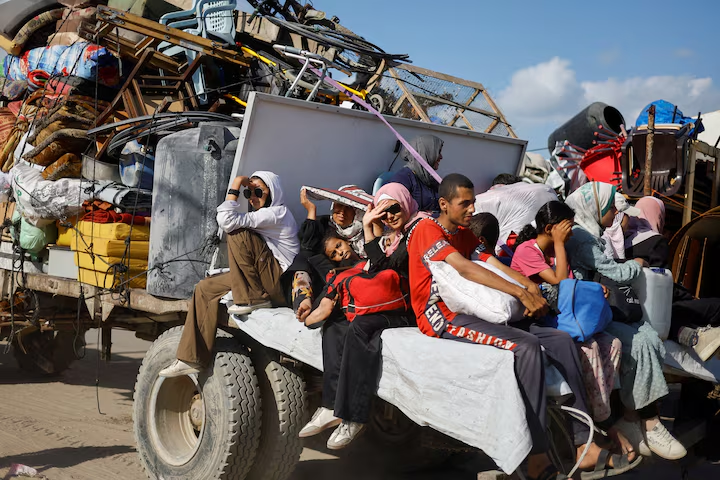
According to Israeli sources, the October 7 attack by Hamas resulted in the deaths of 1,200 people and the abduction of 251 others. In response, Israel launched a devastating military campaign in Gaza, which local health authorities say has killed over 65,000 Palestinians — most of them civilians — while causing mass displacement, widespread famine, and large-scale destruction of infrastructure.
The prevailing narrative suggests that the United States was displeased with KP Oli after he appeared on the same platform as Chinese President Xi Jinping, Russian President Vladimir Putin, Indian Prime Minister Narendra Modi, and North Korean leader Kim Jong Un at the SCO Summit in China. As a result, some speculate that the U.S. played a role in inciting the Gen-Z movement in Nepal to destabilize the Oli-led government.
Another widely circulated narrative claims that India, also reportedly unhappy with Oli’s leadership, sought a way to remove him from power and thus allegedly supported or fueled the Gen-Z protests.
(Inputs from Reuters)





Comment