




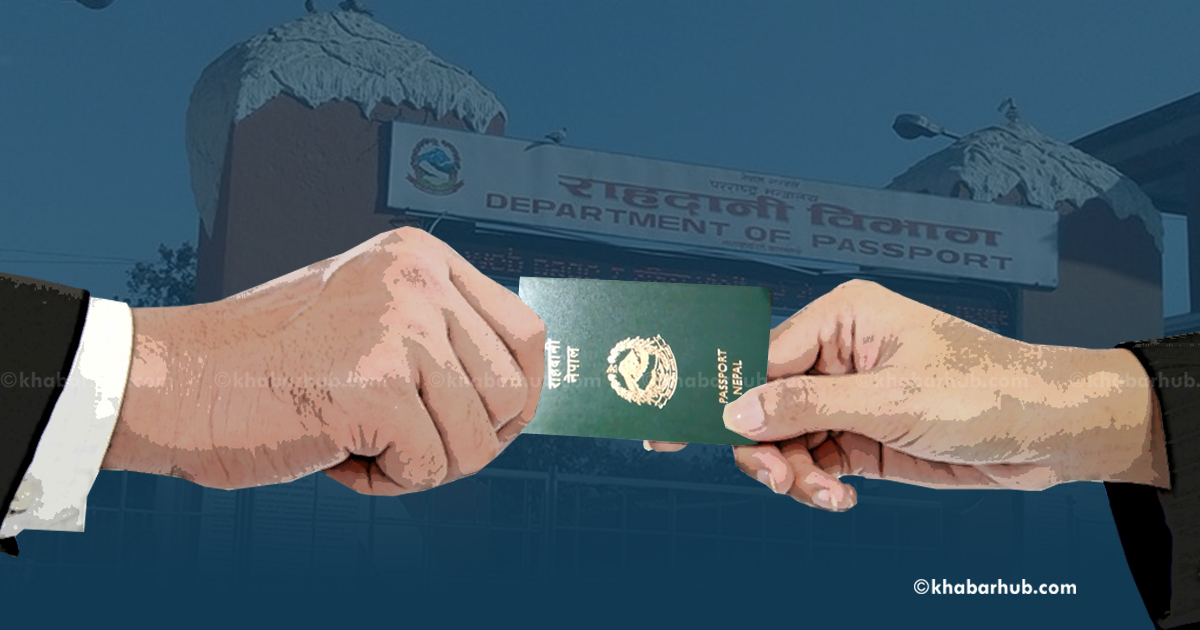
KATHMANDU: Allegations of serious irregularities have surfaced regarding Nepal’s recent international tender process for electronic passports (e-passports). The Department of Passports, under the Ministry of Foreign Affairs, is being accused of bypassing the legal procurement process while handling two key tenders related to passport printing and data management systems.
On November 11, 2024, the Department announced two international tenders—one for procuring the passport data storage system and related equipment, and another for the printing of 6.4 million e-passports.
The submission deadline was set for February 21, 2024, and multiple international companies submitted proposals.
For the first package, three international companies participated: Idemia Identity & Security France SAS (IDEMIA) from France, Muehlbauer ID Services GmbH from Germany, and IRIS Corporation Berhad from Malaysia.
For the second package, four firms submitted bids, including IDEMIA, Muehlbauer, Polska Wytwornia Papierow Wartosciowych (PWPW) from Poland, and Veridos GmbH from Germany.
To evaluate the proposals, a five-member bid evaluation committee was formed under the leadership of Department Director General Tirtharaj Aryal. A separate 12-member technical subcommittee led by IT Director Sunil Kumar K.C. was tasked with assessing the technical aspects of the bids.
The technical subcommittee found that Muehlbauer and PWPW, who had bid on the second package, failed to meet key technical requirements. According to the subcommittee’s assessment, Muehlbauer did not fulfill essential criteria outlined in the 297-point technical specification, and PWPW also fell short.
As per the Public Procurement Act, only those who pass the technical evaluation are eligible to have their financial proposals considered.
However, insiders claim that the evaluation committee disregarded these findings and declared the previously disqualified companies as technically qualified without justification. The financial proposals of all participants are now scheduled to be opened on May 28.
Critics argue that the committee’s decision was made without consulting the Public Procurement Monitoring Office, raising concerns about the transparency and legality of the process. It is also alleged that the final technical evaluation report, which initially bore signatures from April 16, was altered 15 days later to support the changed outcome.
One of the bidders, IDEMIA, has been a consistent recipient of Nepal’s passport contracts for the past 15 years, often through direct orders or contract variations. This history, coupled with the current controversy, has intensified concerns over favoritism and lack of competitive fairness.
The procurement of passports is a highly sensitive national matter. Observers and rival bidders are now demanding an independent investigation, claiming that the integrity of the public procurement process has been compromised.






Comment