




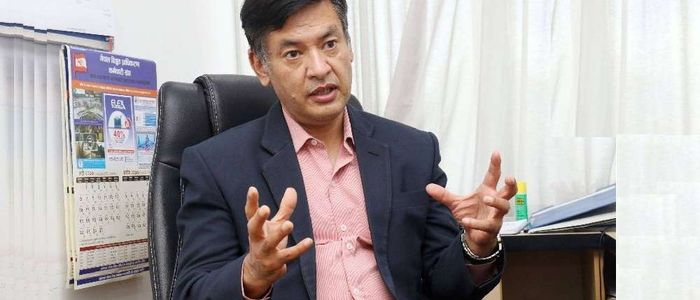
KATHMANDU: Nepal Electricity Authority (NEA) Managing Director Hitendra Dev Shakya has outlined a three-pronged strategy to reform the country’s power sector, focusing on electricity quality, energy security, and financial resource assurance.
Speaking to journalists in Kathmandu on Saturday, Shakya said the NEA has intensified efforts in these core areas to address growing concerns from consumers and stakeholders.
Energy security
Shakya highlighted the urgent need to boost electricity production and storage to meet rising demand and reduce wastage during the monsoon. “We must focus on energy security to avoid wasting electricity when demand is low and ensure availability during peak seasons,” he said.
Highlighting ongoing efforts, Shakya noted that Nepal exported 1,800 GWh of electricity this year, an increase from 1,500 GWh last year, while electricity imports from India have decreased.
He stressed the need for storage-based hydropower projects, citing the Upper Arun as a top priority. While the World Bank has not approved funding, Shakya said Nepal is ready to initiate the project independently if necessary.
The government has also prioritized Kulekhani-Sisneri (100 MW) and Hurlingtar (690 MW) licenses, aiming to enhance power reserve capacity.
Electricity quality
On quality, Shakya admitted that frequent outages and “tripping” have led to public dissatisfaction. “Our focus now is on improving power quality through dual-feeder systems and improved transmission infrastructure,” he said.
In areas like Kathmandu and Lalitpur, frequent power tripping has been observed. NEA is investing in feeder redundancy, though Shakya warned that visible results will take time due to infrastructure and financial constraints.
He also noted that battery-based backups, commonly used by households, degrade over time, leading to user complaints — a challenge that could be solved with reliable grid power and power storage solutions.
Financial sustainability
The NEA chief acknowledged challenges in securing funding. Government grants have reduced from Rs 21 billion to just Rs 2.5 billion over the past three years, while bank investments are also shrinking.
“We’re moving towards bonds and debentures. The Ministry of Finance is about to approve Rs 20 billion in bonds,” Shakya said. He also noted that the NEA has an operating profit of Rs 14 billion and accumulated profit of Rs 46 billion, but pending dues total Rs 44 billion, limiting cash liquidity.
Shakya stressed that while NEA appears profitable on paper, actual recoverable revenue is lagging. “We have Rs 6 billion in fixed assets. If we achieve a Rs 15 billion profit this year, our financial status will significantly improve,” he added.
He also confirmed Rs 500 million in electricity sales to Bangladesh this fiscal year.
Shakya said reforms won’t yield overnight results but emphasized the NEA’s long-term commitment.
“Our society often values noise over substance. We are working with data and evidence. It may take time, but results will follow,” he said.
Shakya concluded by calling for sustained public and policy support to ensure energy reliability, grid modernization, and a financially strong NEA to power Nepal’s future.






Comment