




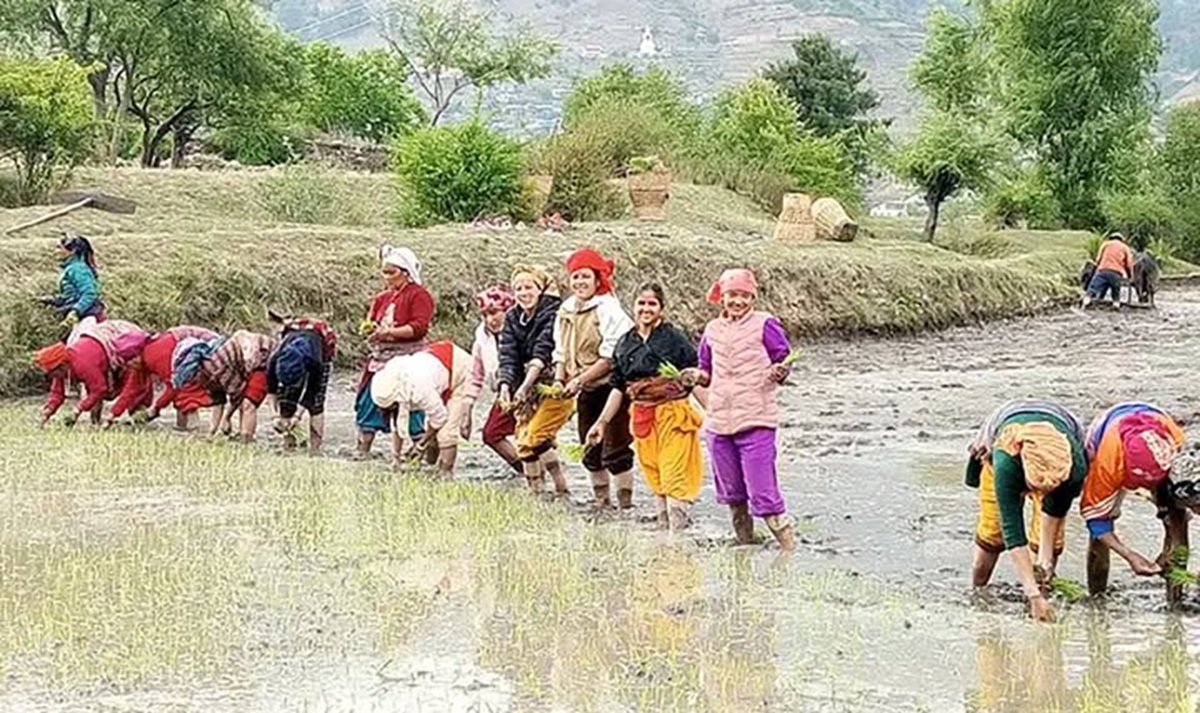
JUMLA: The plantation of Marsidhan, a highly nutritious and indigenous paddy variety unique to Jumla, has begun at Chhumchaur Jiyulo in Patarasi Rural Municipality-3, Jumla. Notably, Marsidhan is cultivated at one of the highest altitudes in the world.
To mark the beginning of the planting season, the Agriculture Development Office in Jumla organized a “Dhan Mahotsav” (Paddy Festival).
According to Ram Bhakta Adhikari, Chief of the Office, the event was jointly hosted by the District Agriculture Development Office and the Marsidhan Preservation and Promotion Centre of Patarasi Rural Municipality.
In keeping with tradition, local farmers began sowing Marsidhan seedlings on Monday. As part of the customary planting process, Marsidhan seeds are soaked in water for four days before being transplanted into prepared fields.
Marsidhan is in high demand both domestically and internationally due to its nutritional value. The festival was organized to support efforts aimed at preserving and promoting this unique variety, Adhikari added.
Govinda Rawat, Chairperson of Patarasi Rural Municipality-3, said that nearly half of Chhumchaur Jiyulo has been fenced off to encourage increased cultivation of Marsidhan. He emphasized the need to protect the entire area to ensure the long-term preservation of this native paddy.
Vice Chairperson Jana Maya Rokaya noted that local farmers, residents, stakeholders, and government bodies are collaborating to promote and safeguard Marsidhan.
She added that the variety has deep historical roots, with ties to the ancient Sinja Civilization.
Historical records indicate that rice cultivation began in Jumla as early as 1098 BS (circa 1041 AD).
Over time, Marsidhan has gained prominence not only for its unique cultivation method but also for its medicinal properties—it is believed to help treat ailments such as diabetes. In the past, Marsidhan was reportedly supplied to members of the royal family.
However, recent years have seen a decline in yields due to pesticide use and the drying up of water sources in the high-altitude regions of Jumla.






Comment