




The Trump–Putin summit in Alaska was hailed as a diplomatic success in appearance but fell short in substance.
Why it looked like a success: Both leaders framed it positively, emphasizing symbolism. Trump staged red-carpet ceremonies and military flyovers, while Putin gained renewed global legitimacy with his first US visit in a decade. Putin made no real concessions but maintained dialogue, and Trump refrained from harsher rhetoric or sanctions, keeping the door open for future talks.
Why it actually failed: The talks produced no ceasefire, no framework for peace, and excluded Ukraine from meaningful participation. Putin’s demands—recognition of Russian territorial control and Ukraine’s exclusion from NATO—remained irreconcilable with Kyiv’s sovereignty and European security principles. NATO allies expressed distrust, fearing Trump might compromise collective security for optics.
What happens next: Momentum may continue with possible follow-up talks, even in Moscow, but any deal will collapse without Ukraine at the table. Europe will push to maintain sanctions and NATO deterrence. The peace process faces a fragile “window of opportunity,” with scenarios ranging from a phased ceasefire with monitoring, to a frozen conflict, to total collapse and escalation.
Bottom line: The Alaska summit was more spectacle than substance. It demonstrated the importance of US–Russia dialogue but underscored that peace in Ukraine cannot be achieved through optics or great-power bargaining alone. Lasting peace demands Ukraine’s central role, European unity, and a shift from symbolic gestures to substantive agreements.
Introduction
The August 15 bilateral talks between US President Donald Trump and Russian President Vladimir Putin in Anchorage, Alaska, were among the most closely watched diplomatic encounters of the year.
While the summit produced no binding results, it did reopen space for future diplomatic engagement. The peace process now stands at a crossroads, with several possible trajectories ahead:
They came amid high expectations that dialogue between Washington and Moscow might yield a breakthrough in the grinding war in Ukraine—a conflict that has claimed hundreds of thousands of lives and destabilized European security in the search for a new global order.
In the immediate aftermath of the two-hour and 45-minute meeting, both leaders framed the summit positively. Trump praised the meeting as “very productive,” while Putin declared it “useful” and hinted at further dialogue.
Trump said his team had made “great progress” toward ending Russia’s war on Ukraine but admitted “we haven’t quite got there” and that no deal was struck. No details were provided.
Putin emphasized Russia’s insistence on addressing what he calls the “root causes” of the war—Kremlin language for limiting Ukraine’s military capability and ensuring it does not join NATO.
For observers of great power politics, the optics of the meeting suggested progress: red-carpet ceremonies, military flyovers, and even Putin’s symbolic ride in the presidential limousine. Yet beyond the symbolism, the talks failed to produce any tangible outcomes.
No ceasefire was announced, no framework for peace was agreed upon, and Ukraine—the country at the heart of the war—was conspicuously absent from the main negotiating table.
The Alaska summit therefore stands as a paradox: a diplomatic event that “succeeded” in style but failed in substance. Understanding this duality is essential to grasp what the summit means for the peace effort going forward.
Why Did the Bilateral Talks “Succeed”?
Despite the lack of concrete deliverables—and the ongoing tragedy of war—several factors explain why the Trump–Putin meeting was widely described as a “success” in political and media narratives. There are four strategic elements that hold broader implications for the global order:
It was a symbolic success. The summit was choreographed to showcase warmth and respect. Trump rolled out a literal red carpet, orchestrated a dramatic military flyover, and extended ceremonial gestures that made Putin’s visit the centerpiece of international news.
Both leaders used these optics to frame the meeting as “productive” and worth continuing—even though no agreements were signed. However, this approach faces skepticism both at home and abroad. Without substance, Trump’s role risks being seen as performance rather than leadership.
It was also a diplomatic win for Russia. The Alaska meeting was a triumph of public relations for Putin, restoring international visibility without conceding ground. It marked his first visit to the US in over a decade, placed him back in the international spotlight, and symbolically demonstrated that he can command global attention without softening his demands.
It also placed him on equal footing with the US president. Putin emerged with renewed global legitimacy, which he can use to reinforce his domestic narrative of Russia as a great power standing tall against the West.
It maintained momentum without concessions. Analysts observed that Putin skillfully shaped a “sense of progress” by offering symbolic gestures, such as vague language about dialogue and mutual respect, while avoiding any real concessions on Ukraine.
This allowed him to enjoy the optics of engagement while continuing to hold firm on territorial claims and opposition to NATO expansion.
It reflected Trump’s restrained rhetoric. Unlike his more combative approach in other international negotiations, Trump refrained from announcing new sanctions or threats. He even delayed punitive measures on China for purchasing Russian oil—a move that signaled he was leaving space for diplomacy.
By emphasizing Ukraine’s need to consent to any final deal and suggesting the possibility of follow-up talks—without committing to specifics—Trump positioned himself as a mediator, maintaining flexibility for future engagement.
Taken together, these factors explain why the Alaska summit could be described as a “success” in terms of diplomatic theater. It created an atmosphere of momentum, gave both leaders political cover, and suggested that dialogue remained possible.
Why Did the Talks Fail?
The Alaska summit ultimately failed because it could not bridge the gap between optics and substance.
Despite all the pageantry, no ceasefire or agreement was reached. Neither side committed to halting hostilities. While Trump praised “progress,” there was no roadmap, no monitoring mechanism, and no binding framework.
Putin’s irreconcilable core demands—territorial concessions and NATO exclusion for Ukraine—clashed directly with Ukraine’s sovereignty and Europe’s foundational security principles. These red lines leave little room for compromise.
It was largely a case of symbolism over substance. The summit prioritized ceremony over content. While both leaders reaped political dividends, Ukraine received nothing tangible.
The exclusion of Ukraine from the main table also raised doubts about the credibility of the process. Zelensky and the Ukrainian government were not included in core talks. Any agreement made “over Ukraine’s head” lacks legitimacy and is unlikely to endure.
The Alaska summit illustrates the paradox of modern diplomacy. On the surface, it was a success: two nuclear powers and permanent members of the UN Security Council met, exchanged dialogue, avoided inflammatory rhetoric, and projected openness.
Furthermore, European distrust over the bilateral nature of the summit was evident. NATO allies remain deeply skeptical of Trump’s approach, fearing he may compromise collective security for a headline-grabbing deal. Without European unity, any agreement risks fracturing the transatlantic alliance.
What Happens Next? The Peace Process Going Forward
While the summit produced no binding results, it did reopen space for future diplomatic engagement. The peace process now stands at a crossroads, with several possible trajectories ahead:
A fragile window of momentum exists—but without real progress in the coming months, it may close. Historical precedent suggests a high risk of collapse.
There is no ceasefire yet, but talks may continue slowly. Both leaders alluded to ideas such as land swaps and security guarantees, but nothing was formalized. Trump left the door open for future discussions, urging Ukraine to participate and emphasizing that any final deal must have Kyiv’s consent. This creates a narrow opening—but until a ceasefire is reached, the war rages on.
**Future talks—possibly in Moscow—**have been floated by both leaders. Although still vague, the suggestion indicates a mutual interest in keeping diplomatic channels open.
Ukraine must be at the table—or peace will not hold. President Volodymyr Zelensky has consistently emphasized that “no one can decide Ukraine’s fate without Ukraine.”
Any lasting agreement must address ceasefire lines, Russian troop withdrawal, displaced civilians, and abducted children. Zelensky has shown openness to future discussions, even hinting at a potential visit to Washington. European allies echo this stance, insisting that any negotiation must begin with a ceasefire and cannot exclude Kyiv.
European skepticism and pressure remain key. European leaders are wary that Trump might prioritize optics over substance. They continue to argue for sustained sanctions and NATO deterrence to prevent Moscow from securing territorial gains without offering peace.
Europe will likely intensify pressure on Washington to avoid appeasement and reinforce NATO’s eastern flank. European unity is vital to resisting Russian leverage and deterring escalation.
Peace agreements are fragile. History warns against premature optimism. Only about 16% of interstate wars since 1945 have ended with formal peace treaties. Even if a ceasefire were achieved, it would mark only the beginning.
Robust monitoring, reconstruction plans, security guarantees, and humanitarian concerns—including the return of abducted Ukrainian children—would require long-term international commitment.
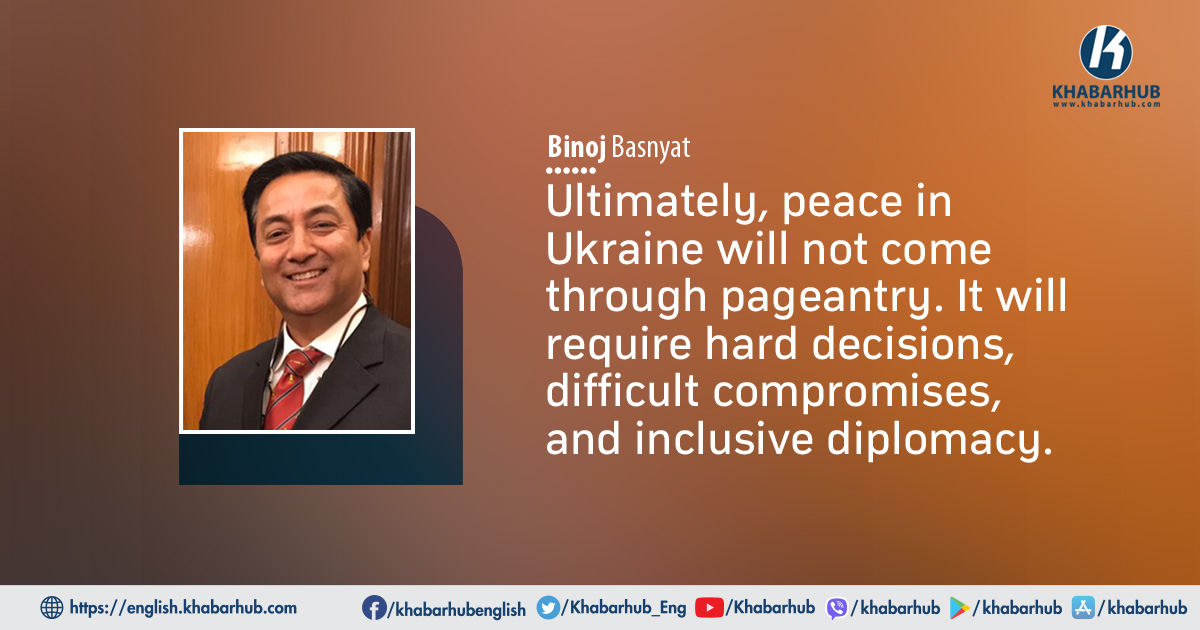
Ultimately, peace in Ukraine will not come through pageantry. It will require hard decisions, difficult compromises, and inclusive diplomacy. Until then, the Alaska summit stands as both a warning and a lesson: that real peace must be built not on ceremony, but on justice, sovereignty, and shared commitment.
Russia retains leverage. Putin remains firm on demands for recognition of Russia’s control over eastern Ukraine and a guarantee that Ukraine will never join NATO. These conditions effectively block compromise, keeping the Kremlin in a position of strength as long as it holds territory on the ground.
Three Possible Scenarios Ahead
Best-case scenario: A phased ceasefire monitored by third parties—such as the UN, OSCE, or BRICS+ observers—leads to substantive negotiations on peace, borders, and security.
Middle-case scenario: A frozen conflict akin to Korea or Cyprus develops, marked by occasional clashes but no formal settlement—leaving the region in limbo.
Worst-case scenario: Talks collapse entirely. Fighting intensifies. Russia consolidates its territorial gains amid transatlantic disunity and a breakdown of diplomatic momentum.
Conclusion: Diplomacy as Theater, or Opening Gambit?
The Alaska summit illustrates the paradox of modern diplomacy. On the surface, it was a success: two nuclear powers and permanent members of the UN Security Council met, exchanged dialogue, avoided inflammatory rhetoric, and projected openness.
Yet beneath the optics, it exposed a wide gulf between rhetoric and reality—no ceasefire, no peace framework, no role for Ukraine, and no resolution of core disputes.
The challenge now is turning symbolic success into substantive progress. That requires putting Ukraine at the center of the negotiation process, maintaining European unity, and preserving Western leverage—while crafting innovative frameworks for security and reconstruction.
Otherwise, the summit may be remembered not as a step toward peace, but as a missed opportunity, heavy on showmanship, light on statesmanship.
For now, the peace process hangs in the balance. Whether the summit becomes the first cautious step toward compromise, or simply fades into history as a spectacle, depends on what comes next.
Future success requires bringing Ukraine to the table, sustaining transatlantic resolve, and moving from symbolism to real solutions. Without this, the war will drag on—and the Alaska summit will serve as a cautionary tale about the limits of optics in war-ending diplomacy.
Ultimately, peace in Ukraine will not come through pageantry. It will require hard decisions, difficult compromises, and inclusive diplomacy. Until then, the Alaska summit stands as both a warning and a lesson: that real peace must be built not on ceremony, but on justice, sovereignty, and shared commitment.
Maj Gen (Retd) Binoj Basnyat is a strategic analyst and observer of South Asian security affairs. He is affiliated with Rangsit University, Thailand.





Comment