




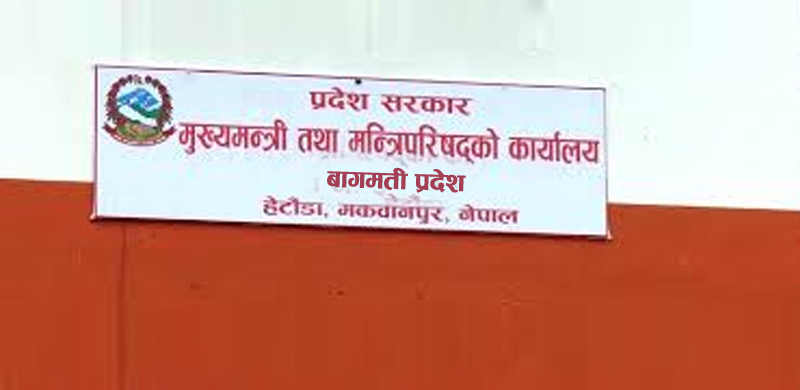
HETAUDA: The Bagmati Province Government has utilized just 38.91 percent of its allocated budget in the first ten months of the current fiscal year 2081/82.
According to Indraraj Sanjyal, Information Officer at the Ministry of Internal Affairs and Planning, the provincial government has spent 35.01 percent of its budget on capital expenditure and 46.79 percent on current expenditure between Shrawan and Baisakh.
The total expenditure amounts to Rs 25.11 billion, with Rs 13.27 billion allocated to capital expenditure and Rs 12.87 billion to current expenditure. This is out of the total budget of Rs 64.54 billion for the fiscal year. Notably, capital expenditure is lower than current expenditure.
The Provincial Chief Attorney’s Office has spent the highest proportion of its allocated budget, at 68.92 percent, while the Ministry of Culture and Tourism has spent the least, at 16.48 percent.
Additionally, the provincial government has collected only Rs 3.74 billion out of the estimated Rs 4.54 billion from internal sources in the current fiscal year. Sanjyal explained that the revenue collection has been impacted by a decline in real estate transactions and the sale of new vehicles, which is attributed to economic liquidity issues.

Comment