




These days in Nepal, political arguments don’t need facts, policies, or even logic — just a passport check. Disagree with someone? No problem — accuse them of being a foreign agent.
It’s fast, effective, and wonderfully patriotic. After all, why bother understanding differing opinions when you can just blame India, China, or the West and call it a day?
In Nepal’s political theater, if you dare to oppose the status quo or traditional political parties, then you must be working for a foreign power. You are branded a “foreign agent.”
The moment you raise your voice against the so-called traditional forces, their loyal cadres waste no time branding you an agent of foreign powers — or whichever embassy is trending that week.
Ironically, patriotism is measured by how quickly you can label your critics as ‘puppets’ or ‘agents’ of foreign masters. This has become a convenient way to dodge accountability. After all, why answer tough questions when you can just wave the national flag and shout ‘foreign conspiracy’ instead?
Whether you’re in Baluwatar, Khumaltar, Gundu, or Balaju, the easiest way to win an argument is to outsource dissent to foreign conspiracies.
And the worst part? It works. Far too often. In today’s Nepal, this kind of shortcut politics seems to be the norm. So if you’re still hoping for more grown-up political discourse — one built on facts, ideas, and accountability — you might be waiting a while. Because right now, it’s far easier to cry “foreign interference” than to answer the tough questions people are asking.
In fact, according to party loyalists, all Gen-Z leaders are foreign agents. Opps sorry, not only Gen-Zs but all those opposing traditional party top brass are ‘foreign agents’ dancing to the tunes of foreign powers. And if they are to believe, the Gen-Z movement on September 8 and 9 was a ‘plot of foreigners’ and that the political change was the outcome of foreign interference.
Ironically, they (loyalists) screaming about ‘foreign agents’ today were ‘happy’ with the old guard (Oli-Deuba-Prachanda regime) which they claim was “wonderful” and “stable.” According to these loyalists, the problem began only when these “foreign agents” started stirring the pot. Before that, it was all smooth sailing, just a sea of “yes men” and harmonious governance.
Additionally, social media, too, has become a ground for misinformation, disinformation, and fake news, fueling the “foreign agent” narrative. These platforms are flooded with self-proclaimed “intellectual” YouTubers, politically inclined journalists, and influencers who analyze everything from the economy to foreign policy, and politics often without the slightest expertise.
It’s a digital carnival of conspiracy theories and baseless claims, entertaining for the neutral citizen who enjoys watching political chaos unfold like a soap opera.
What’s even more interesting is how everyone becomes an expert. First five minutes, they dissect Nepal’s politics and security policy; the next, they’re commenting on human rights, foreign diplomacy, or the economy — all with the confidence of a seasoned professional. These “analysts” and “influencers” or “experts” form the backbone of the “foreign agent” accusations, weaving narratives that suit their political masters or their own agendas.
Now the question is: What does this all mean for Nepal’s democracy? Unfortunately, it means debate is dead, replaced by name-calling and xenophobia. It means real issues — like corruption, economic development, and social justice — get lost in the noise of conspiracy theories. And it means citizens are left bewildered, watching politics devolve into a circus where the clowns accuse anyone who disagrees with them of treason.
But is this really what patriotism looks like? Or is it just a convenient excuse — a smokescreen to dodge responsibility and shut down dissenting voices? When calling someone a “foreign agent” becomes the go-to move in political arguments, we’re not defending the nation. We’re just avoiding the hard conversations.
Over time, this label has turned into a blunt weapon — not to protect national interest, but to silence anyone who dares to question the powers that be. It’s a lazy tactic, really. Why engage in real debate when you can just attack someone’s loyalty and call it a day?
And the worst part? It works. Far too often. In today’s Nepal, this kind of shortcut politics seems to be the norm. So if you’re still hoping for more grown-up political discourse — one built on facts, ideas, and accountability — you might be waiting a while. Because right now, it’s far easier to cry “foreign interference” than to answer the tough questions people are asking.
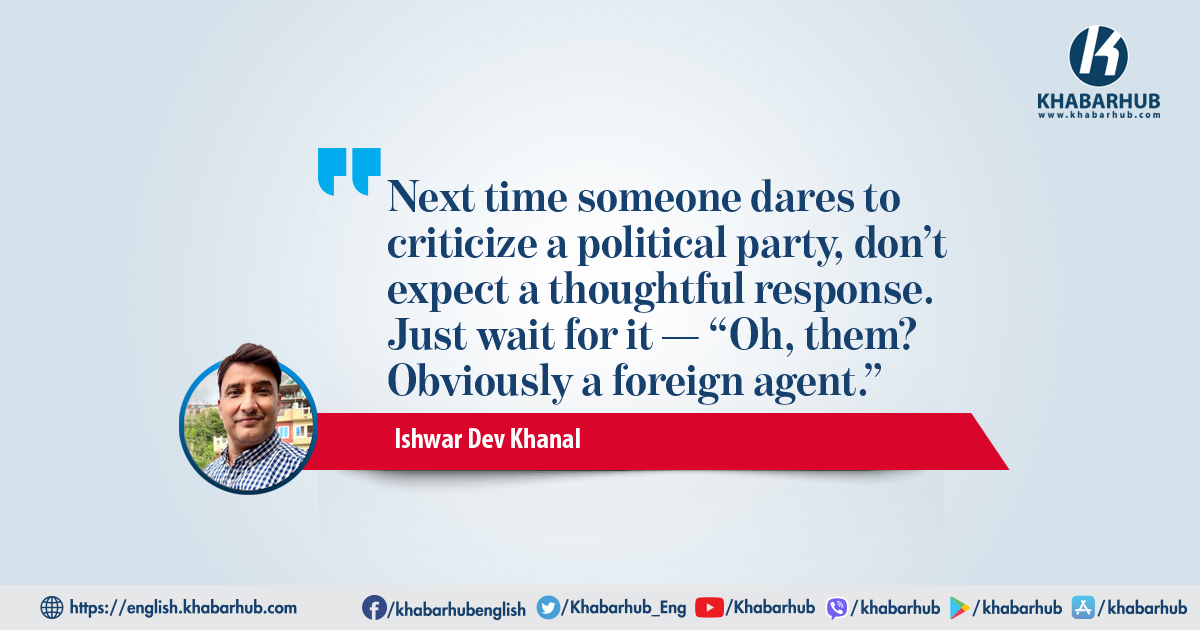
Next time someone dares to criticize a political party, don’t expect a thoughtful response. Just wait for it — “Oh, them? Obviously a foreign agent.”






Comment