




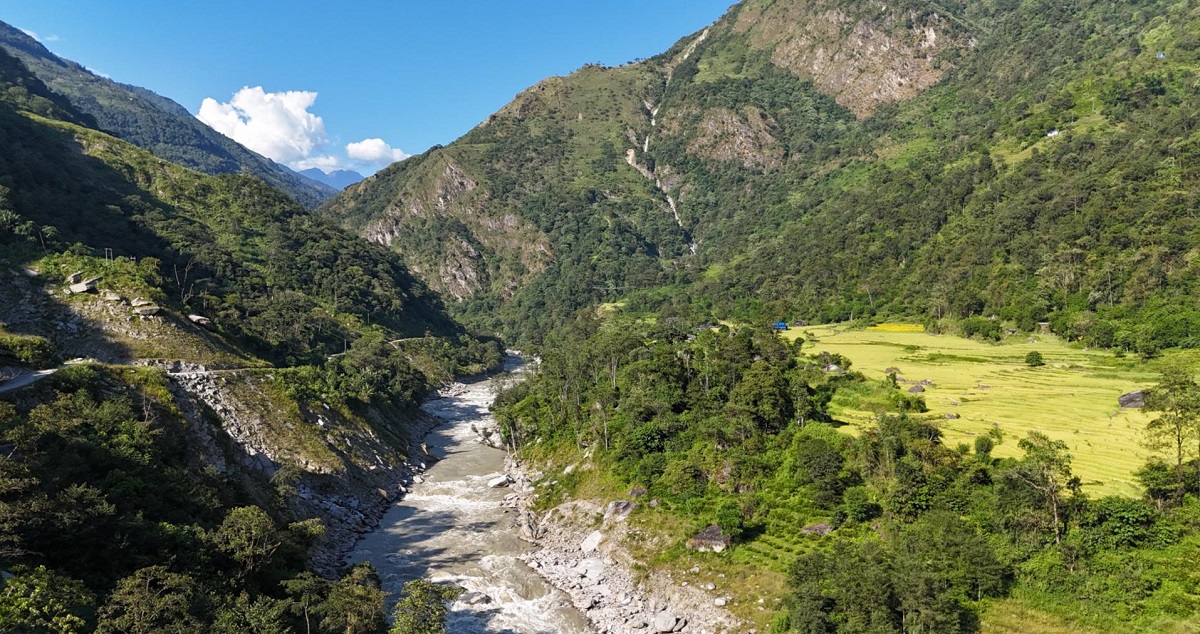
KATHMANDU: More than 2,000 trees have been cut down in Bhotkhola Rural Municipality for the construction of the 1,063-megawatt Upper Arun Hydropower Project and its access road.
According to the Division Forest Office, a total of 2,168 trees have been felled from national and community forests in wards 2 and 4 of Bhotkhola Rural Municipality. Information Officer Chandralal Rai said the trees were cleared to facilitate project construction and road access.
The forest clearance covers around 21.08 hectares of land, including national forest areas in Bhotkhola-4 and the Paripakha and Makpalung community forests in Bhotkhola-2, the forest office confirmed.
The Upper Arun Hydropower Project has received approval to use forest land for a period of 25 years. Following the clearance, construction of the project’s access road has accelerated.
The Nepal Electricity Authority has awarded contracts to India’s Gayatri JV and Jhapa-based Kankai Surunga JV for the construction of an access road stretching nearly 22 kilometres, including a 2.03-kilometre tunnel. The project also includes the construction of permanent bridges over the Arun River and Chepuwa stream.
The access road will connect Chhorang in Bhotkhola-4 to Rukuma Phedi in Bhotkhola-2. The estimated cost of the road construction stands at Rs 7.91 billion, according to the authority.
Meanwhile, large-scale deforestation has continued across the district due to multiple hydropower and infrastructure projects. The Division Forest Office stated that more than 14,000 trees have already been cut down in Sankhuwasabha for various hydropower developments.
Specifically, 14,627 trees from 18 community forests were felled for the Arun III Hydropower Project and the Koshi Corridor transmission line. In addition, around 5,400 trees in government-managed forest areas were cleared solely for electricity transmission expansion.
Forest officials said a total of 11 hydropower projects are currently using forest land across six local levels in the district. The continued use of forest areas for energy infrastructure has raised concerns about environmental impact, although authorities maintain that clearances were granted following legal procedures and environmental assessments.
The Upper Arun Hydropower Project is considered one of Nepal’s largest proposed energy projects and is expected to play a crucial role in boosting domestic power generation and exports. However, the scale of forest clearance associated with the project highlights the growing tension between infrastructure development and environmental conservation in the region.




Comment