




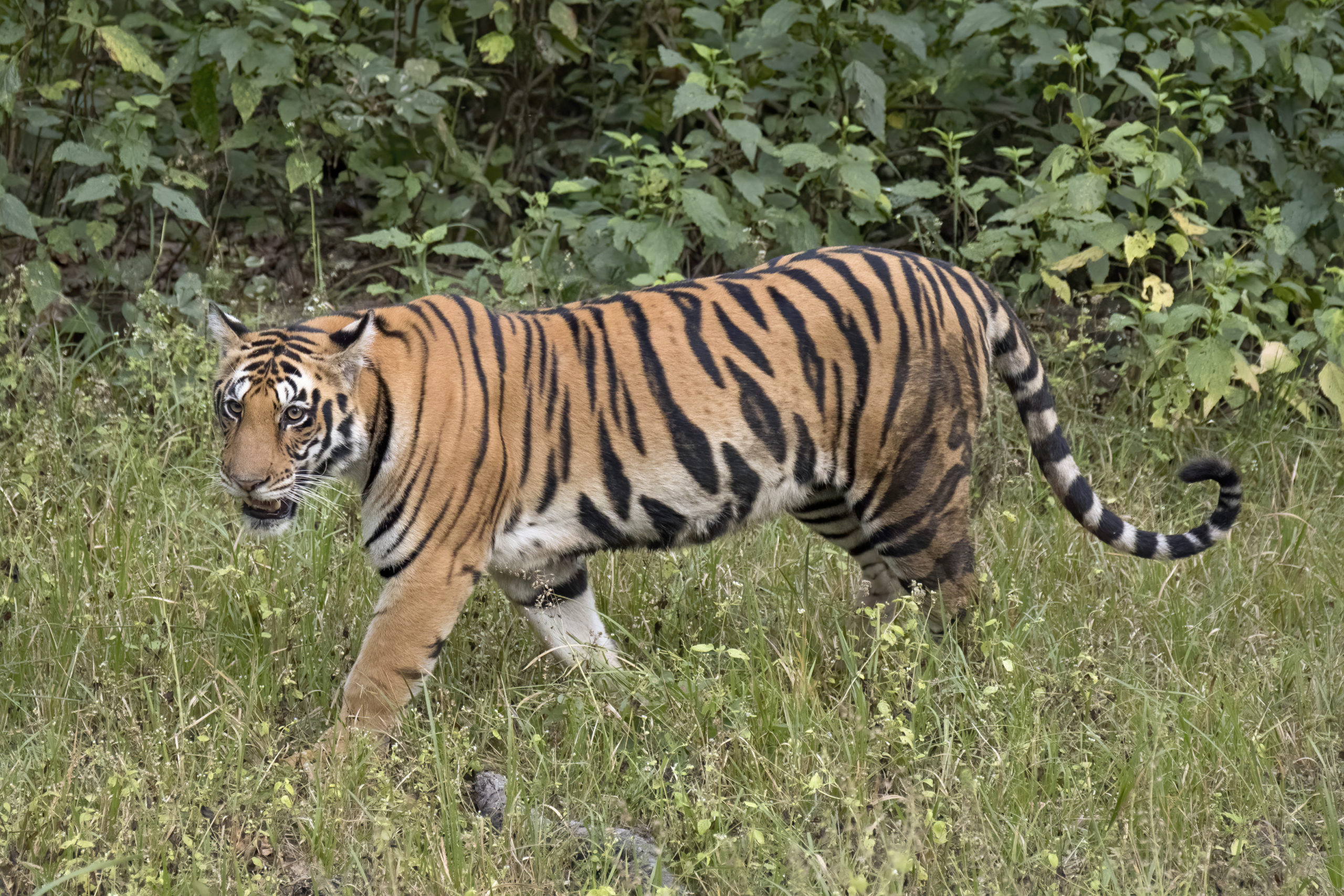
CHITWAN: Nepal has officially launched its nationwide tiger census, a scientific exercise conducted every four years, with the deployment of 1,100 advanced camera traps across major tiger habitats.
The census was formally inaugurated at a programme held in Sauraha, Chitwan, on Tuesday. The tiger count is being led by the Department of National Parks and Wildlife Conservation (DNPWC) under the Ministry of Forests and Environment, in coordination with the Department of Forests and Land Conservation.
The National Trust for Nature Conservation (NTNC), World Wide Fund for Nature (WWF) Nepal, and the Geological Society of Nepal are providing technical and logistical support. The Nepali Army, along with buffer zone and community forest users’ committees, has also been mobilized for the exercise.
According to the DNPWC, the census is expected to be completed within two and a half to three months. A total of 25 technical personnel have been mobilized nationwide for the process.
DNPWC Director General Buddi Sagar Paudel said the tiger population will be estimated through the analysis of photographic captures obtained from the camera traps installed in tiger habitats. “The census will provide reliable data on the current tiger population and help guide future conservation efforts,” he said.
The estimated cost of the tiger census is around Rs 30 million. The budget covers the mobilisation of human resources, management of camera trap memory cards, tents, sleeping bags, and other logistical requirements. The camera traps being used were procured earlier, with each unit costing approximately Rs 35,000.
Nepal has been conducting systematic tiger population counts using automated camera traps since 2009. Under the Tiger Conservation Action Plan, tiger censuses were carried out in 2013, 2018, and 2022. The current exercise is being conducted for the 2026 tiger population assessment.
Historical data shows a steady rise in Nepal’s tiger population over the years. The number of tigers stood at 98 in 1995, 109 in 2000, 126 in 2005, 121 in 2009, 198 in 2013, and 235 in 2018. Nepal has been observing National Tiger Day since 2067 BS.
Addressing the issue of increasing human-tiger conflict, Director General Paudel stressed the need to provide alternative livelihood options to communities living near forest areas. He said reducing dependency on forest resources and promoting positive attitudes toward wildlife are crucial to mitigating conflict.
Meanwhile, the number of problematic tigers has also increased. Currently, 18 such tigers are being kept in captivity across the country. Of them, five are housed at the Central Zoo in Jawalakhel, seven in Chitwan National Park, four in Bardia National Park, and one each in Banke and Parsa national parks. The government is spending a significant amount annually on their feeding, treatment, and management.
Globally, tiger numbers have risen to 5,357 as of 2025. India leads with 3,167 tigers, followed by Russia (750), Indonesia (400), Nepal (355), Thailand (189), Bhutan (151), Malaysia (150), Bangladesh (146), Myanmar (22), China (20), Vietnam (5), and Laos (2).
Nepal’s tiger conservation success is regarded as one of the most notable wildlife conservation achievements in the region.






Comment