




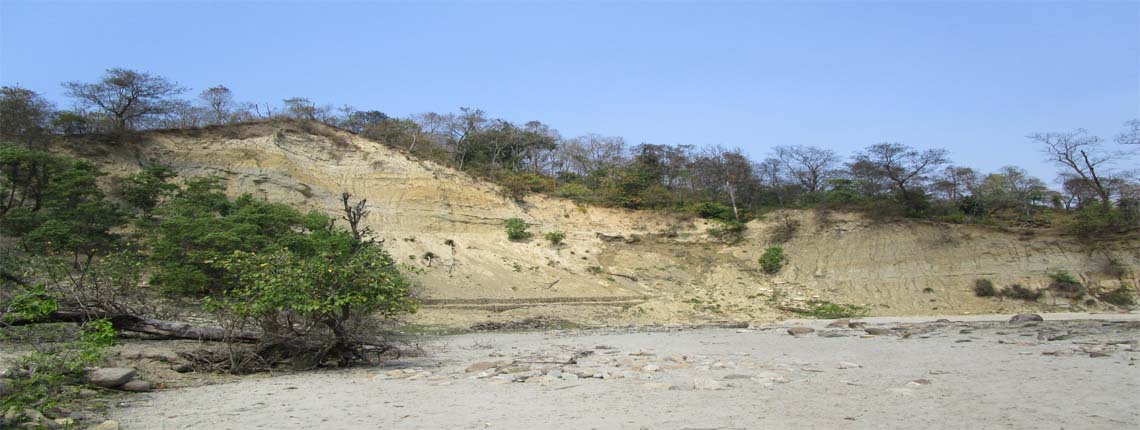
KATHMANDU: The President Chure-Tarai Madhesh Conservation Development Board is observing the 11th Chure Conservation Day today, Monday, commemorating its establishment.
A main event was held in Kawasoti, Nawalparasi, with the presence of President Ramchandra Paudel, according to Prakash Nepal, head of the Board’s Program Implementation Unit in Chitwan.
The Board was established on June 16, 2014, with the objective of contributing to poverty reduction through the conservation of Chure’s natural resources, sustainable management, and promotion of ecological services.
Since its inception, the Board has reported significant achievements. It has controlled gullies, landslides, and flash floods in 1,459 locations and expanded perennial crops over 166 hectares of sloping agricultural land. Additionally, the Board has implemented greenery promotion programs across 5,230 hectares and produced and distributed 29.34 million saplings.
Other conservation efforts include the construction of 412 kilometers of embankments along rivers and streams, the creation of 162 hectares of green belts, the conservation and reconstruction of 139 wetlands and lakes, the construction of 628 rainwater harvesting ponds, and the protection of 548 water sources.
In terms of expenditure, approximately Rs 15 billion has been spent on Chure conservation since the Board’s establishment. As of the fiscal year 2023-24, the Board has incurred expenses totaling Rs 14.96 billion. During this period, financial progress stands at 88.93 percent and physical progress at 91.84 percent.
The Board has a staff of 124, including six officials who receive monthly salaries. Currently, 86 positions are filled. The central office of the Board is located in Lalitpur, with program implementation units operating across the country in Salakpur, Janakpur, Chitwan, Butwal, and Lamki.
The Chure region spans 37 districts across all seven provinces and covers 325 local levels. However, the Chure area is increasingly susceptible to degradation due to its fragile geological structure, population migration, climate-related risks, and incidents like wildfires.






Comment