




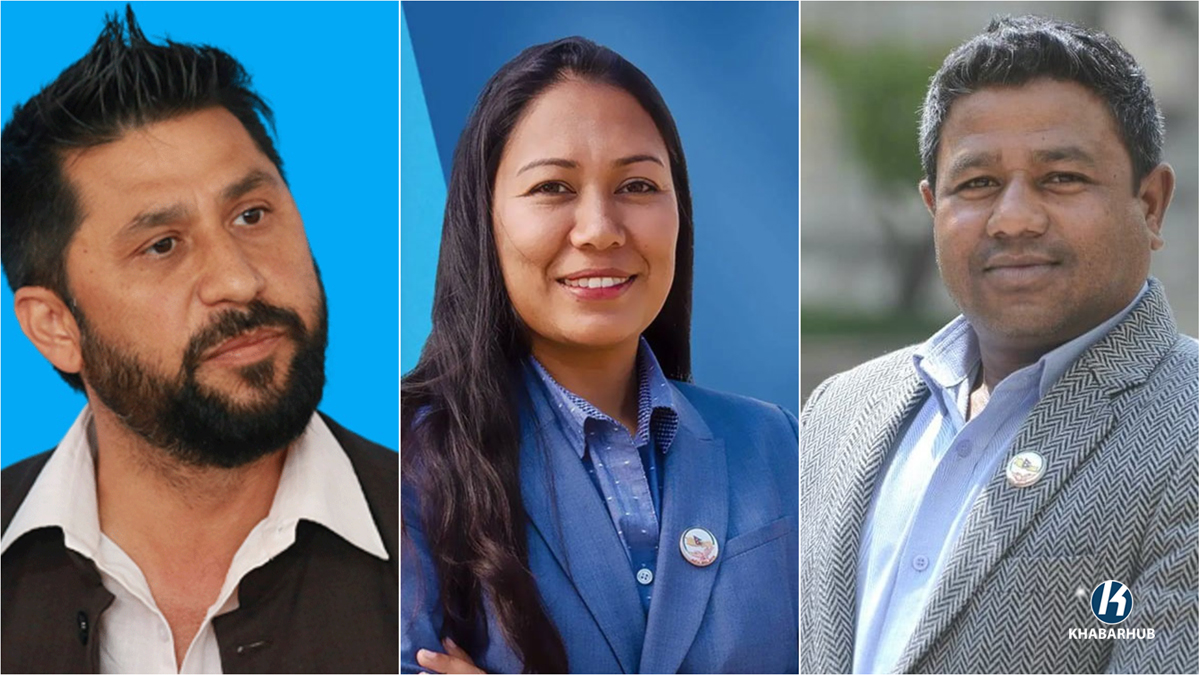
KATHMANDU: The Rastriya Swatantra Party (RSP) is facing an escalating internal crisis after yet another key figure resigned on Friday. Santosh Pariyar, a central secretariat member and former chief whip known for his ideological leadership, announced his departure, marking a significant loss for the party’s intellectual wing.
Earlier, former Education Minister Sumana Shrestha also quit the party. Widely recognized for her policy-oriented contributions and articulate interventions in parliament and its committees, Shrestha had been considered one of the RSP’s most active and ideologically driven leaders.
Pariyar did not single out anyone in his resignation message, stating only that despite sustained ideological discussions within the party, he failed to institutionalize the alternative politics he had envisioned.
Shrestha, however, was more direct. After leaving, she wrote on social media: “When you keep pointing fingers at leaders of the three big parties, accusing them of individualism, do the remaining four fingers not turn toward you?”
She questioned whether it was opportunistic to attempt to build “a new KP, a new Sher Bahadur, and a new Prachanda” within the party while publicly criticizing the same tendencies.
In another setback for the party, Bharatmani Devkota—the owner of the building housing the RSP’s central office in Banasthali-Chamati and former chief of the party’s Disciplinary Commission—resigned recently.
Stating that age had limited his ability to contribute actively, he withdrew his membership from the party website without directing criticism at anyone.
The manner in which Pariyar, Shrestha, and Devkota left the RSP suggests a deeper structural issue: a narrowing space for ideological debate and genuine alternative politics within the party. Their exits indicate growing frustration among independent-minded leaders who feel unable to function freely in the current environment.
Moral question centers on Rabi Lamichhane
The RSP rose rapidly in the 2079 election under the leadership of Rabi Lamichhane, positioning itself as a challenger to Nepal’s traditional political establishment. However, Lamichhane’s tenure has since been marred by controversies—from citizenship and passport issues to accusations of involvement in cooperative fraud.
Lamichhane was stripped of his positions as party chair, minister, and MP during his first tenure as Deputy Prime Minister and Home Minister. Earlier, the Constitutional Bench of the Supreme Court ruled that his reacquisition of Nepali citizenship was invalid, effectively removing him from all official roles.
He later reacquired citizenship following due legal procedures, returned to party leadership, won a by-election in Chitwan, and re-entered parliament—developments that helped neutralize the legal and nationality-related criticisms against him.
However, the cooperative fraud allegations have continued to shadow his political career. Last Kartik, while serving as managing director and shareholder of Gorkha Media Network, he was arrested in connection with money embezzled from five cooperatives—an issue that remains unresolved and continues to place the party in a serious moral dilemma.
Lamichhane, despite being suspended as a Member of Parliament, has not stepped down from his position as the leader of RSP. His continued leadership, in the face of growing controversy and legal issues, has become a significant point of contention within the party.
On September 8 and 9, the Gen-Z youth revolt—spurred by dissatisfaction with traditional political parties—delivered a fierce blow to the leadership of KP Sharma Oli’s two-thirds majority government and has since fueled calls for new political leadership and reforms.
The Gen-G revolt, which demanded a more ethical and transparent state system, has led to political polarization, with some communist parties splitting. The revolt marked the beginning of a political transition in the country, creating a new dynamic in the power structure.
However, in this changing landscape, Lamichhane’s continued leadership, despite legal questions surrounding his citizenship and involvement in cooperative fraud, has raised serious moral concerns.
As the country looks for a virtuous political force, the question arises: How can the RSP, under Lamichhane’s leadership, present itself as a genuine alternative to the traditional political parties?
If elections are held, how can the party convince the public to trust it, with Lamichhane, a controversial figure, at its helm? This dilemma has become a moral challenge for the party, especially as Lamichhane continues to lead the party while facing legal charges.
Growing discontent and the call for collective decision-making
As defections from the party’s leadership continue, Ganesh Karki, a central member of the RSP with a known rebel stance, has called for introspection and collective decision-making. On social media, Karki raised important questions about the reasons behind the exits of several key leaders, including Santosh Pariyar, Sumana Shrestha, Dr. Prabhat, and Hari.
Karki wrote on Facebook, “If Santosh wasn’t allowed to sit in the proportional system for the second time, we could understand his departure. But why did Sumana leave without any such rule? What did Dr. Prabhat and Hari leave without getting?”
Karki’s comments highlight a growing dissatisfaction with the central leadership and decision-making process within the party. He suggested that the party must look beyond blaming those who leave and instead find solutions to the underlying problems.
Karki’s statement calls for a more collective approach to decision-making, pointing to a lack of inclusiveness and shared leadership within the party.
This internal division is not new. Both Karki and another leader, Dr. Toshima Karki, had expressed dissatisfaction publicly during a central committee meeting in Chitwan. Their grievances, along with the recent exits from the party, suggest that the RSP’s leadership structure is increasingly unstable.
If this dissatisfaction remains unaddressed, it could disappoint the supporters who were hoping for a stronger and more cohesive alternative political force.





Comment