




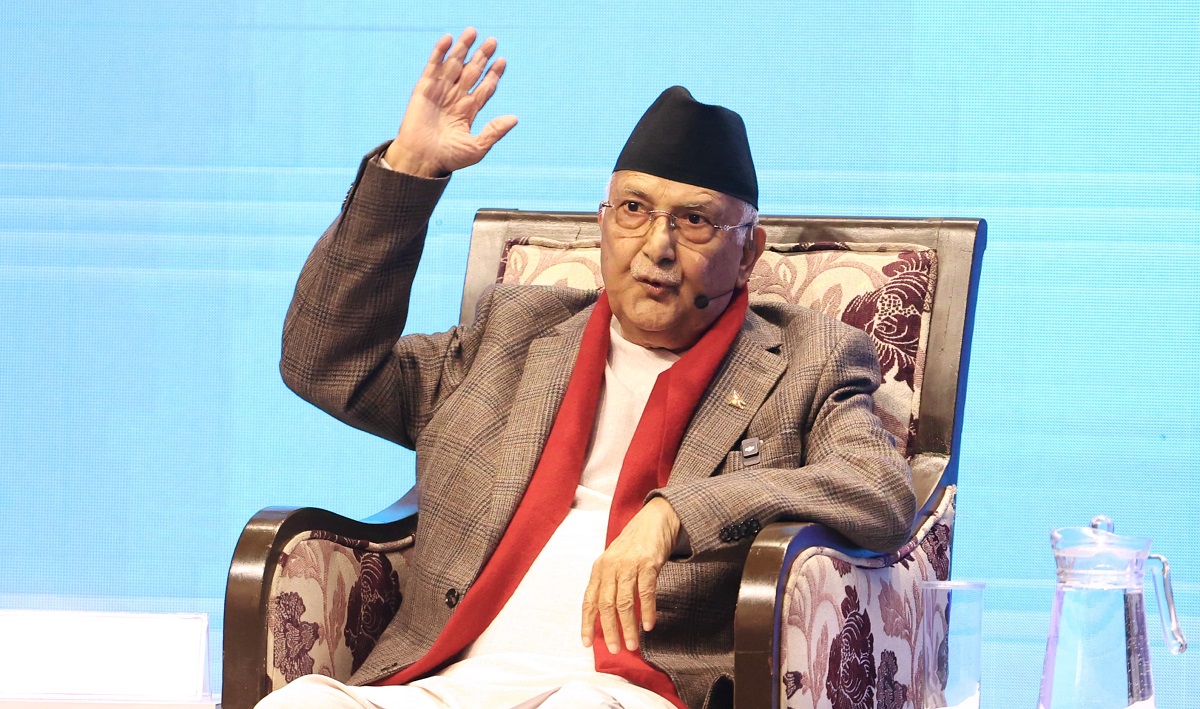
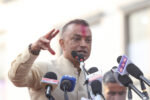
KATHMANDU: CPN-UML Chairperson KP Sharma Oli has blamed foreign-backed conspirators for orchestrating the violent turn of last month’s Gen-Z protests, claiming that the nationwide unrest was a calculated attempt to destabilize Nepal’s political system and undermine national sovereignty.
Presenting a 15-point political report titled The Country’s Political Situation and Our Policy at the party’s ongoing 10th Central Committee meeting in Kathmandu, Oli said while the demands of the protesting youths, focused on anti-corruption, good governance, and free access to digital platforms, were valid, “hidden forces exploited their movement to create chaos and incite bloodshed.”
“There was no disagreement with the youths’ aspirations,” Oli said in his report. “But their peaceful campaign was infiltrated by self-serving and violent elements. A legitimate call for reform was turned into anarchy.”
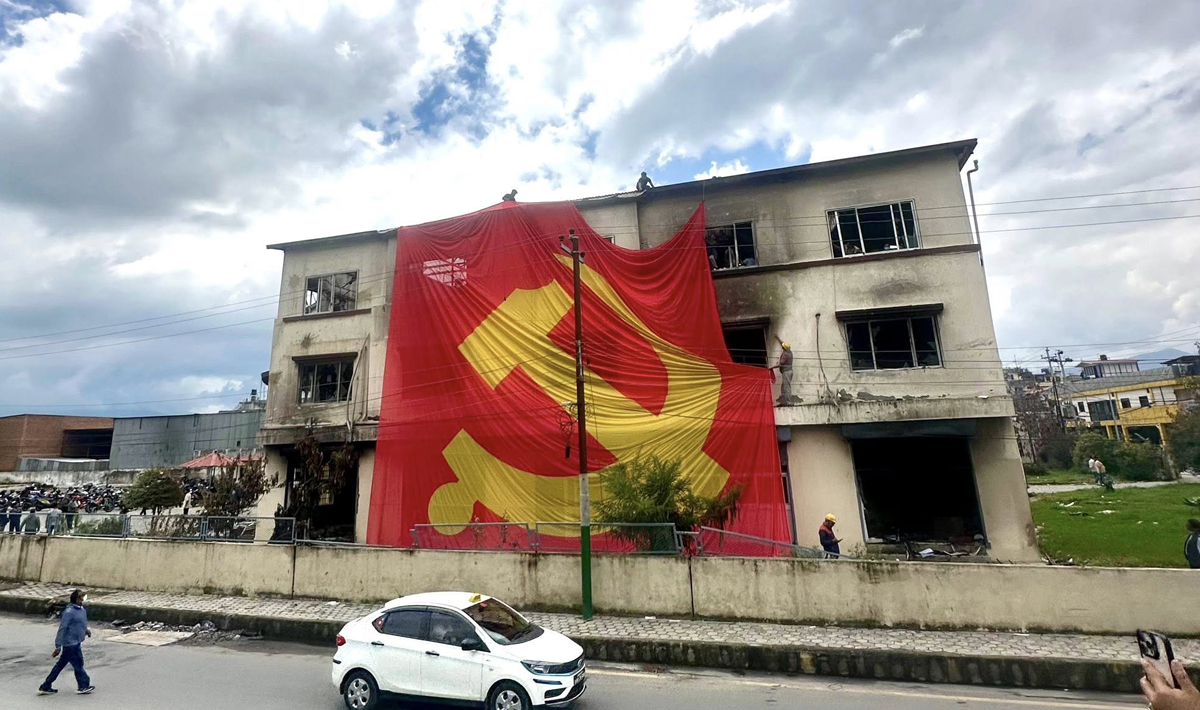
Oli was referring to the Gen-Z demonstrations of September 8 and 9, which began as peaceful rallies but turned violent in Kathmandu and several cities after protesters clashed with police. The clashes left at least 19 people dead, 17 in the capital and two in Itahari, marking one of the deadliest days of political unrest in Nepal since 2006.
According to Oli, the violence was not spontaneous but planned well in advance by forces that wish to reverse Nepal’s democratic and constitutional achievements.
“Gen-Z youths draped in the national flag could not have torched the Parliament, Singha Durbar or the Supreme Court,” he said. “There were bigger powers at play, both within and outside the country.”
The former prime minister also distanced himself and his party from the use of lethal force during the protests, calling the incident tragic and politically motivated.
“The prime minister does not have the legal authority to order a shooting,” Oli said. “Why were other crowd-control measures not used? This needs an impartial investigation, and those responsible must face consequences.”
Oli compared the September violence to color revolutions seen elsewhere, implying that the movement was externally influenced and intended to weaken Nepal’s independence. He warned that Nepal could face prolonged instability if foreign interference in domestic politics is not checked.
The UML chief’s remarks came amid growing debate over the credibility of the Gauri Bahadur Karki-led investigation commission formed by the government to probe the violence. Several opposition parties, including the UML, have dismissed the commission as biased and politically driven.
“This commission cannot uncover the truth,” Oli said. “It was formed to protect those responsible for the tragedy. We demand a new, independent panel led by a former Supreme Court justice.”
Political observers say Oli’s latest statements are part of a broader effort by the UML to consolidate its base ahead of the party’s next general convention. In the same meeting, Oli proposed that the UML’s 11th National General Convention be held in Pokhara from December 13 to 15.
The proposal, expected to be endorsed after internal discussions, effectively signals Oli’s intention to remain at the party’s helm. “Some people think I will step down because of what’s written on Facebook,” Oli reportedly told the meeting. “Leadership changes only through the Central Committee or General Convention, not through social media chatter.”
Oli also reiterated his party’s call for the reinstatement of the dissolved House of Representatives, branding the current government as unconstitutional, illegitimate, and born of regression.
“A government formed through unconstitutional means cannot lead the nation toward elections,” he said. “It has instead destroyed the very environment needed for free and fair polls.”
Oli’s political document outlines a strategy for the UML to strengthen its organizational base, particularly among youths and urban voters, two groups that, he admitted, have become increasingly disillusioned with traditional parties. “Some youths were misled by false promises and propaganda,” Oli wrote. “Our mission now is to reconnect with them through credible action and renewed trust.”
Meanwhile, Speaker Dev Raj Ghimire has intensified his own political consultations, meeting with leaders from across the political spectrum to discuss the possibility of reinstating Parliament. Leaders from both ruling and opposition parties have termed the dissolution of the House on September 12 as unconstitutional and undemocratic.
The Supreme Court has already received ten writ petitions challenging the dissolution and the subsequent formation of Prime Minister Sushila Karki’s interim government. The court, which resumed full operations this week, is expected to begin hearing the writs soon.
Observers believe Oli’s push for Parliament’s reinstatement aligns with a broader opposition strategy to isolate the Karki administration and position the UML as a defender of constitutionalism.
Political analyst Tanka Karki said Oli’s rhetoric appears aimed at reviving nationalist sentiments within his base. “Oli is trying to regain his image as a protector of national sovereignty while distancing himself from the recent unrest,” Karki said. “But his allegations of foreign involvement remain unsubstantiated.”
As the UML’s central committee meeting continues, discussions are expected to focus on organizational reform, youth mobilization, and the party’s preparation for the proposed December convention.
For now, Oli appears determined to hold his ground. “There is no alternative to a people’s movement for peace, stability, and democracy,” he said, concluding his report. “Those who plotted the recent violence will fail, but the nation must remain vigilant.”


Comment