





KATHMANDU: The second week of September 2025 will be remembered as one of the most pivotal—and volatile—periods in Nepal’s modern political history. What began as a seemingly minor backlash against a proposed TikTok ban quickly escalated into a nationwide uprising, led by Generation Z, that toppled a sitting government, razed key institutions, and exposed the deep, long-simmering frustrations of the country’s youth.
At the heart of their anger was not just censorship, but decades of unchecked corruption, elite privilege, and a political system that they believed had consistently failed to deliver justice, opportunity, or accountability. What unfolded was not merely a protest over a social media app—but a collective revolt against a corrupt establishment that many felt had robbed them of their future.
September 8: The Spark
The immediate trigger was the government’s decision to ban TikTok, citing concerns over “social harmony” and “national security.” For many older politicians, it was a typical move to curb dissent and maintain control.
But for young Nepalis—digitally native, politically disillusioned, and deeply cynical of establishment motives—it was the last straw. TikTok was more than just a platform; it was a digital commons where political awareness, satire, and organizing converged. The ban was seen as an authoritarian attempt to silence youth voices.
What followed was unprecedented. By Monday morning, thousands of young protesters had flooded the streets of Kathmandu, converging on Maitighar and New Baneshwor. Their demands went far beyond social media rights.
The protests swiftly transformed into a broad-based uprising against entrenched corruption, political nepotism, unemployment, and decades of systemic exclusion. They carried placards denouncing aging leaders, slogans targeting political dynasties, and chants calling for justice and reform. Some signs were simple but searing: “The dirtiest pig is KP Oli,” read one, reflecting the raw anger on the streets.
This was not a traditional political protest. It was leaderless, organic, and digitally coordinated through TikTok, Instagram, and X (formerly Twitter). Unlike the hierarchical structures of the past, the Gen-Z protest was decentralized, with decisions made in real time via group chats and livestreams. It was loud, visually powerful, and charged with urgency.
September 9: The Explosion
By Tuesday, the protests had escalated beyond Kathmandu. Curfews were imposed across the Valley, but they came too late. The government’s response—deploying tear gas, batons, and live ammunition—only poured fuel on the fire.
Nineteen protesters were killed in one day. Thousands were injured. The death toll, destruction, and suppression sparked outrage not just in urban centers but across provinces.
What followed was a wave of fury unmatched in Nepal’s recent memory. Protesters, enraged by police brutality, began targeting the physical symbols of state power and political privilege. They stormed and set fire to the ruling Nepali Congress headquarters in Sanepa.
The private residence of Prime Minister KP Sharma Oli in Balkot was torched. The homes of former Prime Ministers Sher Bahadur Deuba, Pushpa Kamal Dahal, and other senior leaders were vandalized and burned.
Even institutions once considered untouchable—the Supreme Court, Singha Durbar, and the Parliament building—were attacked and severely damaged. Protesters claimed these institutions no longer represented the people. They were, in the words of one protestor, “bunkers for corrupt elites.”
In a dramatic act of defiance, the national flag was pulled down from Singha Durbar and replaced with a handwritten banner that read: “Youth will rewrite the system.”
September 10: Collapse and Transition
The magnitude of the unrest forced Prime Minister KP Sharma Oli to resign. Citing Article 77(1)(a) of the Constitution, he announced his decision in a terse letter, acknowledging that the country faced “extraordinary circumstances” and required a political reset. His resignation was both a capitulation and a tactical retreat.
Later that day, President Ram Chandra Paudel appointed former Chief Justice Sushila Karki as interim Prime Minister under Article 61—a constitutional clause never before invoked for this purpose. It marked a break from tradition and a symbolic shift toward a neutral, non-party caretaker government. Karki, known for her reformist stance during her time as Chief Justice, was widely seen as a credible figure to lead the transition.
Her appointment fulfilled a key demand of the Gen-Z protestors: the formation of a non-partisan interim government that would dissolve Parliament and pave the way for new elections. The swearing-in ceremony was quiet but charged with symbolism. For the first time in Nepal’s history, the country had both its first female Prime Minister and its first executive leader not drawn from traditional party ranks.
September 11: Rebuilding From Ashes
Prime Minister Karki’s first move was to dissolve the House of Representatives—a bold decision approved swiftly by President Paudel. Elections were announced for March 5, 2026 (Falgun 21). The interim government’s mandate was clear: restore order, begin reconstruction, and hold credible elections within six months.
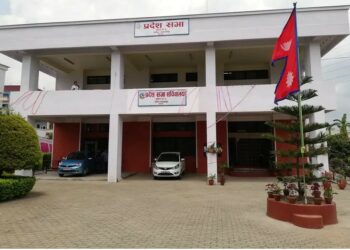
But the cost of the past 72 hours was staggering. Government agencies reported that public infrastructure worth more than Rs 200 billion had been destroyed. Singha Durbar, Parliament, Supreme Court—all were severely damaged, some beyond repair. Police stations, provincial assembly halls, district offices, and municipal buildings across Nepal were either looted or burned. In addition to physical damage, historical documents, case files, government records, and evidence vital to public administration had been reduced to ashes.
Ministry of Urban Development officials called the destruction “overwhelming,” noting that the cost of rebuilding was not just financial, but institutional and psychological. “We have to restart from zero,” a senior engineer said. “Like after a civil war.”
Friday to Sunday: A New Political Grammar
By week’s end, the streets had calmed. The army remained deployed in major cities, but the worst of the violence had passed. In her first public address, Prime Minister Karki appealed for national unity and reconstruction.
Speaking from a temporary office—since her predecessor’s had been burned—she said, “We have reached zero. Now we rebuild. But we rebuild with honesty.”
Her message resonated with many, but challenges loomed. She emphasized that the reconstruction effort must be resourced domestically, without dependence on foreign aid, and must include those most affected by the violence—especially youth.
President Paudel, in a separate address, acknowledged the suffering caused by the protests but insisted that the democratic republic had survived. “This was not the end of Nepal,” he said. “It was a reckoning.”
Broader Meaning: A Reckoning, Not a Revolution—Yet
While the Gen-Z uprising achieved its immediate goal—the resignation of KP Sharma Oli and the formation of an interim government—it opened deeper questions. Was this simply a breakdown of order, or the beginning of something new? Could this be a moment of democratic renewal, or would it slide into a new cycle of chaos?
What made the movement powerful was not just its anger, but its clarity. Unlike previous uprisings, it wasn’t led by party factions or ethnic blocs. It wasn’t about ideology. It was about accountability, transparency, and the belief that the political class had failed an entire generation. For many young Nepalis, this was their first political act—not in service of a party, but in defense of a principle: that power must serve people, not itself.
But the violence also revealed the risks of leaderless uprisings. Without structured leadership, the movement was easily infiltrated by anarchic groups. Vandalism spiraled, and some targets—such as media houses and public infrastructure—raised concerns about indiscriminate rage. For this movement to evolve from protest to transformation, it will need not just momentum but vision.
The next six months will be crucial. The interim government, tasked with rebuilding a battered state, must prove that trust can be restored. And Generation Z must decide: Will it remain a force of disruption, or can it mature into a force of reconstruction?

Comment