




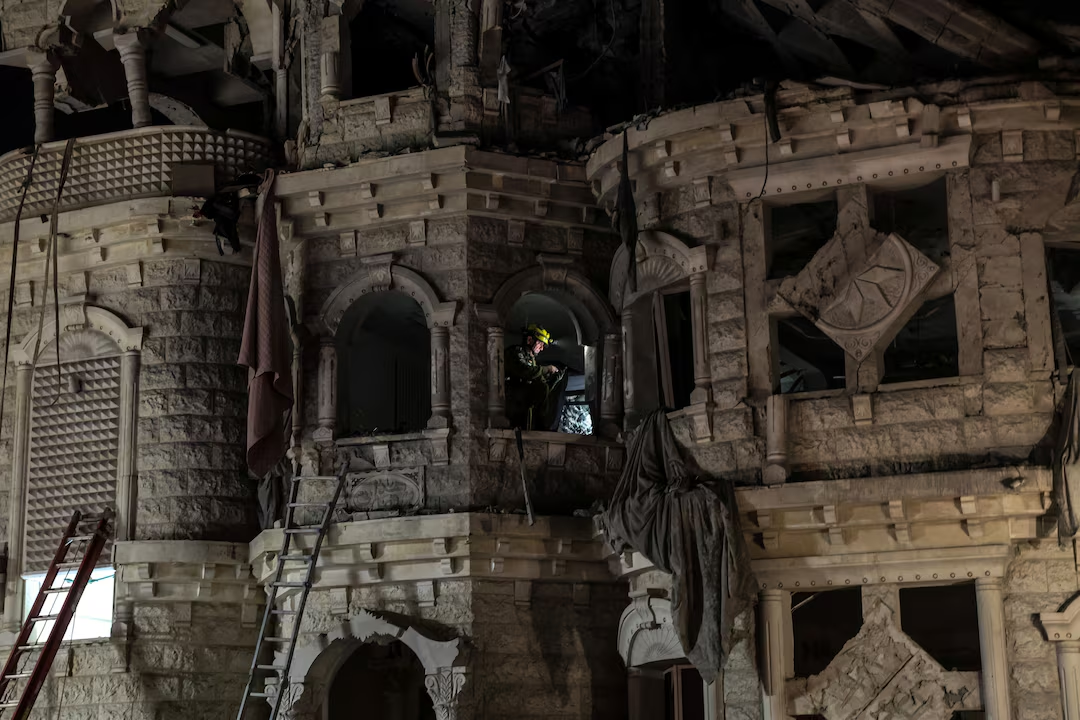
TEL AVIV: Israel and Iran engaged in a new round of attacks on each other overnight into Sunday, escalating fears of a broader regional conflict.
This latest confrontation came after Israel expanded its surprise offensive by targeting the world’s largest gas field in Iran, according to Reuters.
In response, Tehran suspended nuclear talks that the U.S. had pushed as the only path to halting Israeli airstrikes. Israeli Prime Minister Benjamin Netanyahu warned that Iran had seen nothing yet compared to what lies ahead.
According to Israel’s military, additional missiles were fired from Iran overnight, prompting Israel to target military sites in Tehran. Air raid sirens sounded across Jerusalem and Tel Aviv early Sunday, as interceptor rockets lit up the sky and explosions rang out in both cities.
Israel’s emergency services confirmed that three women were killed and 10 others injured when a missile hit a home in northern Israel.
In Tamra, a mostly Palestinian city, rescuers with flashlights were seen searching through rubble. Two others were lightly wounded by shrapnel in separate incidents in the north, Reuters said.
Iran reported that the Shahran oil depot in Tehran had been struck by Israeli missiles, leading to a fire. A separate Israeli strike hit an oil refinery near the capital, and Iran’s Tasnim news agency said another attack caused minor damage to a defense ministry facility.
The Iranian Revolutionary Guards said they had launched drones and missiles at Israel’s energy infrastructure and jet fuel production facilities. They warned that if Israeli attacks continue, Tehran’s response would intensify.
While former U.S. President Donald Trump warned Iran of worse consequences, he also indicated that the Israeli offensive could still be halted if Iran agreed to significantly scale back its nuclear program.
A planned round of U.S.-Iran nuclear talks in Oman was canceled. Iranian Foreign Minister Abbas Araqchi said negotiations could not proceed while Iran was under what he called Israel’s “barbaric” bombardment.
Saturday’s Israeli strike on the South Pars gas field in southern Iran forced a partial shutdown. The field, located offshore in Bushehr province, supplies most of Iran’s natural gas. Oil prices had already jumped 9% on Friday over fears of disrupted regional exports, although Israel initially avoided hitting Iran’s oil and gas sector.
Iranian General Esmail Kosari said Tehran is considering closing the Strait of Hormuz, a vital route for global oil tankers.
Meanwhile, Iran claimed 78 people died on the first day of Israel’s assault, with many more killed on the second day. Among them, 60 people, including 29 children, died when a missile destroyed a 14-story residential building in Tehran.
Iran’s Friday night retaliatory missile barrage killed at least three people in Israel.
As Netanyahu declared that the operation could last for weeks and encouraged Iranians to rise up against their rulers, fears mounted that the fighting could escalate into a wider war involving other nations.
The Israeli rights group B’Tselem criticized the government’s choice to launch a war rather than pursue diplomacy, warning of the regional danger it posed.
Tehran also warned that any foreign military bases aiding Israel could be targeted. Still, Iran’s retaliatory capacity may be limited after years of war have weakened its main regional allies—Hamas in Gaza and Hezbollah in Lebanon.
(Input from Reuters)





Comment