



As Nepal grapples with ongoing political instability, fractured governance, and a deepening crisis of public trust, an interim government has been approved—but are the strategic national challenges in sight?
One potentially transformative group remains largely overlooked: the veterans of the military—the Nepali Army—as well as law enforcement forces.
Nearly three decades after the 2006 Comprehensive Peace Agreement, two decades of political, socio-economic, and security transition, and almost a decade since the 2015 promulgation of the Constitution, Nepal is yet again entering a national crisis—now coupled with the Generation Z uprising.
Nepal is in a state of “immediate security comfort with an upcoming civil disturbance and imminent security-political crisis.”
People are in search of good administrators, and veterans—men and women who have dedicated their lives to constructive change—are the right choice. Yet they remain on the fringes of political and economic life. While some were integrated into state structures, others were left on their own to navigate a disillusioning peace, with transformation possibilities left unfulfilled.
But as time reshapes memory and new political actors emerge across the country, a crucial question looms: What role will veterans play in shaping Nepal’s political future?
Nepal must approach the veteran question not as a welfare issue alone, but as a strategic priority for political stability and national credibility.
Just as importantly, what lessons can be drawn from other nations where veterans have entered politics—with outcomes both inspiring and cautionary?
From Warriors to Politicians: Global Lessons in Power and Transition
As Nepal continues to navigate its complex post-conflict political transition, an underexplored opportunity lies in the potential political engagement of its security veterans—both from the national defense forces and law enforcement agencies. While debates around civil-military relations in Nepal are often cautious and emotionally charged, examples from other countries offer valuable insights.
One such case is Singapore, where the transition of army generals into political leadership has been both structured and impactful.
In Singapore, the ruling People’s Action Party (PAP) has long drawn talent from the ranks of the Singapore Armed Forces (SAF). Prominent leaders such as Prime Minister Lee Hsien Loong, who once held the rank of Brigadier-General, and Ministers Chan Chun Sing and Ng Chee Meng, both former Major-Generals, exemplify a model where military leadership experience is seen as an asset rather than a liability in politics.
These figures are not outliers but part of a broader, institutionalized pipeline that grooms high-performing military officers for eventual public service.
This model has worked for Singapore because it is disciplined, meritocratic, honest, pragmatic, and carefully managed. Military leaders undergo political orientation, are tested in civil administrative roles, and are expected to respect civilian supremacy.
Once in office, many have led key ministries—such as education, labor, defense, and social development—bringing with them a performance-driven ethos rooted in military efficiency but adapted to civilian governance.
Around the world, army veterans have long transitioned from the battlefield to the ballot box, often bringing a stabilizing influence and a deep sense of public service to political life.
In the U.S., General Dwight D. Eisenhower, a World War II hero, became a widely respected president who ended the Korean War, expanded infrastructure, and famously warned against the unchecked power of the military-industrial complex.
In India, General V.K. Singh used his position as a former Army Chief and later as a Union Minister to advocate for veterans’ welfare and national infrastructure development.
Similarly, in Ghana, Flight Lieutenant Jerry Rawlings transitioned from military ruler to democratically elected president, overseeing economic reforms and laying the groundwork for multiparty democracy.
In Colombia, former police general Óscar Naranjo played a crucial role in the peace process with FARC rebels, demonstrating how security-sector veterans can contribute to post-conflict reconciliation.
Whether in Croatia, where General Ante Gotovina helped depoliticize the armed forces, or in Kenya, where Major-General Joseph Nkaissery strengthened internal security systems, military veterans have shown they can be agents of positive change—provided their transition is rooted in democratic norms and guided by a commitment to public service.
These examples point to a broader global pattern: that the veteran-to-politician pathway is not only possible, but often inevitable—especially in transitional and post-conflict societies where former soldiers hold symbolic, social, and organizational capital.
Veterans often enjoy strong public trust and can leverage their leadership skills to promote good governance, institutional and structural reforms, and national unity. Their military background typically instills a sense of discipline, duty, and resilience—qualities often missing in volatile political landscapes.
Importantly, veterans who succeed politically tend to respect democratic institutions, civilian oversight, and the rule of law.
A Path Forward for Nepal
For Nepal, which has witnessed a very different trajectory—marked by civil war, a fragile peace process, a geopolitically sensitive region, and an ongoing trust deficit between state institutions and the public—the idea of veterans enrolling in politics is often met with skepticism. Yet perhaps that is precisely why it deserves fresh consideration.
Veterans from the Nepal Army, Nepal Police, and Armed Police Force—especially those known to be virtuous and who have served in peacekeeping missions—carry leadership experience, crisis management skills, and public trust that could be constructively harnessed in national politics.
A Nepal-specific approach could begin by distinguishing between the politicization of the security sector—clearly undesirable—and the creation of non-partisan pathways for veterans to enter public service, local governance, or even parliament.
Just as Singapore ensured that its generals respected democratic norms, Nepal must build safeguards to ensure that veteran involvement enhances—rather than threatens—democratic consolidation.
In a time when the Nepali public is increasingly disillusioned with the traditional political class, trusted figures from outside traditional party structures—such as veterans—could offer a credible alternative.
If managed with transparency, training, and democratic values, the experiences of Singapore and other countries show that former soldiers can contribute meaningfully to nation-building—especially in societies yearning for discipline, accountability, and vision.
Nepal doesn’t need to copy any one model, but it can learn from their pragmatism. Nepal’s unique veteran landscape—men and women who have long served the nation in uniform—may now be ready to serve in a new role.
It may now be time to ask: How can they serve in a new capacity—one that strengthens the nation they once defended?
Paths to Political Relevance as Political Force or Pressure Group?
Nepal’s veterans could influence the nation’s political trajectory in several ways. One is through the formation of a “Veterans-Based Political Party.” It is not unthinkable that a new political party could emerge, rooted in a shared identity.
Such a party could frame its mission around justice, dignity, anti-corruption, the professionalization of institutions, and national service—offering an alternative to the current parties mired in corruption and status quo-ism.
This would mirror, to some extent, the formation of the People’s Action Party (PAP) in Singapore, where veterans have had sustained political influence and effective legacies.
A second path is through a “pressure group or unionized movement.” Veterans could organize into a national association or lobby—not necessarily a political party, but a well-organized pressure group for influencing national political-security policies and strategic direction.
This could involve advocating for constitutional amendments, anti-corruption drives, addressing the misuse of authority and excessive use of force in a democracy, and pushing for electoral justice.
A third, more organic possibility lies at the local level. Some veterans are already active in rural areas as social workers, cooperative leaders, or informal power brokers.
With decentralization, some could gradually rise into local government positions. Over time, this could create a grassroots veterans’ political network with national implications.
Promise and Peril of Veteran Politics with Opportunities and Risks
The political inclusion of veterans offers tangible benefits. First, it brings legitimacy. Veterans often carry moral authority, especially in communities where they served. Their inclusion in politics can deepen democratic legitimacy and provide representation for neglected groups.
Nepal, in its search for discipline and mobilization, could benefit from veterans’ disciplined backgrounds. They often bring organizational structure and mobilization capacity that can be politically effective.
Veterans can also serve as a bridge between conflict and peace. In the context of a lost transition that has invited multiple national strategic challenges and eroded national credibility, veterans who embrace democratic norms can act as stabilizing figures—reminding newer generations of the cost of war and the value of peaceful change.
However, the risks are equally important. One risk is the militarization of politics. If veterans resort to force or the threat of violence, their participation can backfire, reintroducing fear and coercion into political life. Another risk is fragmentation among competing veteran factions—loyal to different commanders or ideologies—which could further fragment Nepal’s already fragile political landscape.
The challenge, then, is not whether veterans should engage in politics or public service, but how their inclusion can be managed to safeguard against militarization, factionalism, and populist radicalism.
Lastly, there is the danger of populist approaches. Marginalized veterans may be tempted by demagogues or extremist ideologies that promise revenge or restoration, rather than reform.
A Strategic Imperative
Nepal must approach the veteran question not as a welfare issue alone, but as a strategic priority for political stability and national credibility. Continued neglect risks transforming disillusionment into unrest. This ongoing marginalization is not just a moral failure but a strategic risk. A generation that once believed in transformation should not be condemned to disillusionment and economic exile.
At the same time, their inclusion must be principled, not opportunistic. Veterans must be encouraged to participate in democratic politics, but within a framework that respects the rule of law, pluralism, and nonviolence. The path forward demands several commitments.
First, there must be investment in veteran welfare and reintegration programs—not just pensions, but also psychological support and educational opportunities. Second, platforms for political education must be created, so that veterans can transition from command structures to civic engagement. Third, national recognition and remembrance should be prioritized to honor the sacrifices of all sides, without glorifying war.
Constructive inclusion—rooted in respect, not tokenism—could transform veterans from symbols of unfinished revolution into stewards of democratic renewal.
Conclusion: From Margins to Mandate
As Nepal stands at a critical crossroads—marked by deepening political disillusionment, a legitimacy crisis, and growing civic unrest—the time has come to rethink the role of one of its most overlooked yet potentially transformative communities: its veterans.
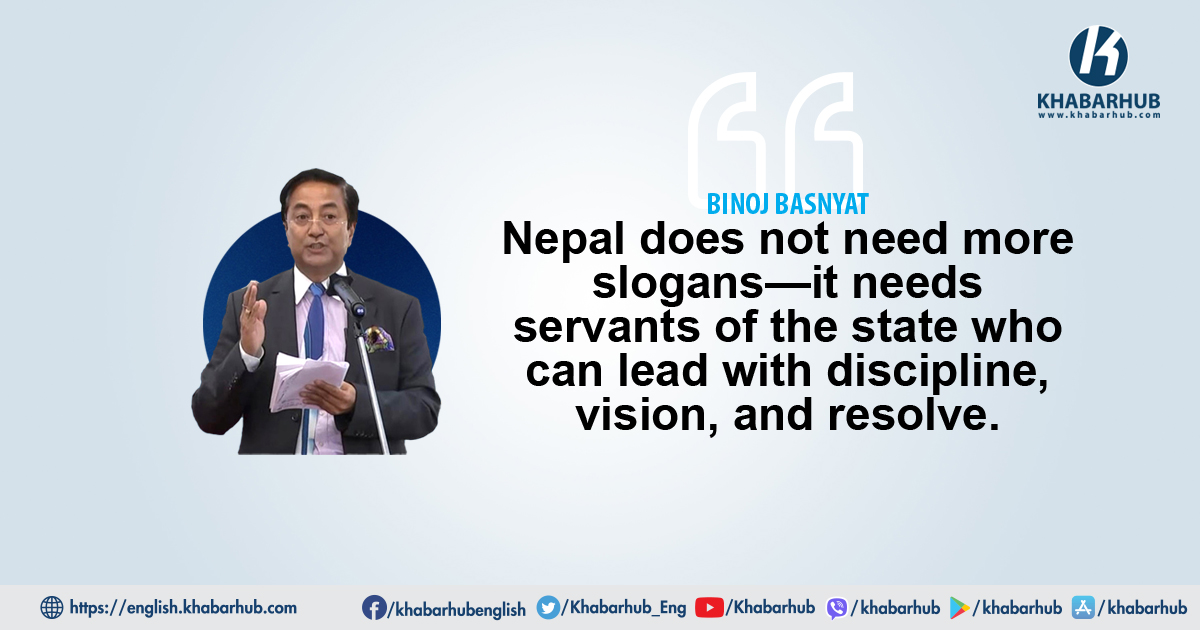
Nepal does not need more slogans—it needs servants of the state who can lead with discipline, vision, and resolve. Its veterans may be just that force: not warriors seeking power, but citizens ready to serve again—this time, in the unfinished battle for democracy.
These men and women, forged in service and discipline, have navigated conflict, peacekeeping, state-building—and now, abandonment. Yet in their shared experience lies an untapped reservoir of leadership, public trust, and institutional knowledge that could help stabilize and rejuvenate Nepal’s fragile democracy.
Global experiences—from Singapore’s meritocratic model to Colombia’s post-conflict inclusion, from the moral authority of Eisenhower in the United States to grassroots activism in Africa—show that when veterans enter politics or civic life within democratic norms, they can become anchors of accountability, agents of reform, and champions of national cohesion. Nepal need not replicate these models wholesale, but it can draw valuable lessons from their pragmatism, structure, and respect for civilian supremacy.
The challenge, then, is not whether veterans should engage in politics or public service, but how their inclusion can be managed to safeguard against militarization, factionalism, and populist radicalism.
Whether through a new political party rooted in service and integrity, a national pressure group advocating for strategic reform, or local leadership rising from the ground up—veterans deserve more than ceremonial respect. They deserve a real stake in the republic they once defended.
Failing to integrate them constructively risks compounding Nepal’s ongoing crisis. But doing so with clarity, care, and constitutional safeguards could turn disillusionment into democratic renewal.
Veterans of Nepal are not just relics of the past. They are living testaments and potential leaders of a future Nepal—one still struggling to define its democratic identity and national purpose.
They may emerge as reformers—not just by default, but because they are among the few left with both the moral legitimacy and the practical experience to lead. The question is whether Nepal’s institutions have the vision to engage them constructively.
The battlefield may be silent, but the political war for Nepal’s future is far from over. Veterans could yet be its decisive force—from legacy to leadership. Nepal does not need more slogans—it needs servants of the state who can lead with discipline, vision, and resolve. Its veterans may be just that force: not warriors seeking power, but citizens ready to serve again—this time, in the unfinished battle for democracy.
(Basnyat is Maj. General (Retd.) and a strategic affairs analyst based in Kathmandu. He writes on South Asian geopolitics, national security, and the intersection of governance, diplomacy, and stability)




Comment