




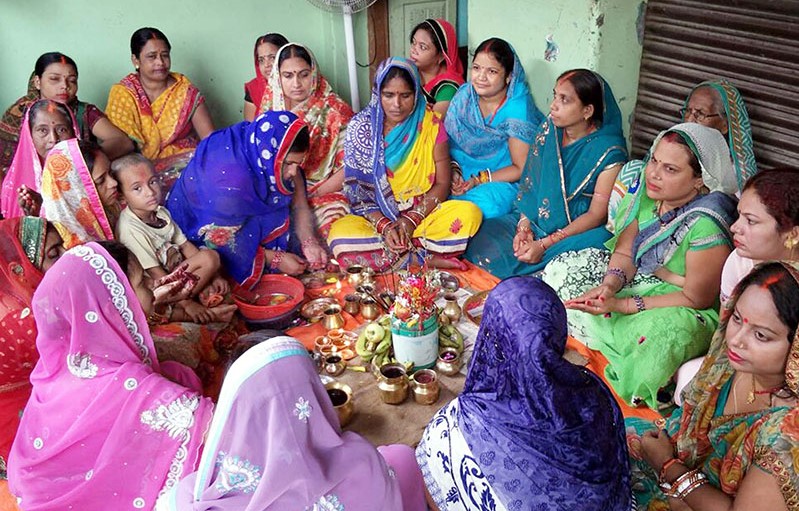
MAHOTTARI: Mothers across the ancient Mithila region of Madhesh have begun observing the Jitiya fast today, praying for the longevity, prosperity, and well-being of their children.
The Jitiya festival, rooted in Mithila tradition, is observed on the Ashtami Tithi of Asoj Krishna Paksha, also known as Pitru Paksha.
Early Saturday morning, after bathing in holy reservoirs, women of Mithila—referred to as Santhanavati Mithila—took a vow to fast and consumed the traditional pre-fast meal known as Ogatan (also called dara) before midnight.
Although the Ashtami Tithi officially begins only at 8:44 a.m. today, the fasting ritual commenced at midnight, in accordance with local customs and timing considerations.
“The fast begins after Ogatan, even if the Tithi hasn’t yet started,” explained Naginadevi Mahato, a fasting devotee from Bardibas-2, Om Shantichowk.
According to the Mithila Panchang and Vidyapati Panchang, the fast will conclude after 7:00 a.m. on Monday. In Mithila culture, these two almanacs serve as authoritative guides for all religious observances, including festivals, Shraddha (ancestral rites), and auspicious ceremonies.
As per Maithil ritual expert Pandit Dinesh Kumar Jha of Bardibas-2, after completing the Jitiya fast on the Ashtami, devotees are advised to continue the observance for an additional hour on the Nawami (ninth) day.
The Jitiya festival is marked by a blend of devotion, ancestral remembrance, and ritual purity. On the seventh day of the lunar fortnight, devotees bathe in sacred waters, remember their ancestors, and take a vow to maintain a strict fast.
It is believed that observing the Jitiya fast with sincerity not only brings blessings to children but also grants immense spiritual joy and fulfillment to mothers. Conservation of these rituals is seen as key to preserving the spiritual and cultural heritage of Mithila.





Comment