




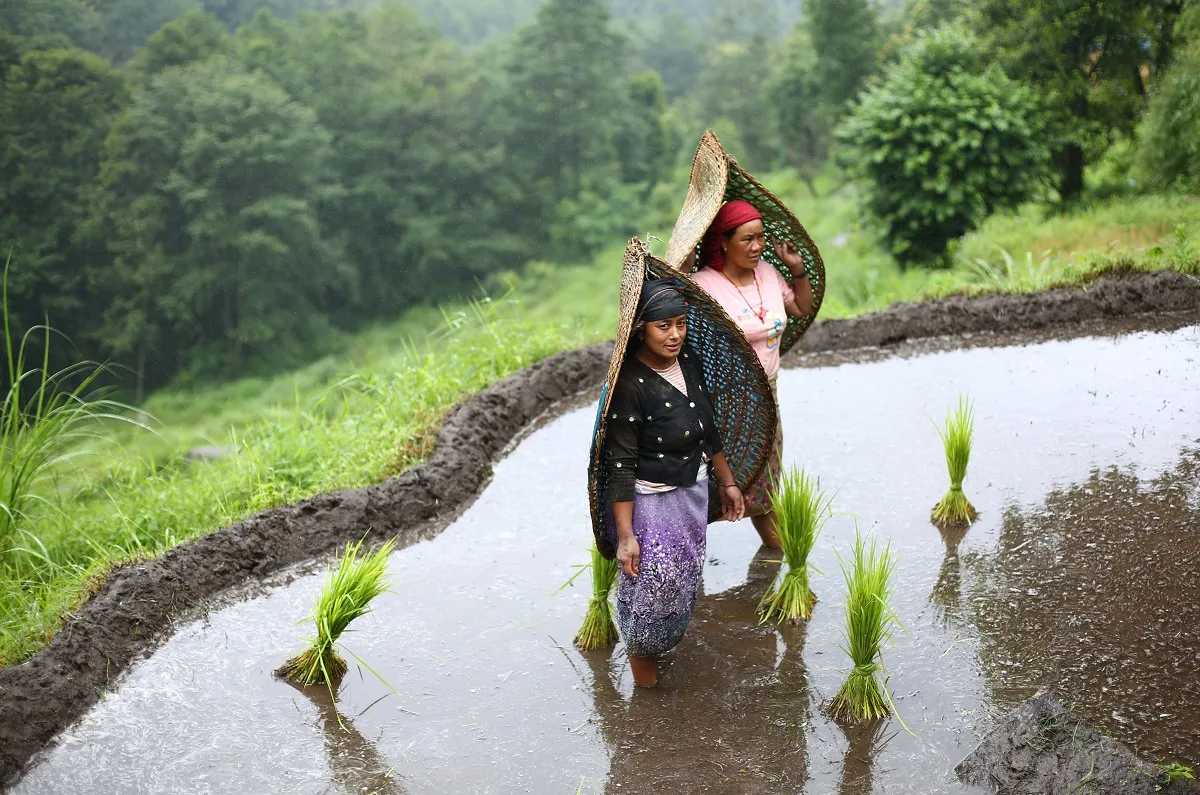
KATHMANDU: As of July 13, paddy plantation has been completed across approximately 59 percent of cultivable land in Nepal, according to the Ministry of Agriculture and Livestock Development.
A total of 816,405 hectares of land has been planted, marking an almost 8 percent decrease compared to the same period last year.
Sudurpashchim Province has reported the highest progress, with paddy plantation completed on around 164,000 hectares of land — about 93 percent of its target area. Similarly, Karnali Province has reached 83 percent plantation, covering 64,000 hectares, while Lumbini Province has completed plantation on 223,000 hectares, which is 73 percent of its total area.
At the same time last year, roughly 67 percent of the paddy plantation had been completed nationwide.
According to data compiled by the Ministry as of Sunday, plantation is ongoing in some parts of the country. It is projected that about 98 percent of the total paddy cultivation will be completed by the final week of Shrawan (mid-August).
Information Officer at the Ministry, Mahananda Joshi, stated that the Tarai region remains the most productive area for paddy cultivation, contributing around 70 percent of the total national output. The remaining 30 percent comes from the hilly regions.
In fiscal year 2023/24, Nepal produced 5.72 million metric tons of paddy. However, this year’s plantation has been negatively affected in several areas due to unfavorable weather conditions, including floods, droughts, and other natural disasters, resulting in delays in the plantation process.
Nepal has approximately 1.4 million hectares of land suitable for paddy cultivation. With improvements in agricultural knowledge, technology, and access to quality seeds, the ministry expects to see a gradual rise in productivity.
Experts note that a 10 percent change in paddy production can directly influence the country’s Gross Domestic Product (GDP) by approximately one percent.
The ministry has projected that this year’s estimated paddy production — around 6 million metric tons — will yield about 3.5 million metric tons of edible rice.






Comment