




KATHMANDU: The revelation of an alleged illegal trade involving the eggs of minor girls has cast a long shadow over Nepal’s in-vitro fertilization (IVF) sector, triggering serious concerns about regulation, ethics and accountability in fertility treatment.
IVF is a medical process in which fertilization takes place outside a woman’s body, in a laboratory. In recent years, the growing problem of infertility has led to a rapid rise in IVF centres across Nepal, promising hope to childless couples. However, the sector has now come under intense scrutiny following allegations that minors were exploited and their eggs sold for profit.
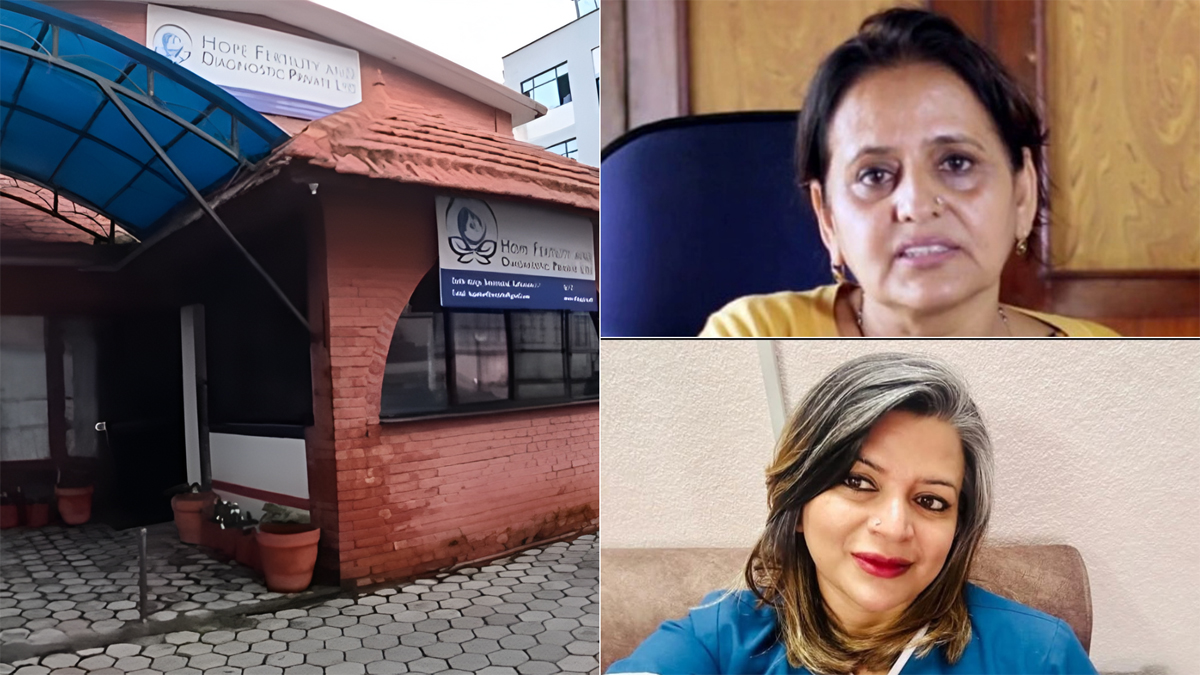
The controversy centres on Hope Fertility and Diagnostic Centre in Babarmahal and Angel Fertility Clinic in Maharajgunj, both operated by well-known IVF specialist Dr Swati Sharma. In August, reports surfaced alleging that the clinics lured underage girls, extracted their eggs and sold them to donors at high prices. Following the revelations, Nepal Police’s Central Investigation Bureau arrested Dr Sharma along with five others for investigation.
Despite the gravity of the allegations, the Office of the Attorney General decided not to file a case, citing insufficient evidence. The decision sparked widespread outrage, particularly as the case involved claims of medical exploitation of minors. Acting on behalf of the victims, advocate Ankita Tripathi filed a writ petition at the Supreme Court on November 30, naming the Attorney General’s Office among the respondents.
After hearing the petition on December 1, the Supreme Court issued a show-cause order, asking why the decision not to prosecute should not be overturned. The court directed the Attorney General’s Office to submit a written explanation clarifying the legal grounds for dropping the case.
The writ petition argues that the acts alleged, falsifying age, conducting procedures without guardian consent, sedating minors for seven to nine hours without food or water, and forcibly inserting medical instruments, fall within the scope of rape, human trafficking and serious criminal offences. Legal experts have described the decision not to prosecute as arbitrary and unjustified.
The case has returned to the centre of public debate, particularly after media reports suggested a potential conflict of interest involving Attorney General Sabita Bhandari and individuals linked to the clinics. These revelations have intensified questions about the independence of the prosecutorial decision, with growing calls for Bhandari’s resignation following the Supreme Court’s intervention.
Amid the controversy, some medical professionals have cautioned against broadly criminalizing egg extraction and donation. Dr Shree Prasad Adhikari, Director of Paropakar Maternity and Women’s Hospital, argues that while those responsible for wrongdoing must be held accountable, egg donation itself should not be treated as a serious crime.
According to Dr Adhikari, donating eggs and sperm that would otherwise go to waste can help childless couples and is a common practice in many countries. He believes Nepal should focus on creating clear laws and strict regulatory mechanisms rather than reacting with blanket condemnation. “This incident should be a lesson,” he said, “to regulate and legalize what is necessary, instead of pushing it into illegality.”
Internationally, egg and sperm donation is governed by varying rules. Dr Adhikari noted that in some countries, women are allowed to donate eggs five to six times, while men may donate sperm up to 10 or 15 times. Sperm donation is relatively simpler, while egg donation involves hormonal stimulation and a minor surgical procedure, which carries certain risks and therefore requires stricter oversight.
In Nepal, the Health Ministry has issued guidelines for donors, but the legal framework remains weak. While sperm donation is mentioned in the Criminal Code, allowing eligible men to donate to childless couples, the law is silent on egg donation. “At the time the law was drafted, lawmakers did not anticipate the need for egg donation,” Dr Adhikari said, adding that this legal gap must now be addressed.
Medical experts also warn of risks associated with repeated donation by a single individual. International cases have highlighted social and genetic concerns, including the possibility of unknowingly creating large networks of biological siblings. In one widely reported case in the Netherlands, a man was banned from donating sperm after being linked to the birth of more than 550 children, raising fears of accidental incest and genetic complications.
Experts say Nepal must consider such risks while framing laws on assisted reproduction. Proper record-keeping, donor anonymity with safeguards, limits on the number of donations, and clear consent procedures are essential. In some countries, children born through donation are informed of their donor origins once they reach adulthood, a model that balances donor privacy with the rights of the child.
Another major concern is the unchecked proliferation of IVF centres. With hundreds of clinics operating across the country, experts warn that allowing unrestricted donation could lead to commercialization and exploitation, particularly of economically vulnerable women. Dr Adhikari argues that the government should designate specific, licensed institutions as donor centres, preferably within public hospitals already offering IVF services.
The current controversy has exposed deep structural weaknesses in Nepal’s assisted reproductive healthcare system. As the Supreme Court seeks answers from the Attorney General’s Office, the case has become more than a single legal battle. It has opened a broader debate on medical ethics, legal accountability and the urgent need for a comprehensive law to regulate IVF, egg donation and sperm donation in Nepal.






Comment