




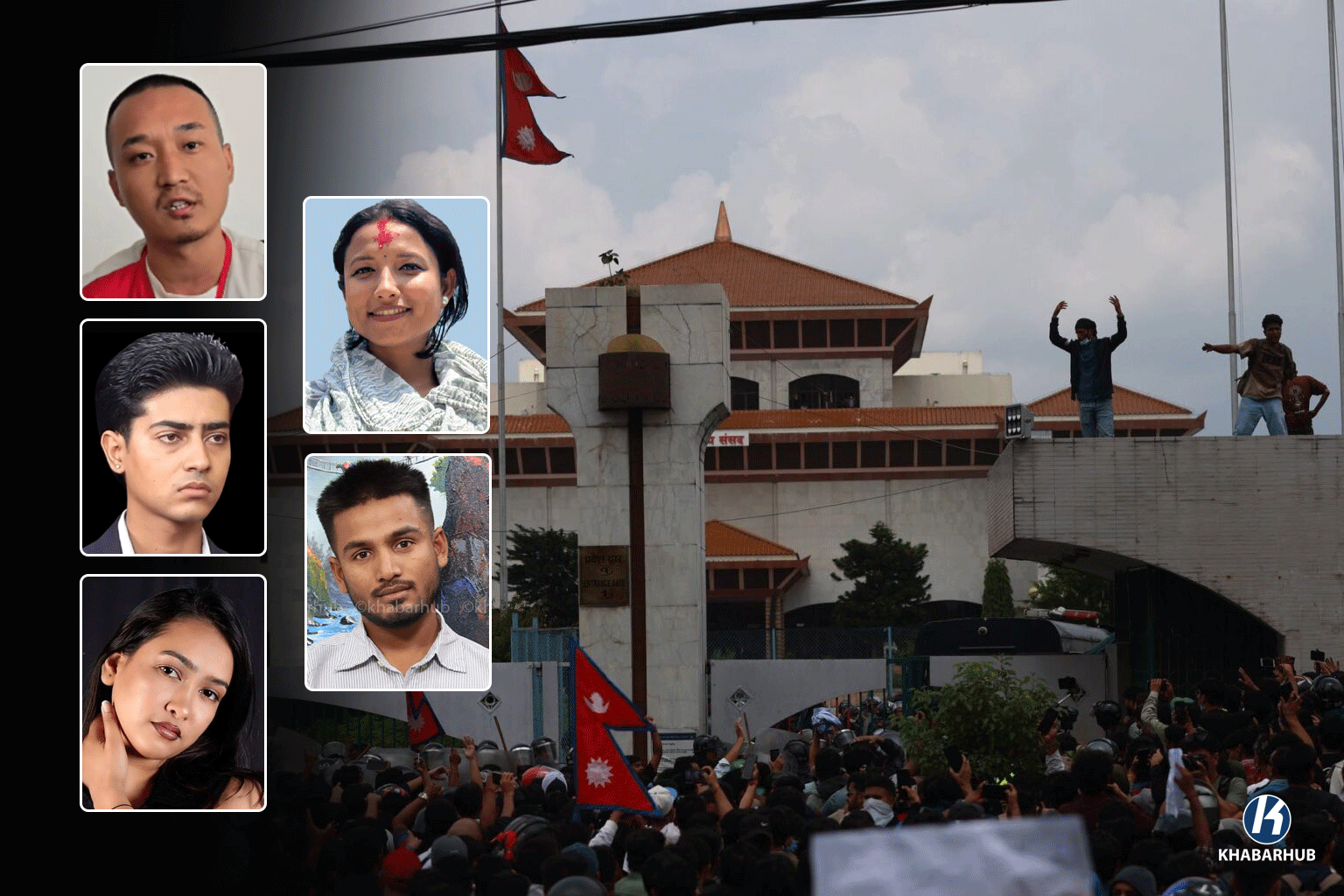
KATHMANDU: The Gen-Z movement, which initially began as a youth-led protest against corruption and nepotism in political appointments, has now devolved into chaos.
The events of September 8 and 9 resulted in significant loss of life and property, the collapse of the incumbent government, and the formation of an interim administration.
Although elections were expected within five months, the country now finds itself in a state of political limbo, with no clear understanding of who the “real” Gen-Z is.
While the President’s Office has prepared a list of some individuals identified as part of the Gen-Z movement, multiple groups have since emerged—each claiming to represent the true Gen-Z. These groups hold divergent views and demands, further complicating the situation.
One faction believes existing political parties should retain ownership and leadership. Another calls for constitutional amendments, including the direct election of an executive prime minister. With growing divisions among the Gen-Z factions, there is increasing speculation about a political comeback for traditional parties.
What was the goal of the Gen-Z?
The Gen-Z movement did not set out to dismantle the state or overthrow the government. Its core intent was to fight the deeply rooted corruption and the perceived entitlement of political leaders’ children—popularly dubbed the “Nepo Baby Kid.”
“Citizens are starting to feel as though there is no functioning government. The movement is heading toward failure due to the immaturity and lack of clear direction among the youth.”
It began as a social media campaign, questioning how the children of political elites could afford such lavish lifestyles. A viral video posted by Purushottam Yadav ignited the movement, garnering over 500,000 views within 24 hours.
This campaign quickly transformed into a call for peaceful protest. The youth behind Gen-Z, most of whom had studied governance in school and college, appealed to their peers—especially the children of politicians—to dissuade their parents from engaging in corruption.
The protests were intended to be peaceful, leaderless, and spontaneous. Participants, having secured official permission from the CDO office, marched from Maitighar Mandala to New Baneshwor, taking care not to damage public property.
Protesters even asked journalists and supporters to avoid stepping on roadside plants, noting they couldn’t afford fines imposed by the municipality. Initially, the movement was marked by discipline and nonviolence.
However, the entry of vested interests derailed the protest’s peaceful nature. Violence erupted, leading to the deaths of 76 people and injuries to thousands. Political leaders, including the Prime Minister and ministers, fled the capital.
Nepali Congress President Sher Bahadur Deuba and his wife, Dr. Arzu Deuba, were physically assaulted. Government buildings including the Parliament, Singha Durbar, and court and police offices were torched. Properties belonging to businesspeople linked to political parties were also destroyed.
Following the violence, Home Minister Ramesh Lekhak resigned on moral grounds, and Prime Minister KP Sharma Oli was pressured to step down to restore order. In an unexpected turn, the burden of national leadership fell onto the shoulders of the Gen-Z—something they had neither anticipated nor prepared for. Nevertheless, they have not backed away from the challenge.
To guide the country through the crisis, former Chief Justice Sushila Karki was appointed as Prime Minister, and senior advocate Om Prakash Aryal became Home Minister. The idea was to place capable, constitutionally knowledgeable individuals at the helm to steer the movement in the right direction.
Former civil servants were also brought into other ministries. However, nearly a month into the interim government, the cabinet remains incomplete due to deep divisions within the Gen-Z ranks. The absence of a unified vision continues to stall efforts to stabilize governance.
Riddhi Acharya, an associate professor at the Department of Sociology at Tribhuvan University, likens the Gen-Z movement to “meat wrapped in a leaf of greens” — suggesting it appears organic on the surface but is being consumed by external interests.
In an interview with Khabarhub, Acharya said, “Gen Millennials — the generation above Gen-Z — have attempted to take advantage of this movement. It seems vested interests are trying to hijack it.”
Despite the political chaos, Acharya does not believe that the old parties can return in their current form. “It will be difficult for them to come back. Only a reformed version of the old parties might regain public trust,” she said, adding, “It would be ideal if the youth could assume leadership, with the old parties acting as mentors or guardians.”
She emphasized that the original Gen-Z protesters, who took to the streets demanding change, have now been sidelined. “The families of those killed or injured during the protests have been ignored. Instead of focusing on justice for them, all attention is now on toppling the government,” she added.
“Citizens are starting to feel as though there is no functioning government. The movement is heading toward failure due to the immaturity and lack of clear direction among the youth.”
Acharya also claimed that young people, influenced by various external forces, have played a role in derailing the movement. “No youth came forward saying, ‘I want to be Prime Minister.’ Experience is required to lead. Yet the lawmakers failed — they simply stood by and watched,” she said.
She argued that every institution of the state now claims innocence, while the country desperately needs a “spotless youth” to lead — someone who is not beholden to any external power. “Those who are controlled by outside forces won’t survive in leadership,” she warned.
Acharya noted that legal complaints have been filed against public figures such as Balen Shah and Sudan Gurung, as well as political leaders like KP Sharma Oli and Ramesh Lekhak.
“Even party-affiliated organizations like the UML-affliated Youth Association and Nepali Congress-affiliated Nepal Students’ Union are accusing them of leading the movement,” she said. “Meanwhile, they sat back and watched the city burn — claiming they had no responsibility.”
Despite the political chaos, Acharya does not believe that the old parties can return in their current form. “It will be difficult for them to come back. Only a reformed version of the old parties might regain public trust,” she said, adding, “It would be ideal if the youth could assume leadership, with the old parties acting as mentors or guardians.”





Comment