




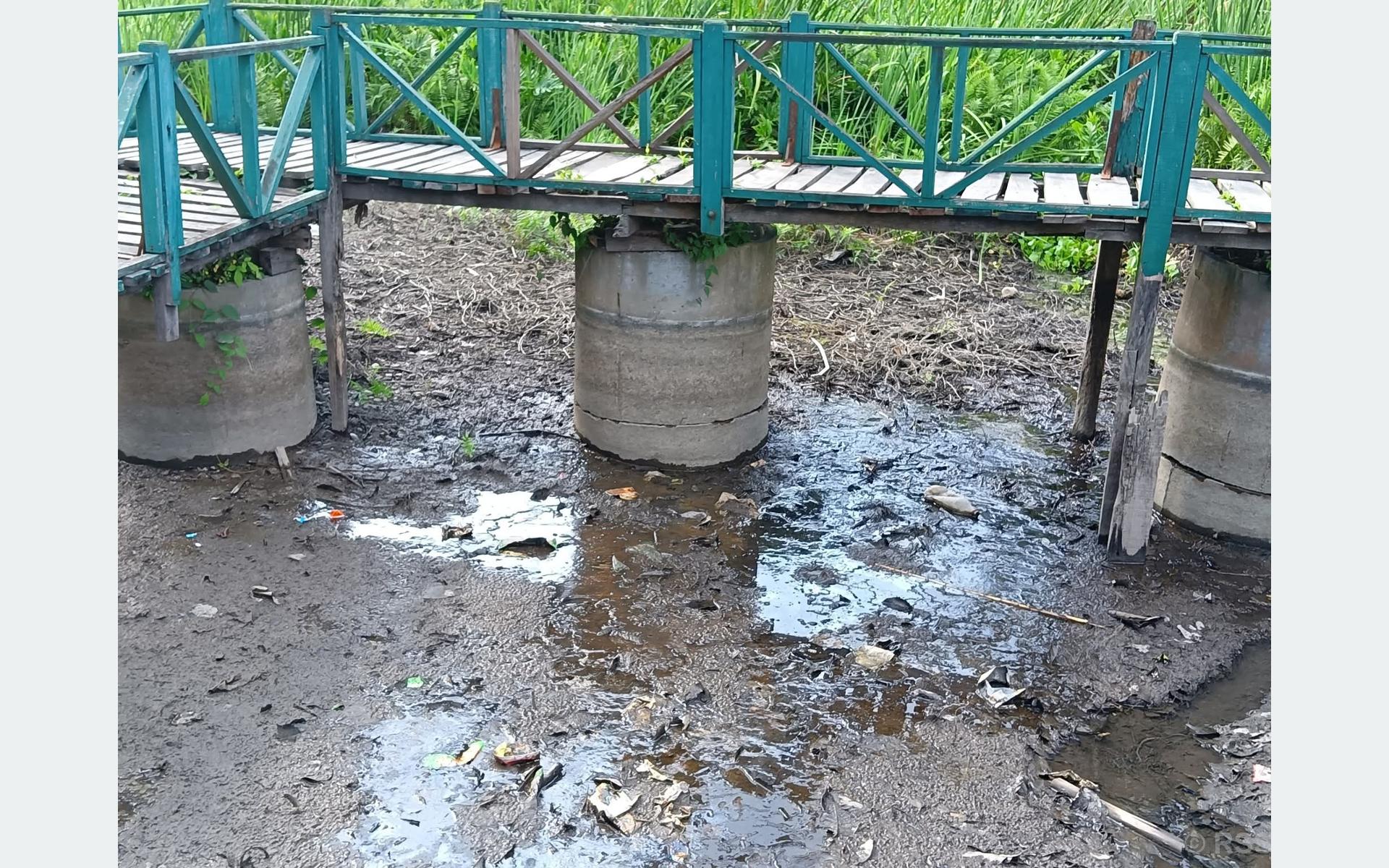
BELBARI: The Betana wetland area in Belbari Municipality is drying up rapidly due to a prolonged drought. The falling water level has already led to the death of fish, and irrigation in the surrounding farmlands has become increasingly difficult.
With no significant rainfall in recent weeks, farmers have been unable to sow crops. Ward Chairperson of Belbari-4, Chandra Bahadur Limbu, said that although water from the Betna wetland typically irrigates hundreds of bighas of farmland in the area, this year the lack of rainfall has severely limited irrigation.
As the wetland’s dammed water reserves declined, authorities had to release the stored water to support limited rice planting.
Betana wetland, which features two ponds adjacent to the East-West Highway, has seen both water bodies drying up. As a result, fish are dying, and farmers face a water crisis.
The drop in water levels has affected over 1,200 bighas of farmland, with crops like rice beginning to wither due to a lack of irrigation.
Hari Prasad Mishra, a farmer from Belbari-4, said rice and other crops planted earlier are now drying up. Natural springs and external water flows that once fed the pond have also dried up, worsening the situation. Experts attribute this to the prolonged absence of rainfall.
Rajan Prasai, Joint Secretary of the Betana Simasar Community Forest Users Group, confirmed that all springs feeding the pond have dried up over the past month.
He expressed concern over the declining water level and the resulting death of fish, adding that efforts are underway to address the issue.
Govinda Prasad Pokharel, a wetland researcher and conservation officer at the National Nature Conservation Trust, pointed to multiple causes behind the drying of the wetland. According to him, human activities such as overuse of water, construction projects, and unsustainable farming practices have contributed to the depletion.
He noted that the Betana wetlands were originally formed by storing runoff from nearby forests and streams, which has historically supported local irrigation needs.
Pokharel also explained that the proliferation of concrete structures in the area has hindered water retention and recharge. Both surface and groundwater systems are being negatively affected, making water scarcity more severe.
He further noted that in recent years, despite consistent rainfall during the monsoon, water levels in ponds and reservoirs have declined. This is partly due to seasonal land erosion and decreased water retention capacity. However, he emphasized the need for further research to fully understand the trends.
Pokharel suggested that restoration of the ecological system, watershed management, water recharge efforts, and the sustainable use of water resources are essential to resolving the crisis.





Comment