





KATHMANDU: Economic Digest offers a concise yet comprehensive overview of significant business happenings in Nepal, presented in easily digestible summaries.
The recent developments across Nepal reflect a nation grappling with both natural and socio-economic disruptions while showing signs of resilience and reform. Floods and heavy rains have severely damaged critical infrastructure and agriculture, prompting a government reconstruction estimate of Rs 12.38 billion, alongside localized relief efforts led by officials like Minister Kulman Ghising.
At the same time, unresolved tensions from Gen Z protests have resulted in over Rs 23 billion in insurance claims, disrupted energy projects, and prompted regulatory action across cooperatives and fintech.
However, initiatives such as the reopening of international flights in Bhairahawa, bans on imported goods to support domestic producers, reforms in capital markets, and the growth of poultry and traditional crafts like madal-making show an active push toward economic recovery, local empowerment, and cultural preservation amid adversity.
Govt estimates Rs 12.38 billion required to repair flood-hit infrastructure
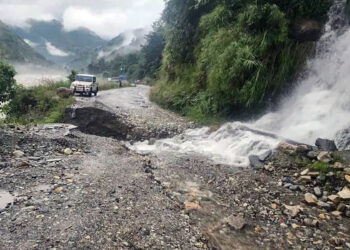
The Ministry of Physical Infrastructure and Transport estimates that Rs 12.38 billion will be needed to restore roads, bridges, and related infrastructure damaged by intense rains from October 4 to 6. The ministry identified 263 affected locations nationwide, with major damage to key highways such as Mechi, Kanti, Koshi, Mid-Hill, and Kaligandaki. Repairs to 17 bridges, including both permanent and Bailey structures, are projected to cost Rs 5.32 billion. The energy sector also took a hit, with 32 hydropower projects impacted and approximately 1,500 meters of river embankments eroded. The Ministry of Agriculture is currently gathering preliminary data on agricultural and livestock losses.
Insurance claims from Gen Z unrest top Rs 23 billion, payouts lag behind
The Nepal Insurance Authority reports that insurance claims tied to the Gen Z protests have reached Rs 23.22 billion as of October 9 (Ashoj 23), with only Rs 1.58 billion disbursed so far. A total of 3,099 claims have been lodged across 14 non-life and four micro-insurance companies. Property damage leads the list with Rs 19.06 billion in claims from 653 cases, followed by motor insurance at Rs 3.41 billion from 2,206 claims. Other reported losses include Rs 380 million under engineering risks, Rs 16.3 million in transport, and Rs 353.7 million in miscellaneous categories. Insurance companies are still processing the remaining claims.
Kulman Ghising focuses on relief and rebuilding in flood-affected Ilam
Transport Minister Kulman Ghising has reaffirmed the government’s commitment to swift relief and long-term reconstruction efforts in Ilam following recent landslides and floods. During an on-site inspection of heavily impacted areas, including Rong Rural Municipality, Suryodaya Municipality, and Ilam Municipality, he engaged directly with local residents from Ilam, Sandakpur, Maijogmai, and neighboring regions. The disaster, triggered by heavy rains from the delayed monsoon on October 4, has caused significant destruction and loss of life. The government has since declared Ilam a disaster-hit zone for three months. The current official death toll stands at 39.
Tatopani border reopens for imports, rasuwa crossing remains shut due to flood damage
Trade has resumed through the Tatopani border following Dashain, with the Customs Office reporting over 20 containers—mostly carrying garments and fruit—entering Nepal daily. The route, previously blocked for nearly two months by a landslide in Kodari, has now been cleared under orders from Infrastructure Minister Kulman Ghising. However, the Rasuwa border crossing is still closed due to severe flood damage sustained on July 7, which destroyed a key bridge over the Lhende River. Although China is constructing a temporary Bailey bridge expected to be completed within 10 days, ongoing road damage between Syafrubesi and Rasuwagadhi could delay reopening until after Tihar.
Bhotekoshi hydropower remains closed despite home minister’s directive
Although Home Minister Om Prakash Aryal instructed authorities to restart operations at the 45 MW Bhotekoshi Hydropower Project in Sindhupalchok, the plant has remained closed for over a month. The shutdown followed demands from a group identifying with the Gen-Z movement, who are seeking 10 percent of the company’s shares free of cost. Despite Aryal’s orders to the Chief District Officer to ensure immediate resumption, discussions between the project management and local stakeholders have yet to reach a resolution. The District Administration Office has scheduled another round of negotiations for Sunday. Meanwhile, the Independent Power Producers’ Association Nepal (IPPAN) has urged the government to take firm action against what it calls extortion disguised as activism, warning that investor confidence is under threat.
Cooperative regulator demands top 100 depositor and borrower records
In response to increasing concerns over financial misconduct, the National Cooperative Regulatory Authority has instructed all cooperatives to provide detailed information on their 100 largest depositors, members, and borrowers. This move follows heightened scrutiny over suspected money laundering and tax evasion through cooperatives, which are often less regulated than banks. The authority has also issued a new directive requiring all cooperatives involved in savings and loan operations to register under its oversight. Under the updated Registration and Record-Keeping Standards 2082, savings and credit cooperatives will now come under stricter national regulation.
Kathmandu bans imported flowers for Tihar to promote local floriculture
Kathmandu Metropolitan City has announced a ban on imported flowers and floral products during the Tihar festival to encourage domestic flower producers. The restriction will be in effect from October 17 to 22, during which the city will operate 32 designated flower distribution centers at various locations such as NB Centre, Phoenix Tower, Sifal Chaur, Chabahil Ganeshthan, KL Tower, and Old Baneshwor. Authorities have warned that any imported flowers found will be confiscated. The Floriculture Association of Nepal, led by Rajesh Bhakta Shrestha, has endorsed the decision and is organizing the 18th Godavari Chrysanthemum Flower Competition from October 15 to 18. Officials confirm that local flower production is sufficient to meet the market demand during the festival.
Land record restoration process simplified after Gen Z protest damage
The government has introduced streamlined procedures to help citizens recover land ownership documents (sresta) destroyed during the Gen Z protests on September 8–9. In response to public backlash over previous complicated restoration notices, the Ministry of Land Management has directed land revenue offices to issue new records based on existing documents such as land titles, citizenship papers, and field maps. If both digital and manual records match, new sresta can be printed directly. In case of discrepancies, verification through the Document Management System (DMS) or local government recommendations will be used. Ten major land offices, including those in Kathmandu, Kaski, Rupandehi, and Banke, have been tasked with offering citizen-friendly support.
Nepal Rastra Bank relaxes rules on share-backed loans and holding periods
Nepal Rastra Bank has revised its Unified Directives to make share-based lending more flexible and improve stock market participation. The central bank has reduced the mandatory holding period for purchased shares from one year to six months and lifted the previous restriction that limited annual sales to 20% of a company’s primary capital. Additionally, the cap of Rs 250 million per person for margin loans from financial institutions has been removed. These changes follow recommendations by the Capital Market Reform Taskforce and are intended to boost market liquidity and make stock investments more accessible.
Young artisan Chitre Badi preserves madal-making tradition during festivals
Seventeen-year-old Chitre Badi from Pachurkha, Ghorahi Sub-Metropolitan City, is dedicated to preserving the traditional Nepali craft of madal-making. With demand surging during festivals like Dashain and Tihar, Badi crafts four to five madals daily and also repairs old ones used in cultural dances, especially the Tharu community’s Sakhya-Paiya performance. Working from early morning until evening, he charges Rs 1,000 to Rs 2,000 for each new madal, depending on size, with repair prices varying by damage. His dedication is helping keep this musical and cultural tradition alive during Nepal’s most vibrant festive season.
Chamber of commerce urges continuation of export subsidies, business-friendly reforms
The Nepal Chamber of Commerce (NCC) has called on the government to sustain export subsidies, warning that withdrawing them could worsen the country’s export performance. In recent discussions with Industry Minister Anil Kumar Sinha and Finance Minister Rameshore Prasad Khanal, NCC President Kamlesh Kumar Agrawal stressed the importance of promoting investment, ensuring industrial safety, and simplifying procedures for business registration, taxation, and licensing. The chamber praised recent steps such as concessional loans and customs duty waivers post-Gen Z protests but pushed for faster credit access for young entrepreneurs. It also suggested limiting customs duties to 25%, removing excise taxes on domestic goods, and retaining a higher VAT rate.
Nepal Rastra Bank cancels licenses of PrabhuPay and FirstPay
Nepal Rastra Bank has revoked the licenses of Prabhu Technology Pvt. Ltd. and FirstPay Technology Pvt. Ltd., citing regulatory non-compliance. Prabhu Technology, operator of the PrabhuPay digital wallet, lost its payment service license under Section 13(4) of the Payment and Settlement Act, 2075, due to failure to renew. The license was originally granted on February 23, 2020. Similarly, FirstPay Technology, licensed as a payment system operator on February 25, 2020, was deregistered under Section 13(6) of the same Act. The central bank has advised individuals and institutions with pending transactions to contact the companies within 30 days.
Bhairahawa airport to restart international flights after six-month suspension
Gautam Buddha International Airport in Bhairahawa is preparing to resume regular international flights after nearly six months of inactivity. Thai AirAsia will begin two weekly flights to Thailand starting October 12 (Ashoj 26), airport general manager Pratap Babu Tiwari confirmed. Other carriers, including Jazeera Airways, are also expected to launch services, likely after the Tihar holidays. Although the airport was officially inaugurated in May 2022, only temporary international flights operated during maintenance at Tribhuvan Airport earlier this year. The extended halt in operations has severely impacted the local tourism and hospitality industries, which had invested nearly Rs 100 billion in anticipation of sustained international traffic.
Storms destroy banana farms in Sunsari, farmers suffer heavy financial losses
Strong winds and heavy rain have ravaged banana farms across Sunsari district, wiping out hundreds of bighas of crops. Farmers from Inaruwa Municipality-9 and Bhokraha Narsingh Rural Municipality-2 reported total losses, with damages ranging from Rs 100,000 to Rs 1.3 million per farmer. Many had invested heavily in banana farming as a long-term income source, often employing daily laborers and relying on loans. The destruction of entire plantations due to recurring natural disasters has left growers demoralized, highlighting the vulnerability of commercial agriculture in the region to extreme weather events.
Ongoing rain damages crops, delays harvest in Bajura and Humla
Farmers in Bajura and Humla districts are facing serious challenges as continuous rainfall disrupts harvesting and damages stored produce. In Bajura, ripe paddy remains unharvested in lowland areas, increasing the risk of spoilage. In Humla, recently harvested grains such as millet, barley, maize, beans, and lentils have been soaked by rain, with some already beginning to rot. Multiple municipalities, including Budhiganga, Adanchuli, Simkot, and Kharpunath, have reported significant losses. Authorities warn that without prompt action, the ongoing weather could jeopardize the year’s agricultural output and severely affect livelihoods.
Poultry farming grows in Salyan, creating jobs and raising incomes
Poultry farming is gaining momentum in Salyan, providing a steady source of income and employment. Tara Dev Wali of Bagchaur Municipality-7 started with a few hundred broilers in 2020 and now raises 18,000 chickens, using his earnings to invest in land. Similarly, Rahim Das Miya of Triveni Rural Municipality earns around Rs 2 million annually and produces more than 1,700 eggs daily. Rising local demand for poultry products has attracted many youths to the sector. District authorities are encouraging the trend through grants, low-interest loans, and support programs aimed at making the region more economically self-reliant.





Comment