




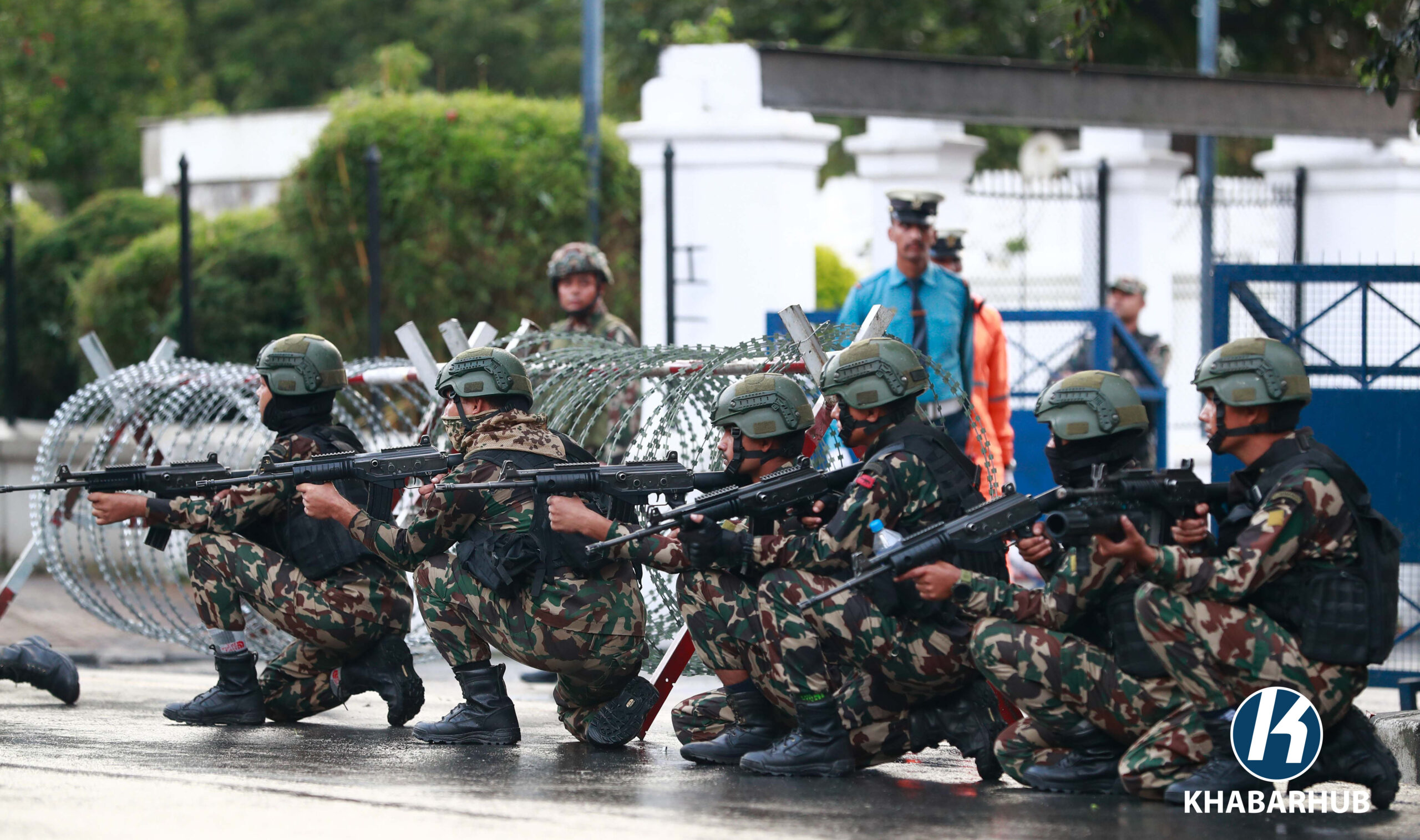
KATHMANDU: Following the Gen-Z protests earlier this week, Nepal finds itself in a deep political vacuum. Ousted Prime Minister KP Sharma Oli, accused of using excessive force to suppress the protests, is currently under military protection, and most top political leaders remain out of public view.
The Nepali Army, which has assumed control of national security, is reportedly trying to mediate a political breakthrough. However, disagreements persist over key issues: whether to form an interim government, dissolve Parliament, or establish a powerful commission to investigate state repression, looting, and high-level political corruption during the unrest.
The army has warned the President, leaders, and political parties that failure to reach a consensus could push the country into deeper crisis.
Meanwhile, Gen-Z protesters—reeling from the destruction and deaths caused by the violent crackdown—have demanded the dissolution of Parliament as a condition for any new government formation.
However, civil society, constitutional experts, and legal scholars are cautioning that dissolving Parliament or forming a government outside the constitutional framework could lead to even greater instability.
Possible State of Emergency?
If political consensus is not achieved soon, there are increasing concerns that the military may pressure the President to declare a state of emergency. So far, the army has limited its role to ensuring security and coordination, but its growing involvement has raised alarm bells.
What Does the Constitution Say?
The Constitution of Nepal, under Part 30, outlines the President’s emergency powers in Articles 273 (1) to (13).
Article 273(1) states that the President may declare a state of emergency in the event of a “serious crisis” affecting Nepal’s sovereignty, territorial integrity, or security—caused by war, foreign aggression, armed rebellion, severe economic disruption, natural disaster, or an epidemic. The emergency may apply to the entire country or a specific region.
Article 273(3) mandates that any emergency declaration must be presented to both Houses of Parliament for approval within one month.
Article 273(4) provides that the emergency will remain in effect for three months if approved by a two-thirds majority of members present in both Houses.
Article 273(9) allows the President to issue orders with the force of law to address the emergency situation.
Suspension of Fundamental Rights
Nepal’s Constitution guarantees 31 fundamental rights under Article 46. During a state of emergency, some of these rights can be suspended.
Article 273(10) allows for the suspension of rights under Part 3, except for:
The right to constitutional remedies
Habeas corpus (Article 16)
Other rights including equality (Article 18), freedom from torture (Article 22), and several others listed in the Constitution.
If a right is suspended during an emergency, citizens cannot file cases in court to enforce that right.
Article 273(13) gives the President authority to withdraw the emergency declaration at any time.



Comment