




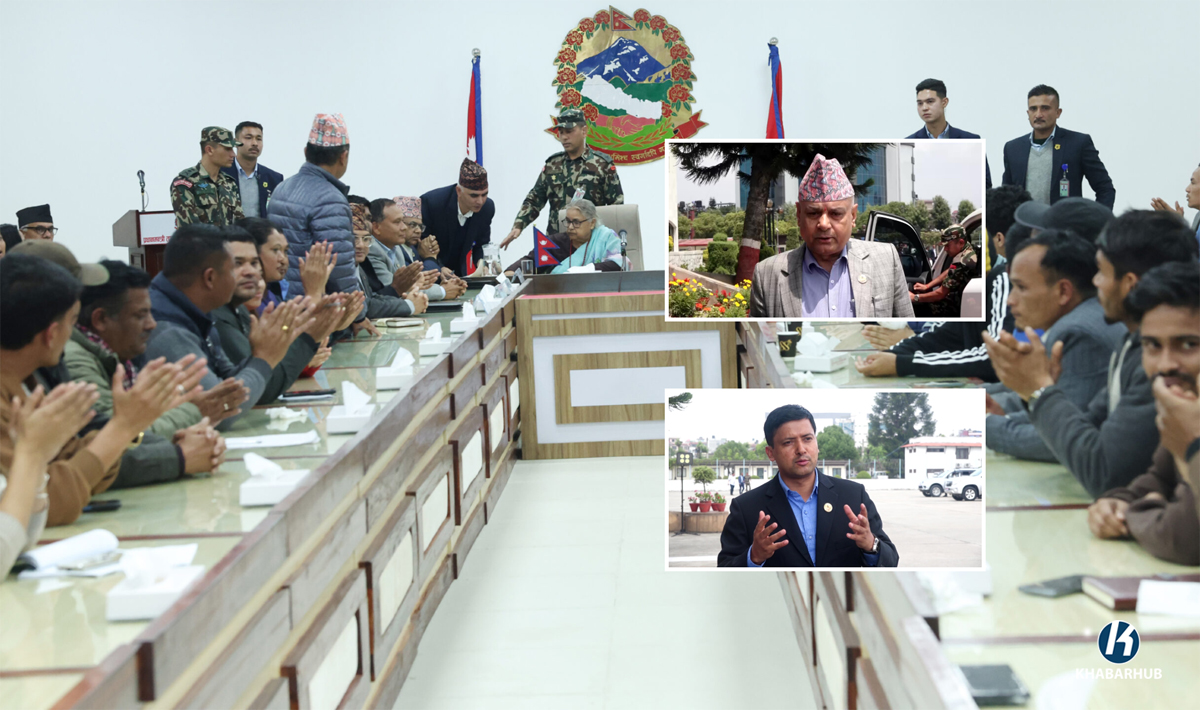
KATHMANDU: The government’s recent 10-point agreement with the Gen-Z Movement has come under sharp criticism from Nepal’s major political parties, highlighting deep divisions over electoral reforms and the government’s approach to youth-led movements.
While CPN-UML leaders have termed the agreement illegal and unconstitutional, Nepali Congress officials have expressed doubts over its feasibility, particularly with the March 5 elections only few months away.
The agreement, signed Wednesday evening between the government and selected Gen-Z representatives, addresses a range of issues including honoring martyrs and the injured, institutional reforms, adjustments to recruitment and anti-corruption processes, and proposed amendments to electoral laws. The government has emphasized that six of the agreement’s points will be implemented immediately, with a focus on changes that could impact the upcoming House of Representatives elections.
CPN-UML leader Mahesh Bartaula strongly opposed the move, arguing that the accord lacks any legal basis.
“Who exactly constitutes Gen-Z? Which legal authority recognizes this agreement? The government has engaged with unauthorized individuals outside constitutional and democratic procedures. This is an artificial and unconstitutional agreement with no legitimacy,” Bartaula said.
He further criticized the government for negotiating with a select few and labeling them as representatives of the entire youth population, stating that the process bypassed the sentiments of millions of Nepali youth and undermined the Constitution.
Bartaula also raised questions about the government’s rationale for making electoral reforms under the agreement. He warned that the agreement’s provisions, such as introducing the “None of the Above” (NOTA) voting option, mandating primary elections within parties, and addressing proportional representation in direct elections, would disrupt existing legal and institutional frameworks if implemented hastily.
“The government’s approach risks destabilizing democratic norms and bypassing necessary parliamentary processes,” he added.
Nepali Congress leader Shyam Ghimire, while not questioning the principles of the agreement, highlighted logistical and procedural challenges.
“If the elections are to be held on March 5, implementing these changes is not feasible. Legal amendments and procedural adjustments require careful preparation and time. Hasty implementation could result in errors, undermining both the elections and the intended reforms,” Ghimire explained. He criticized the government for failing to consult with major parties while negotiating with selected Gen-Z representatives, stressing that long-term, meaningful reforms need thorough dialogue and coordination with all stakeholders.
Political analysts say the controversy underscores broader tensions in Nepali politics over youth participation, governance reforms, and the balance of authority between the government and political parties. While the government presents the agreement as a step toward modernizing electoral processes and addressing youth demands, opposition parties perceive it as a unilateral and extraconstitutional move.
With less than three months remaining before the elections, questions remain about whether the government can implement any of the agreement’s provisions. The dispute between major political parties and the government over the Gen-Z accord could influence not only the upcoming elections but also future debates on youth engagement, electoral reforms, and constitutional procedures in Nepal.





Comment