




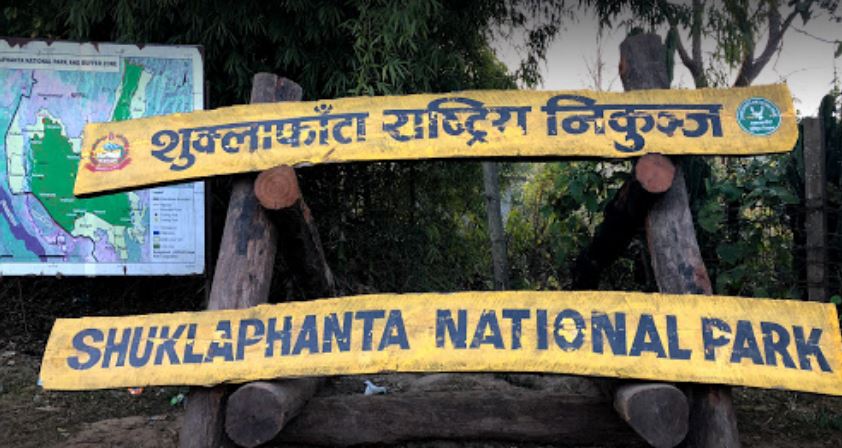
KANCHANPUR: The forest safari in Shuklaphanta National Park has been temporarily closed following damage to the park’s main road caused by recent rainfall.
According to the park’s information officer, Purushottam Wagle, the road used for safari routes has become impassable, leading to vehicles getting stuck and tourists facing difficulties.
“The main safari route was damaged by rain, causing vehicles to get stranded and tourists to suffer. As a result, we have decided to suspend the safari,” Wagle said.
So far, 3,722 visitors have come to the park in the current fiscal year. Spread over 305 square kilometers, Shuklaphanta National Park is known for its expansive 54-square-kilometer grassland—the largest in the country—which serves as a key habitat for large herds of swamp deer (bison).
Thousands of these deer attract both domestic and international tourists to the park, which is praised for its serene environment, diverse wildlife, and dense biodiversity within a relatively small area.
Shuklaphanta is also home to numerous bird species that can be spotted near its rivers and lakes. In addition to its rich wildlife, the park is equally known for its rare plant life.
According to the park office, the area hosts 12 species of reptiles, 20 amphibians, 24 fish species, 35 butterfly species, and more than 449 species of birds—including rare ones such as the stork, shrike, black tit, kingfisher, and lesser spotted owl.
The park also shelters over 53 species of mammals, including leopards, one-horned rhinoceroses, elephants, blackbucks, pangolins, nilgai, chital, hispid hares, and wild boars.
According to the latest census, more than 2,300 chital (spotted deer) inhabit the park. The main wildlife attractions include tigers, rhinoceroses, elephants, blackbucks, and chital.






Comment