




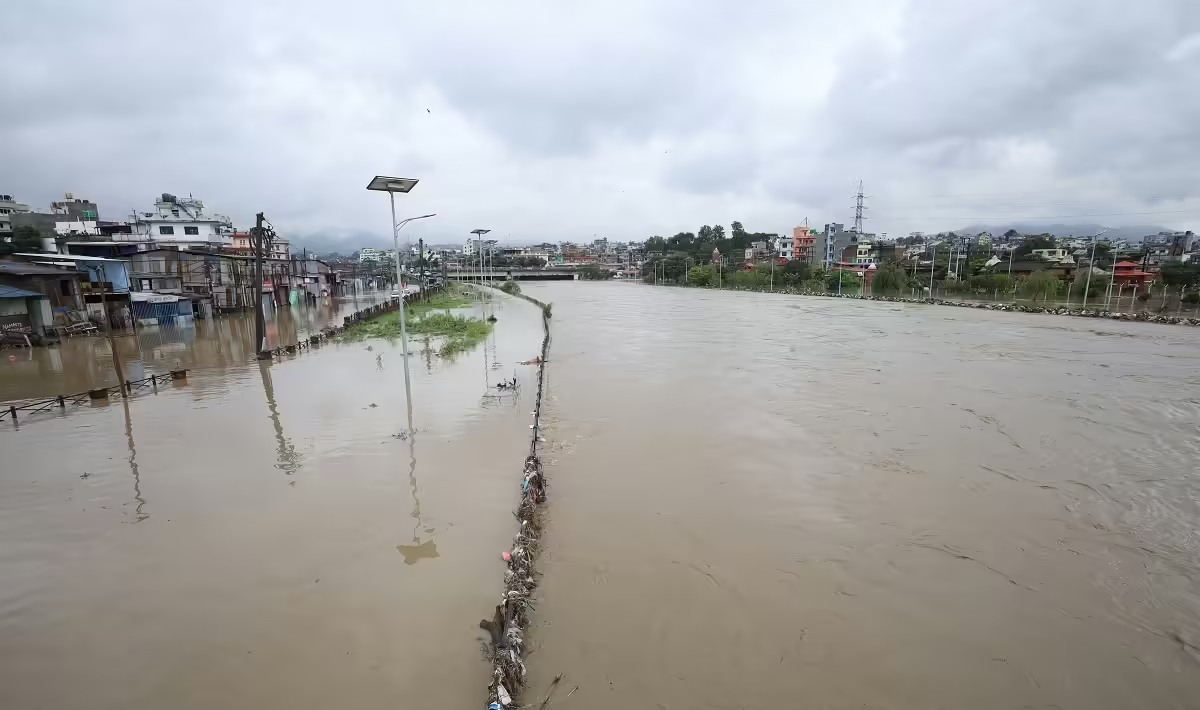
SARLAHI: With the onset of the monsoon, fear grips residents living along the Bagmati River in Sarlahi district.
Flowing through the Chure hills to the north and running westward along the border with Rautahat, the Bagmati River has long been a source of destruction during the rainy season. For many locals, memories of past floods remain painfully vivid.
“Floods occur here every monsoon. As soon as the rains begin, the fear returns,” said 65-year-old Ramsewak Mahato of Manpur, Basabariya Rural Municipality-2.
“Last year, the river breached its embankments at two or three points. We fled for our lives when the water began pouring into the village,” he recalled. Mahato described rushing to move his livestock as thunderclouds signaled the coming storm.
Last year’s flooding affected several areas along the Bagmati, including Manpur in Basabariya, parts of Ramnagar Rural Municipality, and the western and southern regions of Balara Municipality.
According to Dinesh Yadav, ward chair of Ramnagar-1, heavy rains submerged Bhel village and surrounding farmlands, displacing residents.
He added that smaller tributaries feeding into the Bagmati also contribute to flood risks in the southern belt of the district.
Bishwanath Mukhiya, a resident of Chharki Tole in Ramnagar-1, said his village remained submerged for over a week during last year’s floods.
“The flood swept away our thatched homes. We were forced to leave everything behind,” he said. Although the floodwaters eventually receded, his concerns have not.
“We only see the faces of politicians during elections,” he said bitterly. “I’m afraid of how much more the river will take from us this monsoon.”
As the river descends from the Chure hills, its width and impact increase dramatically. By the time the Bagmati exits Nepal and enters India, it has expanded nearly three kilometers.
“Instead of flowing along its old course, the river now cuts through our fields and settlements,” said Harisharan Kapar of Balara-1. He lost much of his food stock to the flood last year.
Kapar criticized the lack of proactive measures by local authorities. “Every year, the government wakes up only after the damage is done. Instead of handing out relief afterward, they should work to reduce the risk in advance,” he said.
He stressed that constructing and maintaining embankments and identifying vulnerable areas could go a long way in easing the constant fear faced by riverside communities.
Residents across Sarlahi continue to call for timely and effective flood mitigation measures—before the next wave of destruction strikes.
(Source: RSS)





Comment