




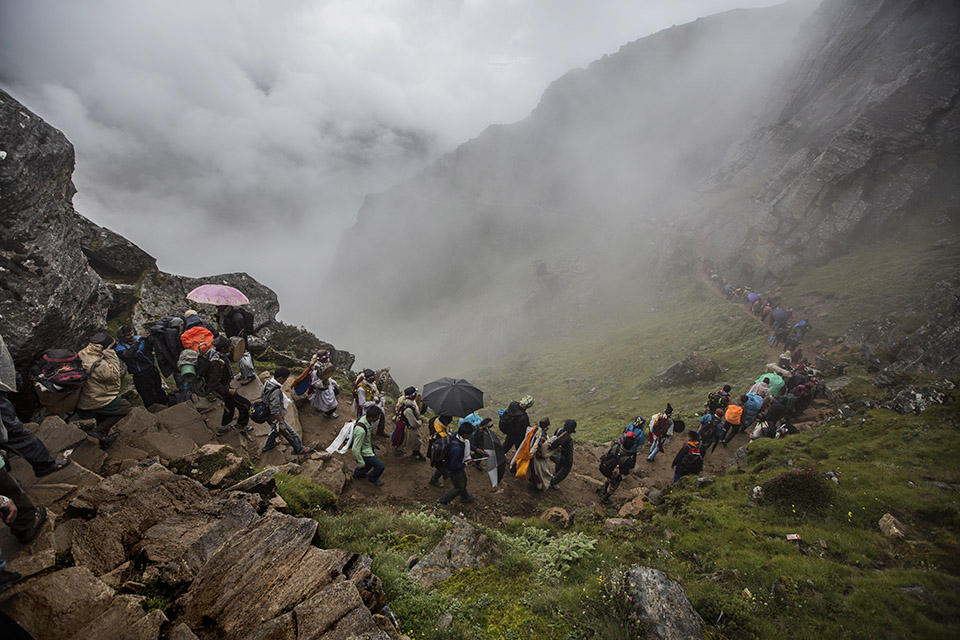
DHUNCHE: Thousands of pilgrims from across Nepal converged at the sacred Gosaikunda Lake on Thursday to mark Janai Purnima, taking ritual dips in the icy waters and offering prayers despite challenging weather conditions.
From as early as 2 am, devotees from districts including Nuwakot, Kathmandu, Bhaktapur, Lalitpur, Kavrepalanchok, Sindhupalchok, Chitwan, Dhanusha, Makwanpur, Kaski, Syangja, Tanahun, Gorkha, Bhojpur, Ramechhap, and Saptari gathered for the annual pilgrimage. According to Sanjeev DM, chair of the Gosaikunda Area Development Committee, bathing in the 4,380-meter-high alpine lake is believed to wash away sins and grant blessings.
While the spiritual atmosphere remained strong, altitude-related health problems affected several visitors. The Himalayan Rescue Association reported that five pilgrims, including travelers from Saptari, Lalitpur, and Sindhupalchok, required evacuation to better-equipped hospitals due to altitude sickness. One man from Kathmandu’s Jorpati was diagnosed with fluid in the lungs caused by high altitude and was transported to Dhunche for treatment.
A total of six seriously ill pilgrims were carried down overnight by Nepali Army and Armed Police personnel. More than 150 patients with minor ailments received treatment at the association’s medical camp, while additional first aid services were provided at Deurali by the Young Communist League.
The Nepali Army’s medical post at Cholangpati treated over 1,800 pilgrims, according to the District Public Health Office. Local authorities have deployed specially trained security personnel around the lake to prevent incidents similar to one reported on August 11 last year.
Free health services are being offered by the Gosaikunda Rural Municipality, District Hospital, Ayurvedic medical providers, Green City Hospital, the Nepali Army, the Himalayan Rescue Association, and the Panchdham Committee. Volunteers from the Dhunche Youth Group are serving free hot water to pilgrims.
District Police Chief Hem Bahadur Shahi confirmed that the security situation remains stable.






Comment