




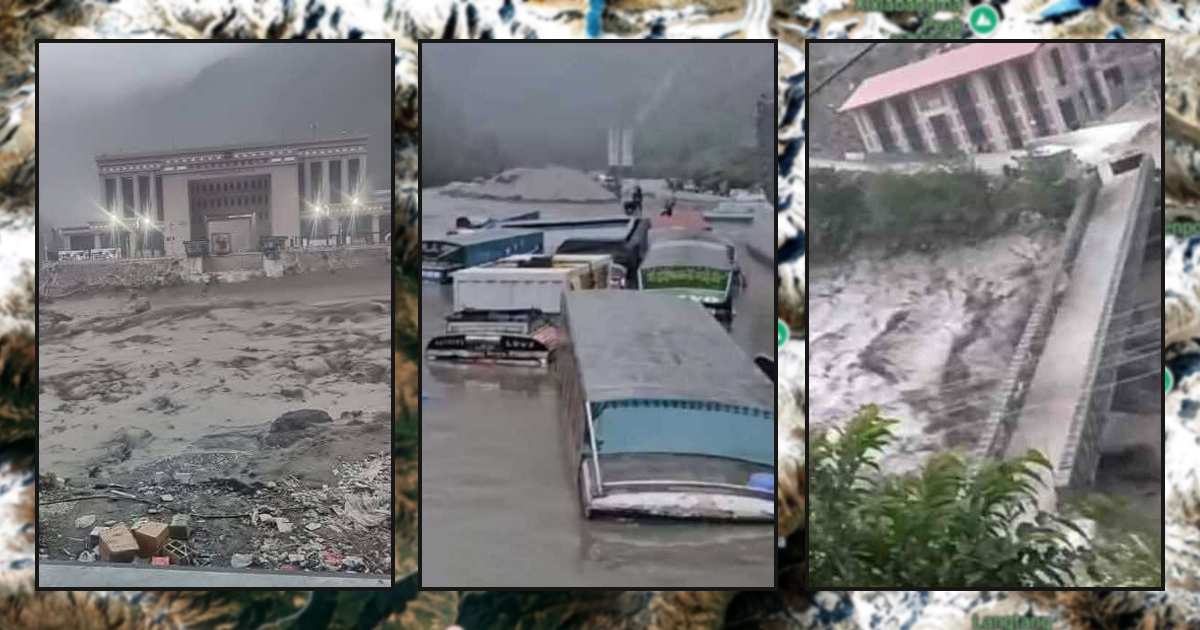
RASUWA: A devastating flood that swept through Nepal’s Rasuwa district shortly after midnight has been traced to a permafrost collapse in the upper catchment of the Lhende River, across the border in China’s Tibet Autonomous Region (Xizang).
Preliminary assessments by Nepal’s Department of Hydrology and Meteorology—supported by satellite imagery, local officials from the border area, and geologists—confirm that the flood originated after a section of long-frozen permafrost suddenly gave way near the river’s source, which flows into Nepal via Gosainkunda Rural Municipality–1.
Permafrost refers to terrain made of compacted rock, snow, and soil that remains below 0°C year-round. Even light rainfall or increased temperatures can destabilize it, causing sudden floods or landslides.
“The headwaters of the Lhende River, known downstream as the Bhote Koshi in Nepal, lie in Tibet. A chunk of frozen terrain there suddenly collapsed into the river, causing a massive flood,” said Urken Chiring Tamang, ward chair of Gosainkunda-1. “Although there hasn’t been heavy rain in Tibet, even minimal precipitation seems to have begun melting the frozen ground. There has been no visible landslide blocking the river on the Nepali side.”
Multiple glacial sources feed Lhende River
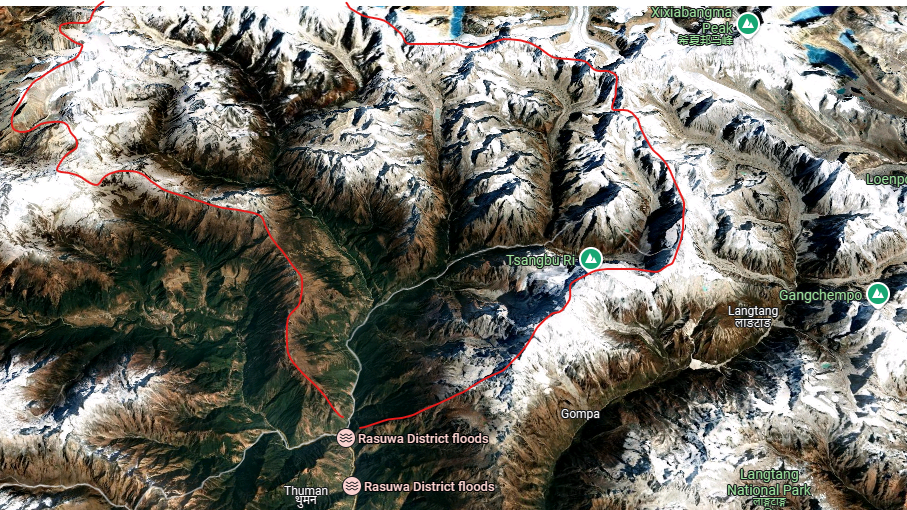
At least four of the river’s glacial tributaries originate in Tibet. On the Nepali side, the catchment extends through glacial areas between Langtang Lirung and the Sangbu Ri ridge, reaching as far down as the Dudhkunda Ghattekhola area.
The Lhende River joins the Trishuli downstream from the Nepal-China friendship bridge at Rasuwagadhi, which was washed away by the flood.
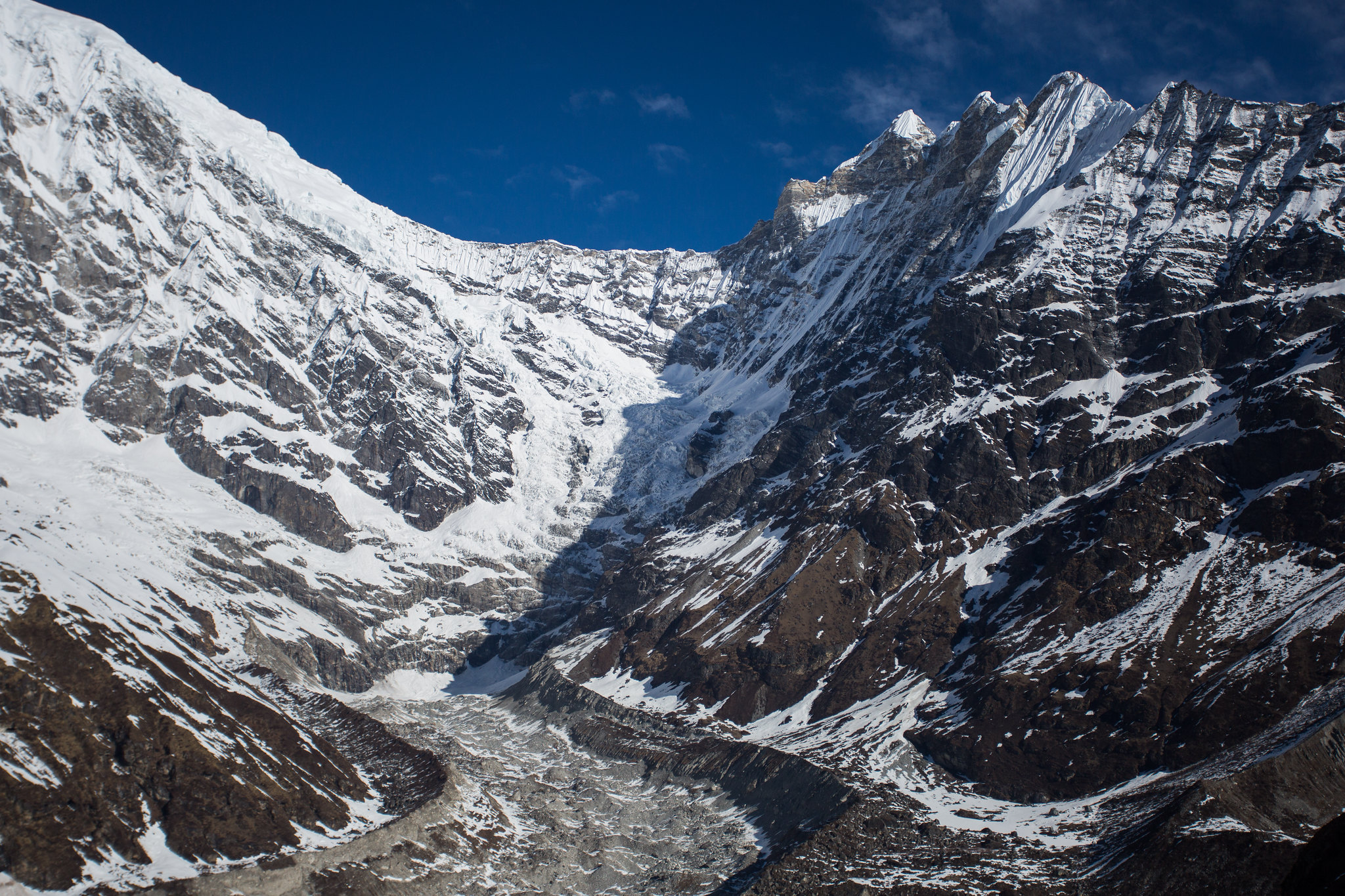
Other glacial tributaries, including the Tibu glacier to the northeast, the Purupe glacier further upstream, and another glacier northwest of Langtang Himal, all contribute to the Lhende. These catchments collectively host at least seven glacial lakes on the Tibetan side, and a smaller one can be seen near Dudhkunda in Nepal.
Due to rising global temperatures, these permafrost areas have been receiving consistent rainfall in recent years. The warm precipitation accelerates the melting of permafrost—frozen mixes of snow, sand, and rock—which have remained stable for decades at subzero temperatures.
In some cases, warm water infiltrates beneath the surface, eroding permafrost from within and triggering glacial mudflows. This process creates underground cavities, leading to surface depressions known as “thermokarst.” When subsequent rains fill these depressions, they can collapse entirely and cause catastrophic flooding.
If such permafrost lies near a glacial lake, the resulting collapse can breach the lake itself, releasing a destructive flood. A similar event occurred last August in Thame, Solukhumbu, when melted permafrost surged into a glacial lake, causing it to burst.
Signs of climate change
A preliminary report by Nepal’s Department of Hydrology and Meteorology noted light rainfall in the 24 hours prior to the flood at local weather stations in Kyanjin and Dhunche. However, maximum temperatures in Kyanjin Glacier Center rose from 13.5°C on Sunday to 13.9°C on Monday—sufficient to destabilize the permafrost.
“Looking at past glacial floods in Thame and Humla’s Tiljung River, the combination of rising temperatures and even light rainfall over just two days can cause massive floods in glacial river systems like the Lhende,” a department official told Khabarhub on condition of anonymity. “There might have been no rainfall in the last 24 hours, but previous rains and recent heat were enough to trigger this permafrost collapse.”
Delayed response
Prime Minister KP Sharma Oli boarded a military helicopter today to visit the flood-affected region, but only after the devastation became visible. Critics have pointed out that his government has repeatedly ignored growing rainfall and climate risks in the Trans-Himalayan region.
Geohazard expert Shree Kamal Dwiwedi said rising temperatures and precipitation are increasingly triggering glacial lake outbursts, mudflows, glacier melts, and permafrost collapses in Nepal’s high mountains.
“In the Himalayas, everything is held together by frozen ground. You don’t need a lot of rain to cause disasters—just a bit of warming or a brief shower can be devastating,” Dwiwedi explained. “Now even Tibet is getting monsoon rain, and it seems the monsoon cloud has looped into Nepal from the north, which is why the southern plains have received less rain this year.”
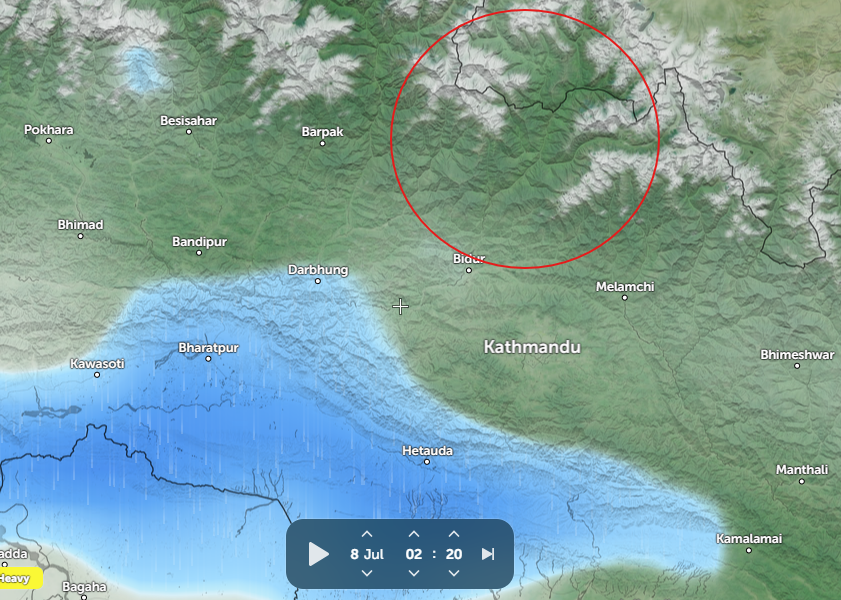
Satellite data from Zoom.Earth confirms that no significant rainfall or cloud cover was observed over the Lhende catchment in recent days, including at 2:20 AM Tuesday, the time of the flood. Rainfall was seen only further south, from Nawalparasi to Sindhuli.
“Rain in the Tibetan headwaters is becoming a growing threat,” a senior source at the Ministry of Energy said. “Judging by this flood, it appears multiple permafrost collapses occurred simultaneously. We had long anticipated such a disaster—but no real preparedness was in place.”
Growing threat
Nepal is home to over 6,000 rivers spanning more than 45,000 kilometers. Based on origin, these rivers are categorized into three types. The first includes glacial rivers that originate in the Himalayas or flow from Tibetan sources—like most tributaries of the Koshi, Gandaki, and Karnali systems.
When floods hit these rivers, they impact terrain from the mountains to the plains—especially affecting riverbanks and valleys in hill regions.
Unusual rainfall has been reported across Nepal’s Greater, Border, and Inner Himalayas for nearly a decade. Much of the Tibetan side of the Inner Himalayas drains into Nepal. Both the Greater and Border Himalayan regions contribute Tibetan runoff into Nepal.
Previously, the high terrain of Nepal’s northern trans-Himalayan “Bhot” region received little rainfall due to Himalayan ridges blocking monsoon winds. But now, the frozen Himalayas are melting due to rising temperatures and rainfall.






Comment