




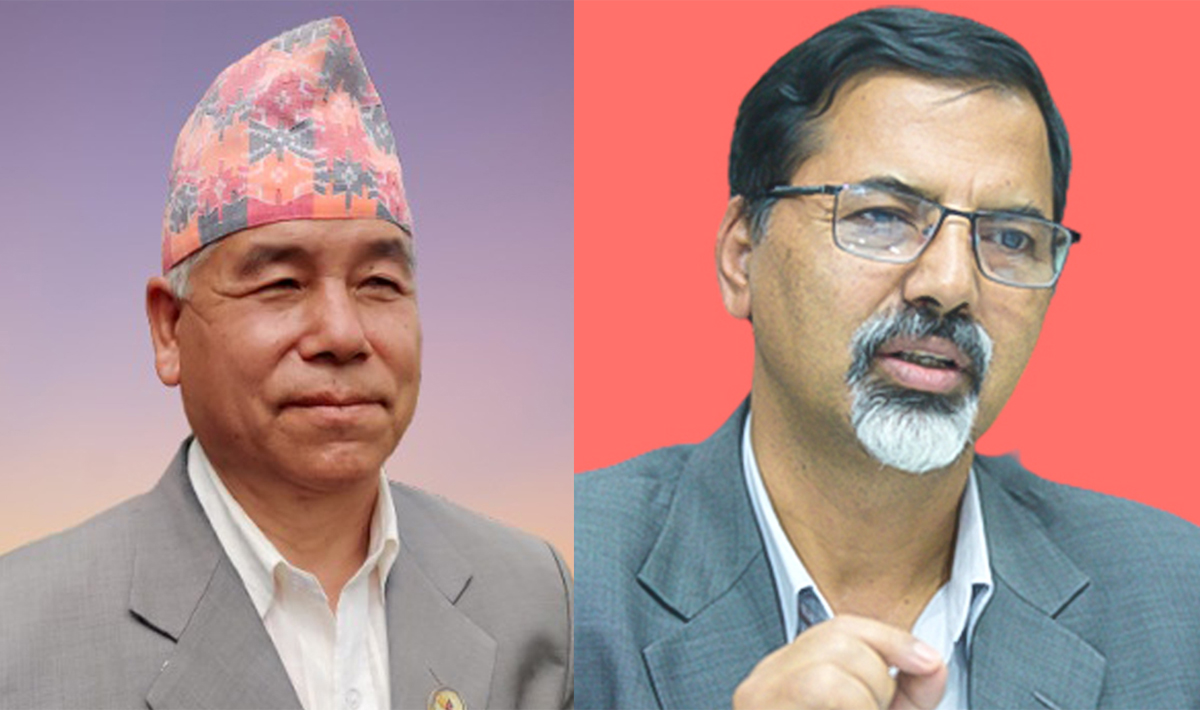
KATHMANDU: The fallout from escalating tensions between India and Pakistan has begun to reflect within Nepal’s political landscape, with senior leaders of the opposition Maoist Centre publicly taking opposing stances on the matter.
Divisions have emerged among party office bearers after India launched airstrikes on at least nine locations in Pakistan on Tuesday night.
While General Secretary Dev Prasad Gurung strongly criticized the airstrikes and questioned their justification, Deputy General Secretary Janardhan Sharma defended India’s actions, calling them a legitimate response to terrorism.
Gurung argued that India’s military action cannot be deemed justified without independent verification of Pakistan’s involvement in the terrorist attack in Pahalgam, Kashmir.
“India launched missile strikes using fighter jets in various parts of Pakistan. This is deeply concerning,” Gurung said. “Although India claims it is retaliating for the Pahalgam attack, which killed 27 people including a Nepali citizen, there has been no independent confirmation of Pakistan’s involvement. Blaming a country without proof and launching military action cannot be justified. These actions must stop immediately, and dialogue must be pursued.”
In stark contrast, Sharma praised India’s campaign against terrorism, known as ‘Operation Sindoor’. “Terrorism is one of the gravest threats to human civilization,” Sharma said.
“Every nation has the duty to confront terrorism. India’s operation is part of that responsibility, and we must stand in solidarity to defeat such threats and promote peace and stability.”
While Sharma’s remarks seemed to side with India, Pakistan has not responded to his statement. Gurung, meanwhile, called for an independent international investigation into the Pahalgam attack, emphasizing the need for truth and accountability.
He also reminded the government of Nepal’s balanced diplomatic ties with both India and Pakistan and urged the state to uphold its commitment to peace as outlined in the UN Charter and the principles of Panchsheel. “Nepal cannot remain a silent spectator. We must advocate for peace, not war,” Gurung said.
In response to the escalating conflict, Nepal’s Central Security Committee convened a meeting on Wednesday and decided to increase security along border areas.
However, the government has yet to make an official statement on the India-Pakistan situation, despite Nepal currently holding the chair of the South Asian Association for Regional Cooperation (SAARC).
Lawmakers raised the government’s silence during Thursday’s session of the federal parliament, calling for a clearer stance on the growing regional tension.



Comment