




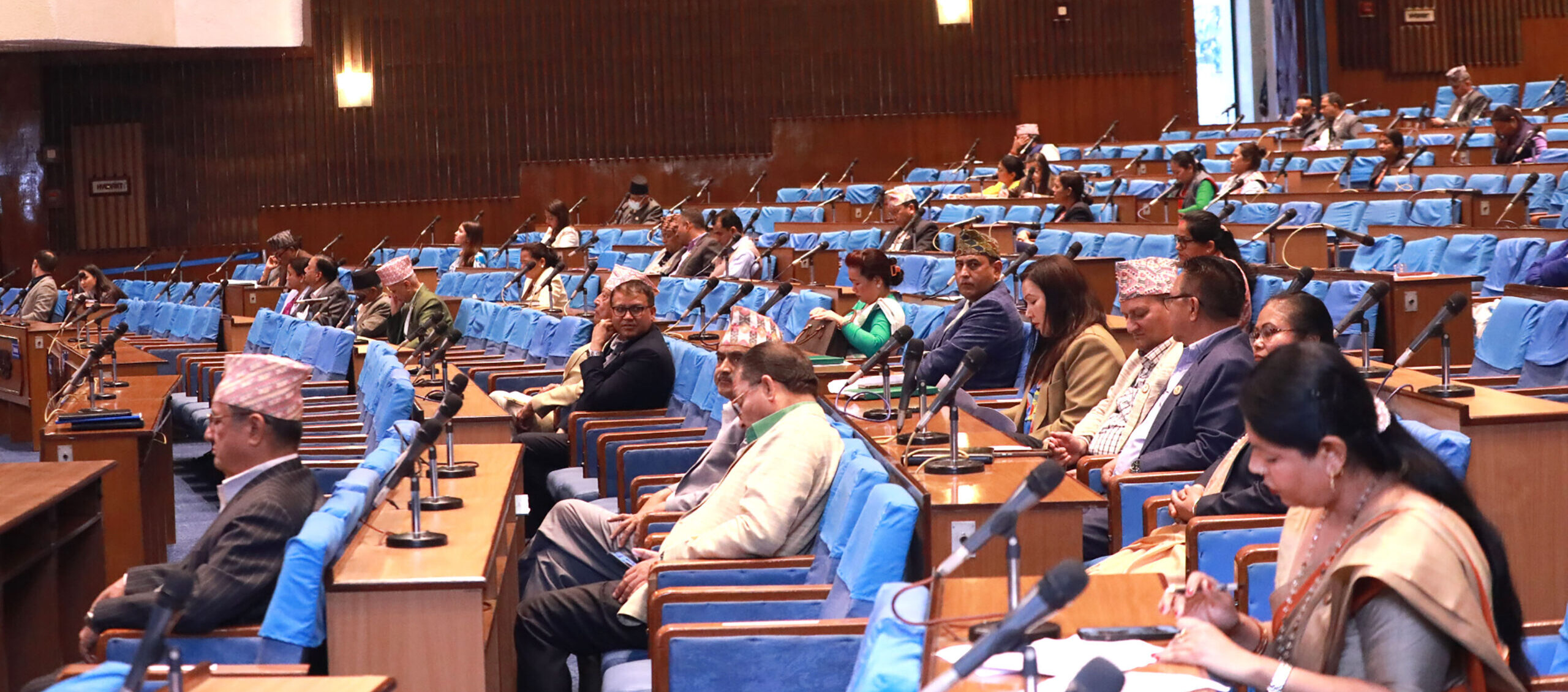
KATHMANDU: Lawmakers continued to debate the government’s annual policies and programs for fiscal year 2082/83 BS in the House of Representatives, urging necessary revisions to make the document more mature, practical, and inclusive.
During Thursday’s session, lawmakers emphasized that the government should incorporate justified and constructive suggestions raised during the parliamentary discussion, as the policies and programmes document remains open to amendment.
Nepali Congress lawmaker Arjun Narsingh KC remarked that debating the policies would be meaningless if suggested changes are not reflected in the final version.
He stressed the need for a two-thirds majority government to craft more systematic, advanced, and implementable policies. KC urged the government to prioritize practical, rather than overly ambitious, plans in the upcoming budget.
He welcomed the inclusion of ‘Gen-G’ (Generation-Goal) focused initiatives, but called for greater emphasis on uplifting marginalized communities and those living below the poverty line through social justice.
He also raised concerns over rising public debt, persistent corruption, weak governance, and lack of employment opportunities, which he said are fostering public frustration. KC further emphasized mobilizing international cooperation to combat climate change.
CPN-UML lawmaker Thakur Prasad Gaire underscored the importance of incorporating feedback from parliament, noting that policies must align with the constitutional directive principles and ensure coordination with the annual budget and medium-term expenditure framework.
He pointed out that the failure of the government and system to meet public expectations has fueled dissatisfaction.
Gaire argued that meaningful critique and constructive suggestions should be prioritized over blanket rejection. He urged the government to prioritize passing key legislation, including the Civil Service Bill, Education Bill, and Police Bill.
Gaire also warned that the India-Pakistan tensions could impact Nepal and suggested Nepal should explore ways to help promote peace in the region.
Maoist Centre lawmaker Mahendra Bahadur Shahi criticized the policies for lacking vision on promoting federalism and building a self-reliant economy. He said the document fails to inspire youth or address the development needs of remote regions like Karnali.
Shahi pointed out that although the constitution emphasizes socialism, the policies seem to favor privatization and lack clarity on economic direction. He called for agriculture development tailored to Nepal’s needs, full automation of 40 customs offices, and improved management of smaller customs points.
He also suggested reducing recurrent expenditures by downsizing unnecessary offices and staff and proposed developing a self-reliant economy based on national priorities. Strengthening local and provincial governments, he added, will require a united and meaningful national effort.



Comment