




KATHMANDU: A powerful earthquake early Tuesday morning disrupted daily life in Nepal, sending people rushing into the streets despite the cold.
Families clutching children and elderly relatives gathered in open spaces, while students fled their classrooms in panic.
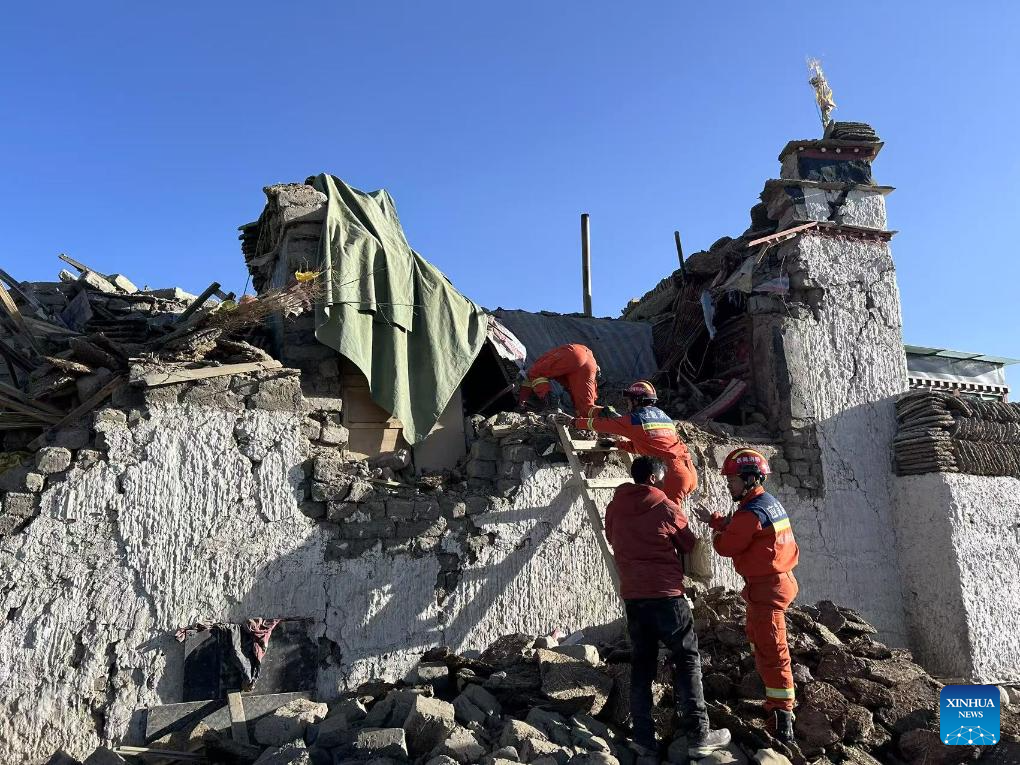
The 7.0-magnitude quake struck at 6:50 am, with its epicenter located in Dinggye, a village in China’s Tibet Autonomous Region, according to Nepal’s National Earthquake Monitoring and Research Center.
The tremors were strongly felt across Nepal’s Koshi, Madhesh, and Bagmati provinces, including the Kathmandu Valley.
The earthquake caused minor disruptions but reignited fears of devastation. At Tribhuvan University, the first-year undergraduate exams were delayed by 15 minutes.
In Kathmandu’s Nagarjun municipality, a man injured himself while jumping from the roof of his home. In Bara district, 11 schoolchildren reportedly fainted from shock.
For many, the quake brought back haunting memories of the 2015 Gorkha earthquake, which killed over 8,000 people and caused billions in damage.
“The psychological scars of that disaster remain fresh,” said Dr Basudev Karki, a psychiatrist at Patan Mental Hospital. “Even mild tremors can trigger overwhelming anxiety, as the fear of another major disaster lingers.”
Dr Karki pointed out that earthquakes don’t just cause physical destruction; they also leave lasting impacts on mental health.
“The 2015 earthquake led to a surge in psychological issues, including post-traumatic stress disorder,” he said.
He called for increased awareness and mental health support to help people cope with the trauma of natural disasters.
Seismologist Dr Lok Bijay Adhikari urged the public to remain calm and avoid spreading false information on social media.
“There’s no way to predict earthquakes,” he said. “Unfounded rumors can create unnecessary panic and lead to accidents during evacuation.”
Experts stressed the importance of preparation to minimize risks during earthquakes. Dr Adhikari called for better public awareness campaigns on safety measures, structural reinforcements for buildings, and the development of early warning systems.
Nepal lies in one of the most seismically active regions in the world, situated along the collision zone of the Indian and Eurasian tectonic plates.
This geologic activity, which formed the Himalayas, also makes the country vulnerable to devastating earthquakes.
Tuesday’s earthquake served as a stark reminder of Nepal’s seismic vulnerability and the importance of disaster preparedness.
While no major damages were reported, experts warned that the country must remain vigilant, both structurally and psychologically, to face the inevitable challenges ahead.





Comment